
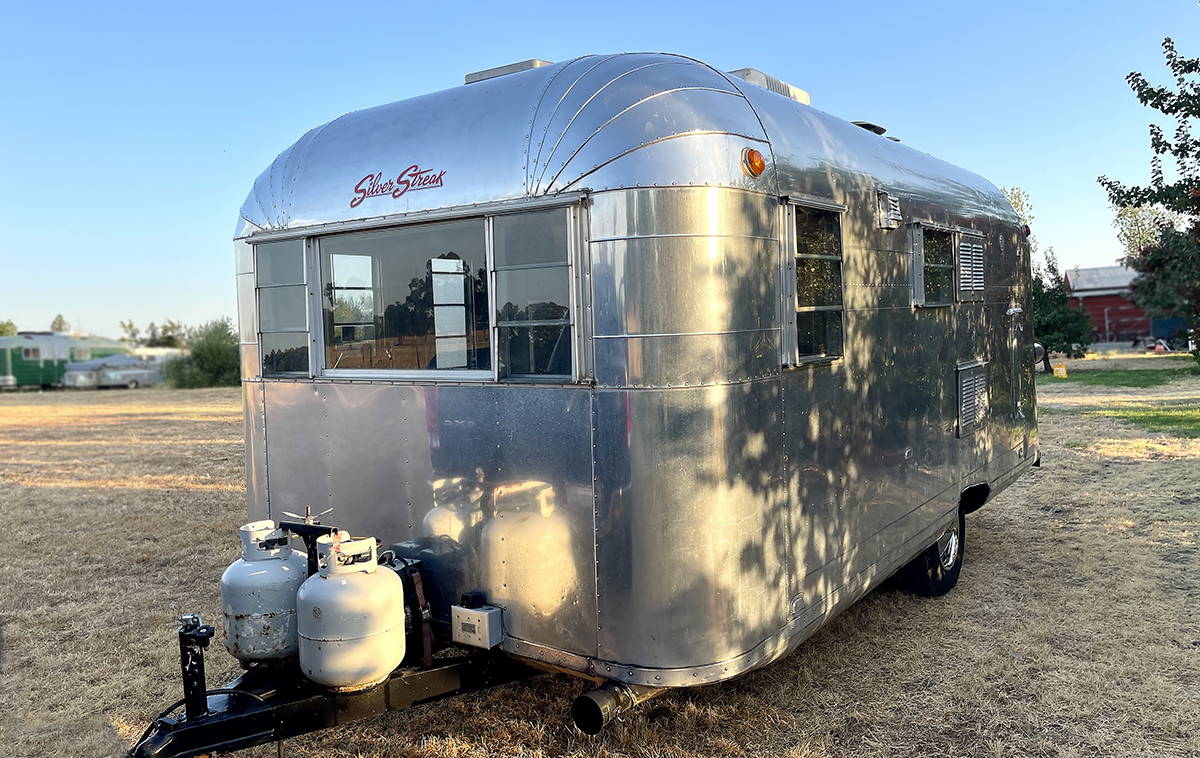
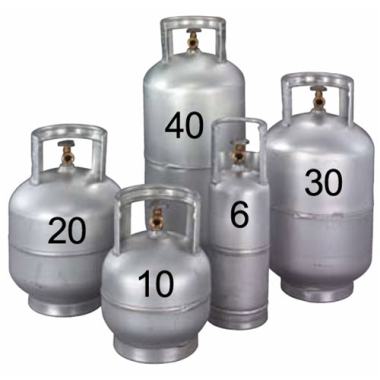
Propane cylinders (or tanks) on vintage trailers are commonly a #20 (5 gal.), #30 (7 gal.) or #40 (10 gal.) size. They are considered “portable” by the Department of Transportation and are subject to DOT regulations. They must be re-qualified every 5 years.
Propane cylinders must have a modern style valve or OPD (overfill protection device) in order to be re-qualified and refilled. Should your propane cylinder have an outdated valve this can be replaced by a licensed propane company and re-qualified at that time.
Choose A Light Color:
Federal and state restrictions mandate that propane containers must be painted a light-reflecting color. Dark colors absorb heat; light colors reflect it. As the tank heats, the propane inside will expand. Because propane exists as both a liquid and a gas within the tank, heat absorption can create a high-pressure situation that may cause the safety relief valve to open, releasing propane gas to reduce excess pressure in the tank.
Regulator:
Propane appliances require a regulator to operate properly. The regulator is located at the cylinder. They are subject to corrosion, insects and moisture over time. It is recommended that you replace the regulator as part of the restoration of your propane system.
Propane Lines:
Typically propane lines on vintage trailers are made from soft copper tubing or iron pipe. Some sections may be rubber tubing. Inspect the lines for any obvious damage, cracks or wear. Clearing the lines is recommended and should be done with compressed air. Always disconnect all appliances and the propane cylinder prior to this process. Blow compressed air into each end of the line until moisture and debris are cleared.
Propane Appliances:
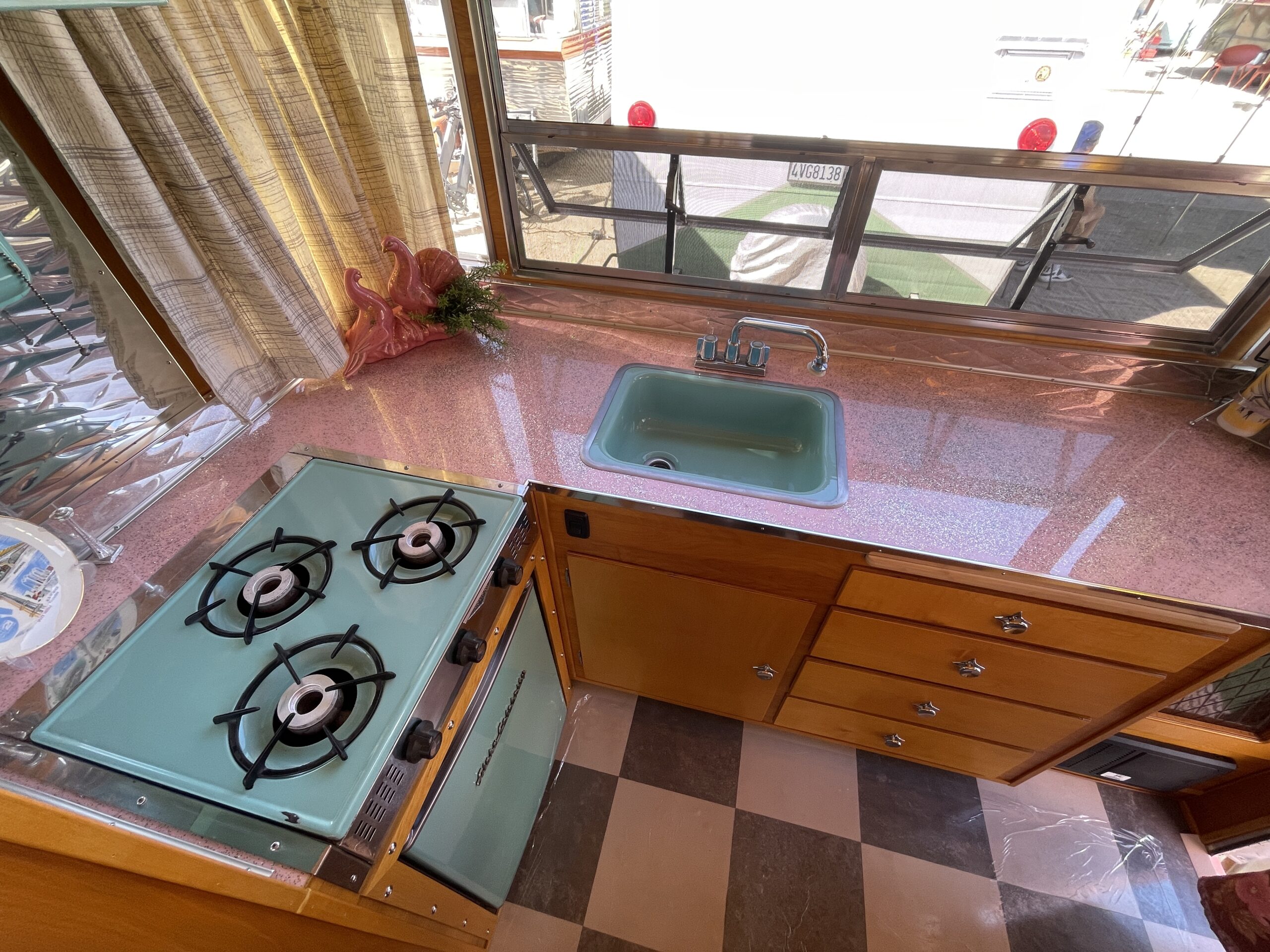
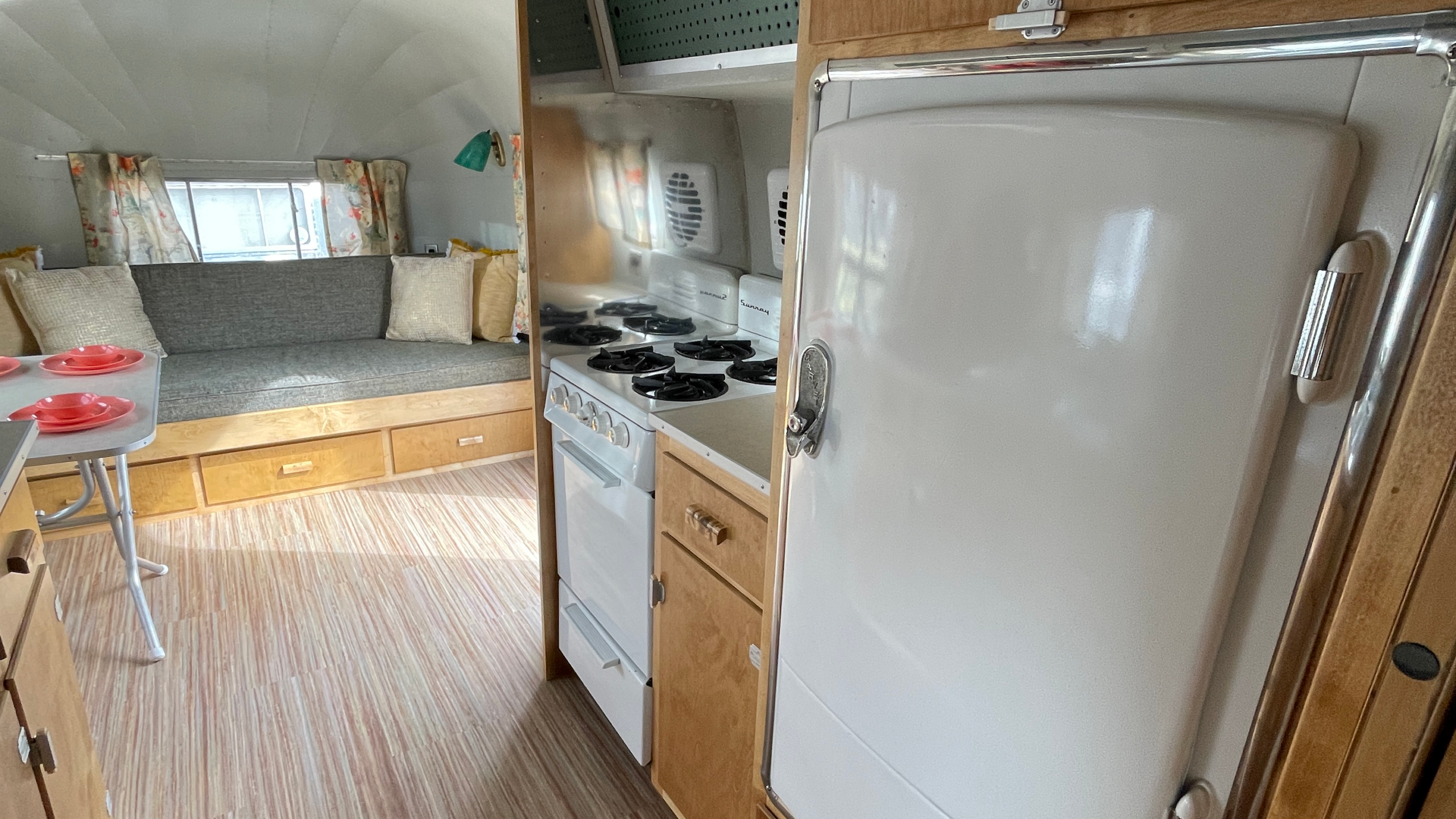
Determine there are no missing parts. Look for any obvious damage and uninvited guests, i.e., rodent nests, spider webs, etc. Thoroughly clean the appliance before beginning to test the unit. (VCT Boot Camp offers a class on appliance maintenance and restoration.)
Pressure and/or Leak Testing:
This process should be done after the propane regulator, lines and/or appliances have been repaired or replaced. A manometer (low pressure gauge) is required to do a pressure test. A spray bottle of soapy water will help determine where any leaks are.
Safety First
Using fueled appliances in your vintage trailer can increase the risk of high levels of propane gas and carbon monoxide. A detector alerts you to potentially dangerous levels. A fire extinguisher is also a good investment.