
It’s a phrase almost everyone recognizes—and a message that has remained critically important for generations. Over the years, the campaign has evolved to stay fresh, with voices like Betty White, Al Roker, and Jeff Foxworthy helping carry it forward. But one figure has remained constant: Smokey Bear.
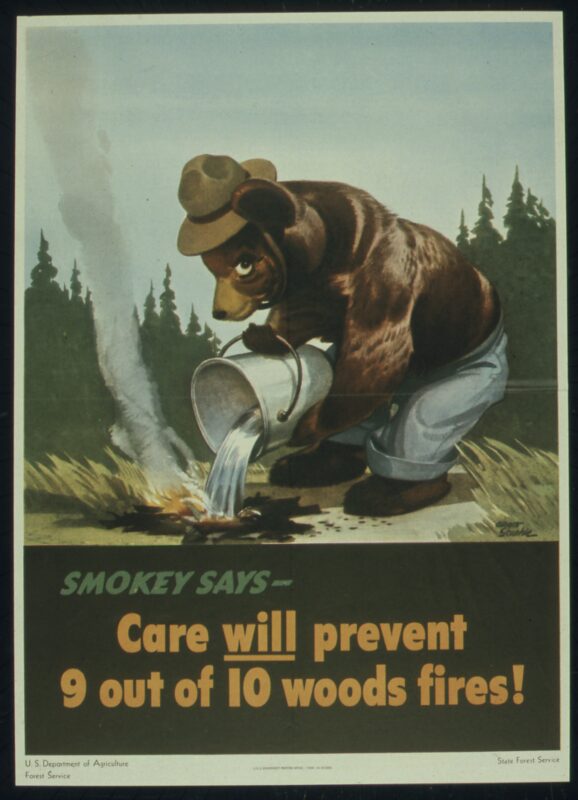
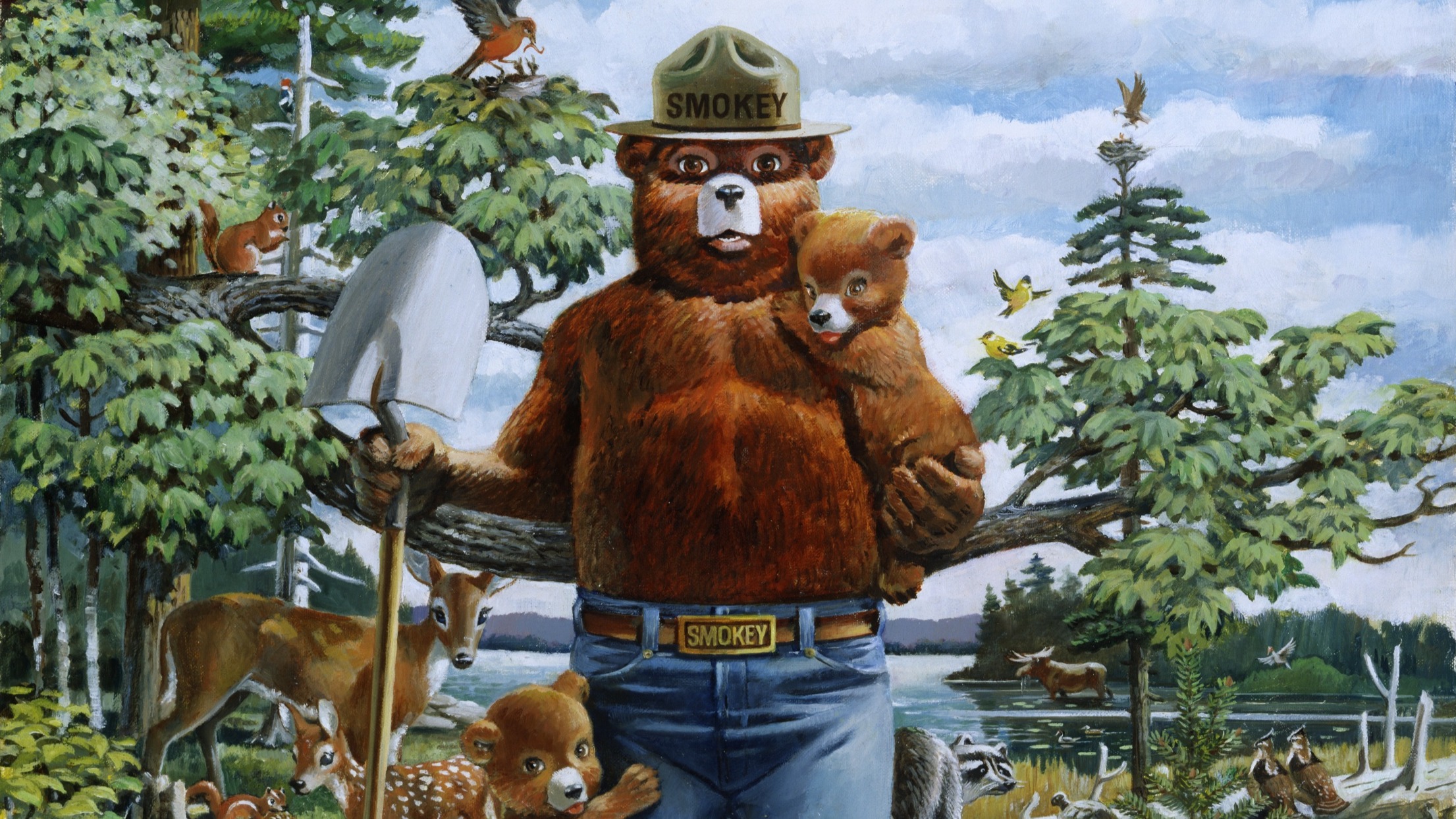
Smokey has been the face of wildfire prevention for more than seven decades, dating back to his debut in 1944. In that first campaign poster, he appeared shirtless, wearing his now-iconic campaign hat, pouring water over a campfire. While most people recognize Smokey instantly, the more interesting question isn’t who he is—but how he became such an enduring symbol of wildfire prevention.
The story begins during World War II. After the attack on Pearl Harbor on December 7, 1941, and President Franklin D. Roosevelt’s “Day of Infamy” speech the following day, the United States shifted its focus toward the war effort. With many experienced firefighters and able-bodied men deployed overseas, protecting America’s forests became more challenging. Wildfires were not just an environmental concern—they were seen as a threat to vital natural resources needed for the war.
In response, the U.S. Forest Service helped organize the Cooperative Forest Fire Prevention (CFFP) program to educate the public and reduce human-caused fires. Early on, the campaign partnered with Disney, which allowed the use of characters from Bambi in a 1944 poster that urged Americans to be careful and prevent forest fires. However, Disney only loaned the character for a limited time, leaving the program in need of a long-term symbol.
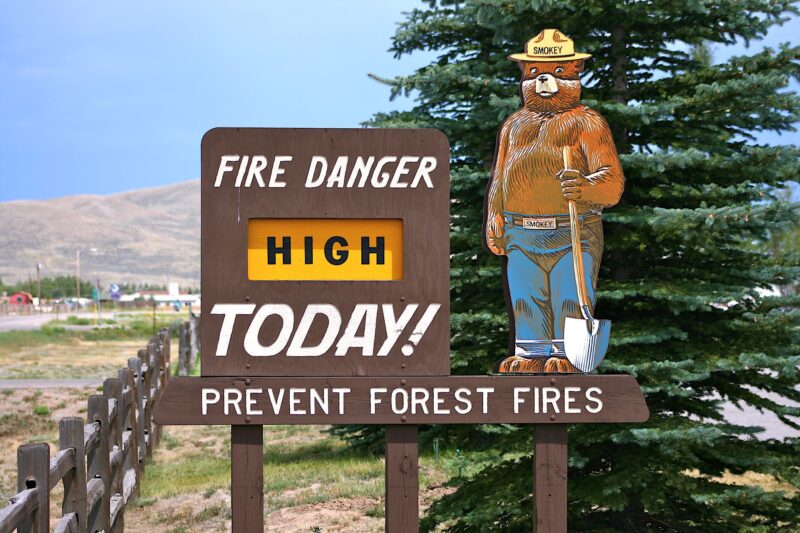
That led to the creation of Smokey Bear. The CFFP chose a bear as the campaign’s mascot—strong, approachable, and uniquely American. Artist Albert Staehle created the first Smokey Bear poster in 1944, establishing the visual identity that still endures today. Early messaging focused heavily on personal responsibility, eventually evolving into the now-famous slogan: “Only You Can Prevent Forest Fires” (later updated to “Wildfires”).
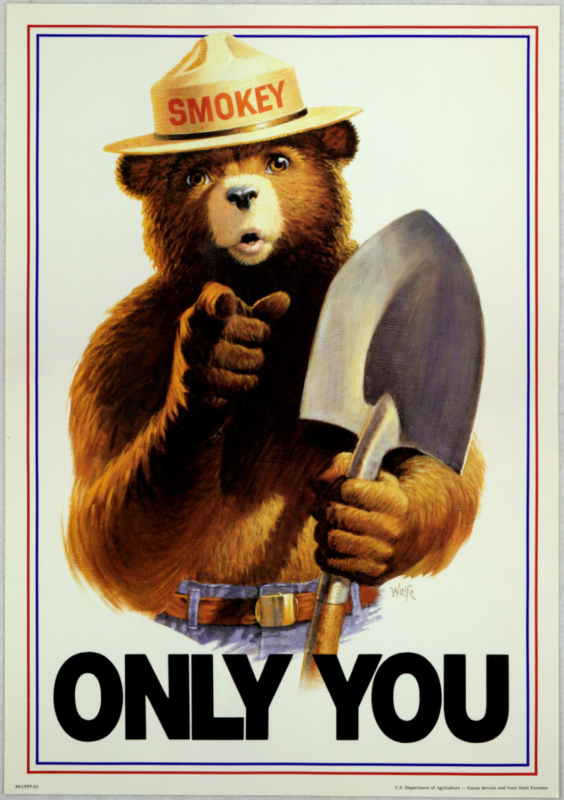
The now-famous slogan “Only You Can Prevent Forest Fires” was officially adopted in 1947, reinforcing the campaign’s focus on personal responsibility. According to Amy Gibson-Grant of the Ad Council, Smokey Bear was intentionally chosen because he could connect with both adults and children—delivering a message that feels authoritative, yet approachable. That balance helped cement Smokey as an effective and enduring public figure.
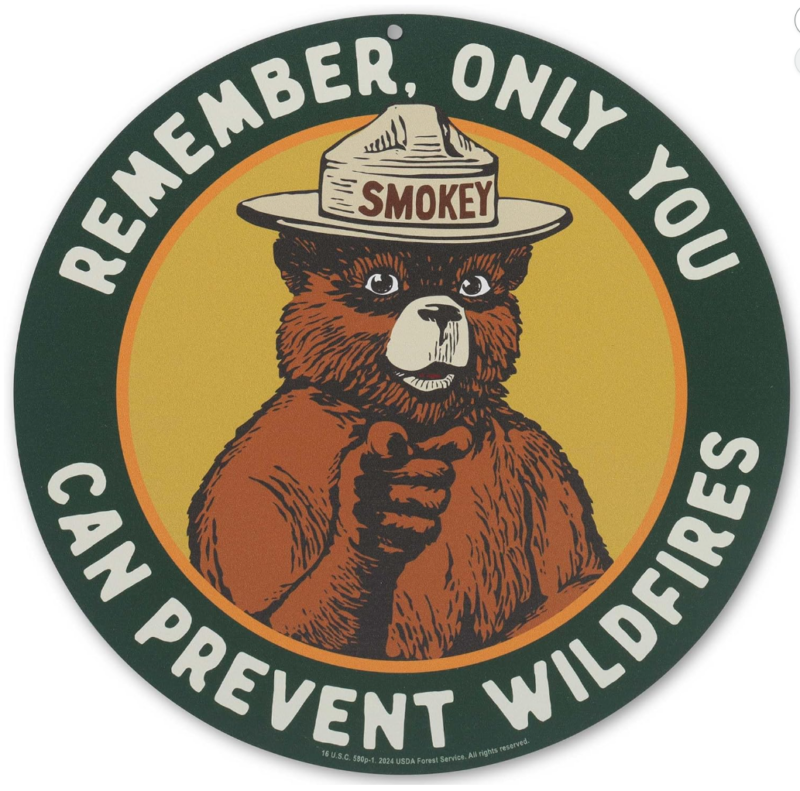
As the years went on, Smokey’s popularity only grew. Today, he’s a true household name and one of the most recognizable mascots in American history. Interestingly, one of the only persistent points of confusion has been his name. Many people still refer to him as “Smokey the Bear,” but his official name has always been simply Smokey Bear. The mix-up likely traces back to a popular song written about him, where adding “the” helped the rhythm—marking the only time Smokey ever had something like a “middle name.”
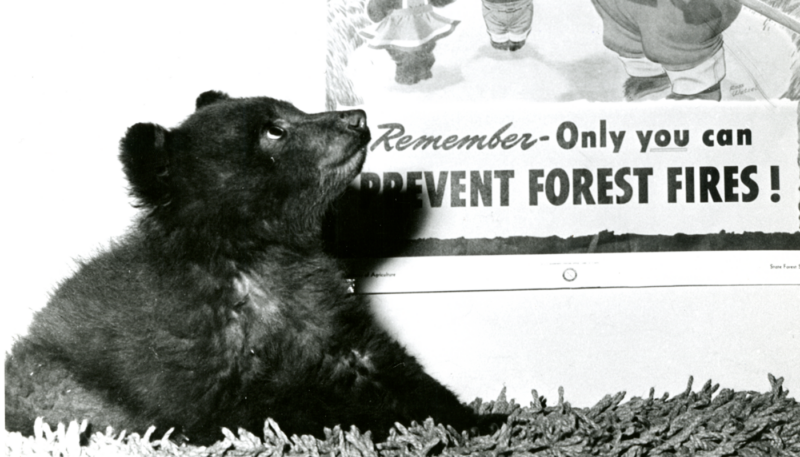
Another common misconception is that Smokey Bear was inspired by a real bear rescued from a wildfire. While there was a real bear, the timeline is often misunderstood. The living “Smokey” came later. In 1950, firefighters discovered an injured bear cub clinging to a tree after a wildfire in the Capitan Mountains of New Mexico. His story quickly spread nationwide, capturing public attention and sympathy. The cub was nursed back to health and eventually moved to the National Zoo in Washington, D.C., where he became the living symbol of Smokey Bear. He lived there until his death in 1976, after which he was returned to Capitan, New Mexico, and laid to rest in what is now Smokey Bear Historical Park.
While Smokey Bear has become an icon, his message remains as relevant as ever. Campfires, for example, are a cherished part of outdoor life—but they come with responsibility. Always allow wood to burn completely to ash when possible, then pour plenty of water over the fire, continuing until any hissing sound stops. If water isn’t available, use dirt or sand to fully smother the embers. Stir thoroughly and repeat the process until everything is cool to the touch. A good rule to remember: if it’s too hot to touch, it’s too hot to leave.
Smokey Bear’s introduction marked the beginning of one of the longest-running public service campaigns in U.S. history—one that continues to adapt while keeping its core message intact.