
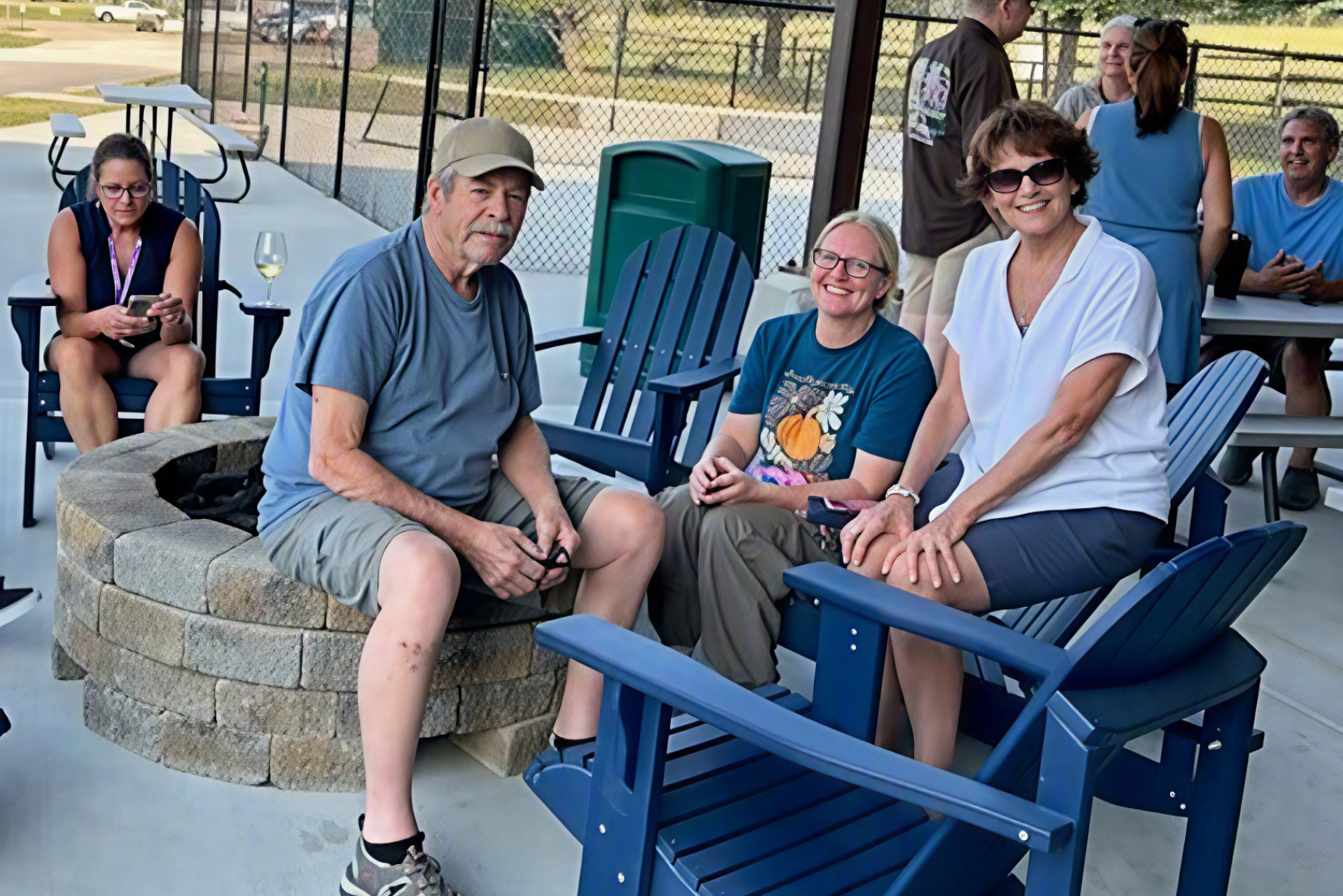
Caroline’s recent West Nile virus diagnosis is a reminder that one small bite can lead to weeks of illness—and that mosquito protection belongs on every camper’s checklist.
For those of us who spend a great deal of time camping, mosquitoes are usually considered little more than a nuisance. Recently, however, West Nile virus became very personal for our family.
Caroline was diagnosed with the virus after a difficult couple of weeks. Her illness did not follow a perfect checklist. She had many of the symptoms associated with West Nile, but not all of them.
She simply knew that she did not feel right.
It took persistence to persuade her doctors to continue looking for an answer. Additional testing eventually confirmed West Nile virus.
Caroline now seems to have turned the corner. She is improving each day, although she still tires easily and needs plenty of rest. That lingering fatigue is not unusual. The Centers for Disease Control and Prevention reports that weakness and tiredness can continue for weeks or even months after the other symptoms have passed.
Her experience is an important reminder. Symptoms do not always appear exactly as expected. If you remain sick, feel unusually weak or believe something is being missed, continue communicating with your healthcare provider.
What Is West Nile Virus?
West Nile virus is spread mainly through the bite of an infected mosquito.
The virus moves through a cycle involving birds and mosquitoes. A mosquito becomes infected after feeding on a bird carrying the virus. That mosquito may then transmit it to a person, horse or other mammal.
West Nile does not spread through touching, coughing, sneezing or ordinary contact with another person. Transmission through blood transfusions, organ transplants or from mother to baby has occurred, but those cases are rare.
Symptoms Can Vary
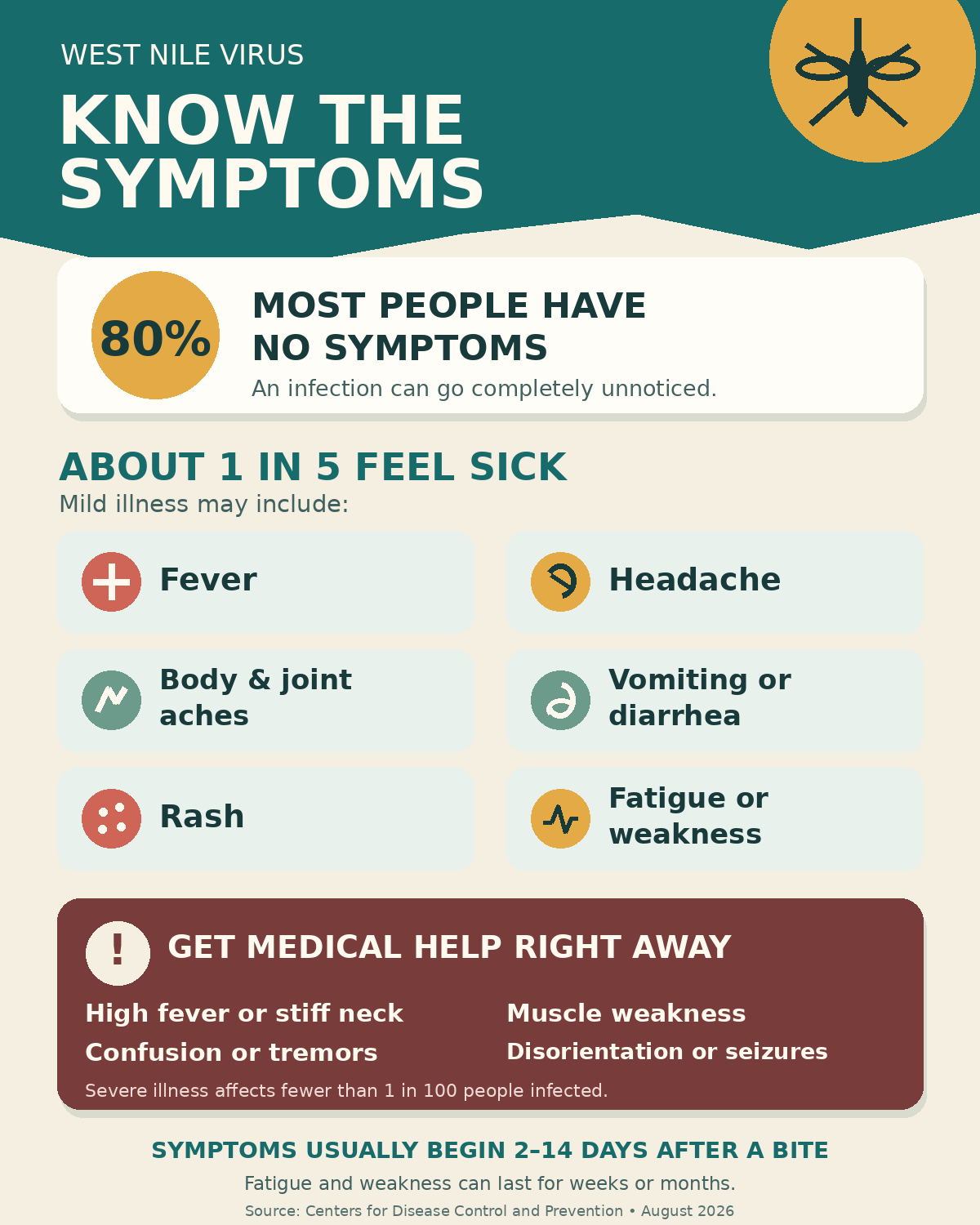
Symptoms generally begin two to 14 days after the bite of an infected mosquito.
About 80 percent of infected people never develop symptoms. Approximately one in five develops a mild or moderate illness that may include:
- Fever
- Headache
- Body or joint aches
- Vomiting or diarrhea
- Skin rash
- Fatigue or weakness
Fewer than one percent of infected people develop a severe illness affecting the brain or nervous system. This may include meningitis, encephalitis or paralysis.
Seek immediate medical attention for a high fever, stiff neck, muscle weakness, confusion, disorientation, tremors or seizures. Numbness, vision loss or paralysis are also serious warning signs.
Older adults have a greater risk of severe illness. Risk is also higher for people with cancer, diabetes, high blood pressure, kidney disease or a weakened immune system. CDC: West Nile symptoms and risk factors
A healthcare provider may consider symptoms, recent mosquito exposure and laboratory test results when making a diagnosis. There is no specific medicine that cures West Nile virus. Treatment generally focuses on rest, fluids and relief of symptoms. Severe cases may require hospitalization.
Where Is West Nile Found?
West Nile virus is established throughout all 48 contiguous states. The CDC identifies Alaska and Hawaii as the two states where the virus is not established.
That does not mean the risk is equal everywhere. Activity changes from year to year and even from one county to another. Weather, bird populations and the number of mosquitoes all influence local conditions.
A county showing no reported cases should not automatically be considered free of West Nile. Mild cases frequently go undiagnosed, and public-health reporting can be delayed. The CDC updates its surveillance information throughout mosquito season. CDC: Current West Nile data

Protection at the Campground
The best way to prevent West Nile is to avoid mosquito bites. There is currently no approved human vaccine.
Before sitting outside, apply an EPA-registered repellent. Effective active ingredients include DEET, picaridin, IR3535, oil of lemon eucalyptus, PMD and 2-undecanone. Always follow the product label.
Campers should also:
- Wear loose-fitting long sleeves and long pants when mosquitoes are active.
- Be especially careful between dusk and dawn.
- Keep camper door and window screens in good repair.
- Empty water from buckets, pet dishes and other containers around the campsite.
- Treat clothing and camping gear with a permethrin product, following its directions.
- Do not apply permethrin directly to your skin.
- Check local mosquito-control or public-health reports when traveling.
These are simple precautions, that won’t keep us from enjoying the outdoors. They can, however, greatly reduce the chance that weekend at a campground turns into weeks of illness.
Caroline’s recovery is moving in the right direction, and we are grateful. Her experience has also made us much more aware of a disease that can be easy to overlook. Listen to your body, speak up when something does not feel right and take mosquito protection seriously wherever your travels lead.
This article is for general information and is not a substitute for professional medical advice.