

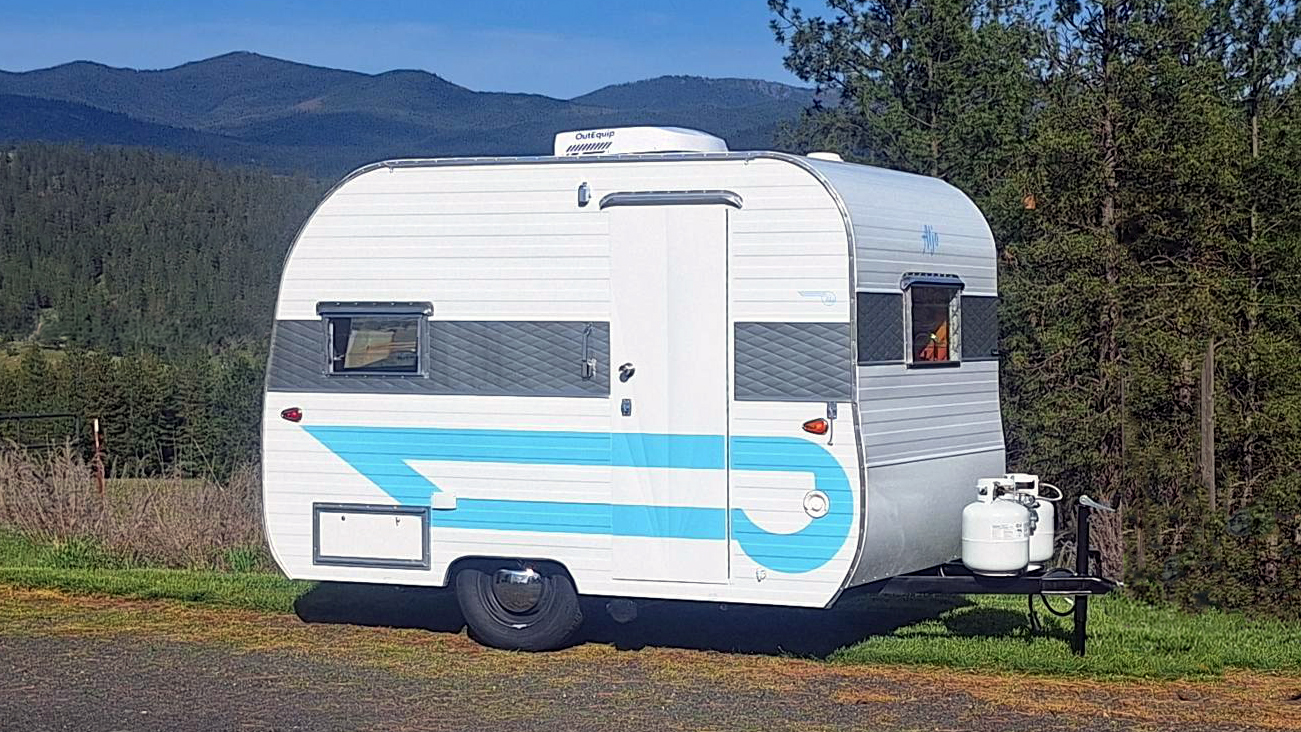
Air conditioning in a vintage trailer has always been a balancing act. We want comfort, but we also care about weight, roof profile, noise, appearance, and how much work it takes to install something modern on an old trailer.
That is why a recent Facebook post by Doug Johnson caught my attention. Doug shared his experience with the OutEquip Pro RVAC 12-volt air conditioning unit, and after reading his comments, I followed up with him to learn more.
The first thing Doug told me was simple: he would not have posted about it if he was not impressed.
Doug restores vintage trailers, but his first experience with 12-volt air conditioning came while planning an off-grid van conversion for his son. They were looking for something quiet, efficient, and better suited to boondocking than a traditional 110-volt rooftop unit. That search led him to the OutEquip Pro.
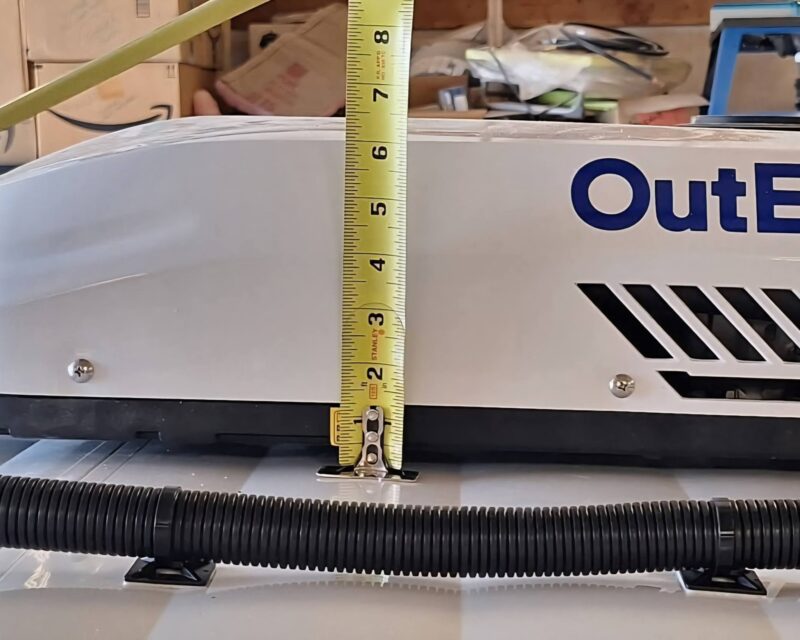
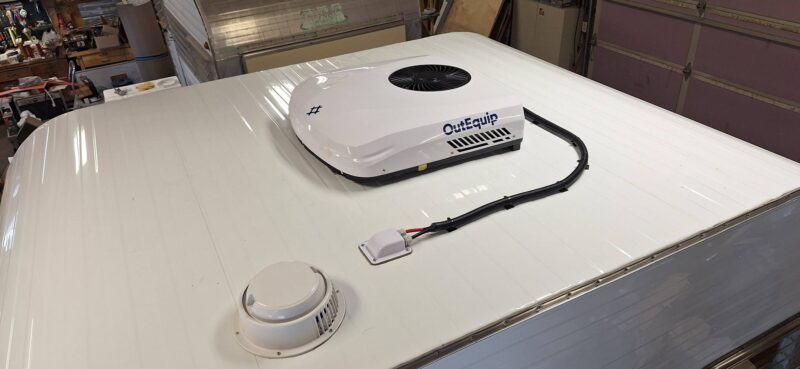
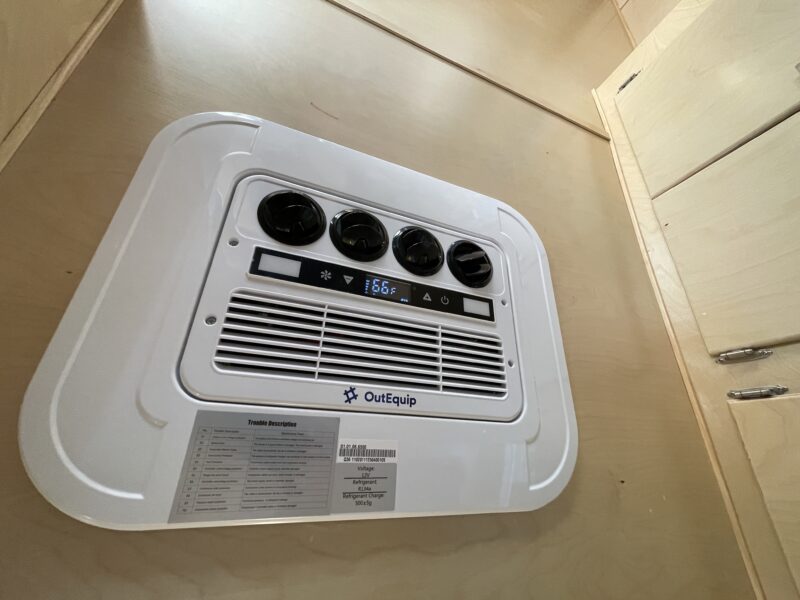
There are several things about this unit that make it interesting for vintage trailers. It weighs about 45 pounds, which is considerably lighter than many 110-volt rooftop units that can weigh 65 to 80 pounds. It also has a much lower profile, sitting just over six inches above the roofline. On a vintage trailer, that matters. A large modern air conditioner can look out of place, but this unit is much less noticeable, especially if the surround is painted to better match the trailer.
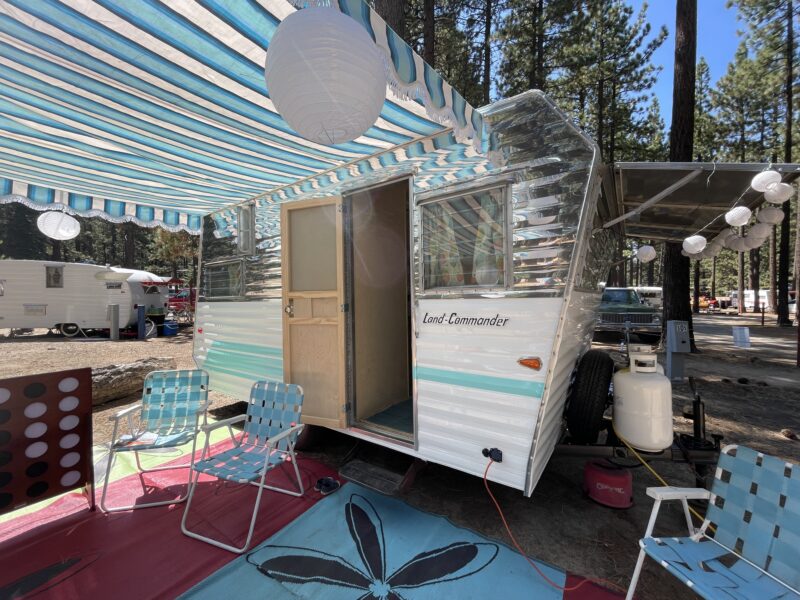
The unit is rated at 10,000 BTU for cooling and 4,500 BTU for heat. Doug installed one on his 18-foot Aloha and said it had no trouble keeping the trailer cool and comfortable on a 100-degree day in full sun.
In one real-world test, the outside temperature was 102 degrees and the inside of the trailer had climbed to about 110 degrees. Doug turned the unit on around noon, and by about 3:30 p.m., the trailer had dropped to 78 degrees. The next day, he started the unit earlier before the trailer became heat-soaked. Running on low, it kept the trailer under 73 degrees.
That kind of performance gets your attention.
Doug also tested the heat on a cool night in the low 40s. On the lowest setting, the unit kept the trailer around 65 to 70 degrees and was barely audible. He was quick to point out that the heat is best described as supplemental heat, just as the manufacturer states. It can help maintain warmth, but it may struggle to warm up a cold trailer from scratch. For many vintage trailer owners who already have propane heat, that makes sense. Use the propane to warm the trailer, then let the 12-volt unit quietly maintain the temperature.
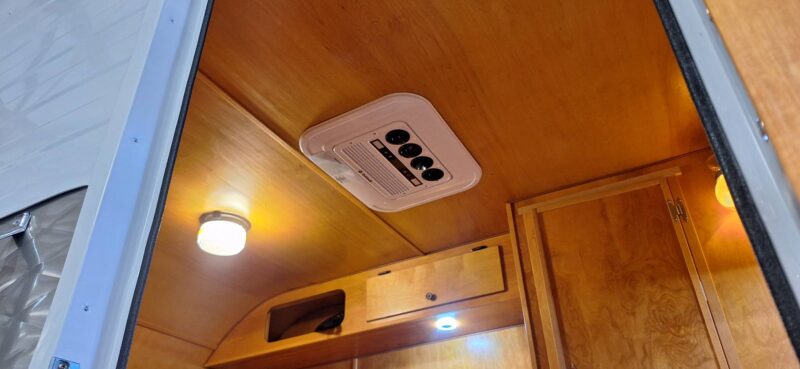
Installation is another part of the appeal. The unit fits a standard 14-inch square roof opening, which is common in RVs. Doug said the installation was not difficult. After doing a few of them, he can complete one in about an eight-hour day. A well-equipped do-it-yourselfer may want to allow a couple of days.
The company has also made improvements. Since many vintage trailers have thicker roofs than the vehicles these units were originally designed for, OutEquip Pro updated the mounting system to better accommodate that difference.
Roof reinforcement will depend on the trailer. A small canned ham style trailer with wood framing and thin ceiling structure may need additional support. An aluminum-framed trailer like an Airstream or Streamline may already have enough structure, especially since the unit is relatively light.
The biggest thing Doug stressed was the electrical system. Study the specifications and do not undersize the wiring, batteries, or power center. These units need a properly designed 12-volt system to perform correctly.
Doug is running a Progressive Dynamics PD4060 power center with a 200Ah LiFePO4 lithium battery that has built-in Bluetooth monitoring. Battery run time will depend on the weather, trailer insulation, battery capacity, charging system, and what else is running in the trailer.
For some owners, the appeal may not even be boondocking. They may simply like the lighter weight, lower profile, quieter operation, and cleaner appearance. For others, the ability to run A/C or heat on 12 volts while traveling or camping off-grid may be the big advantage.
Cost is another consideration. Doug estimated the OutEquip Pro unit at around $950, while a comparable 110-volt rooftop unit with heat may be around $1,350. The 12-volt unit may cost less upfront, but depending on your trailer, you may need to upgrade batteries, wiring, or the power center. In the end, the total investment could be similar.
I also spoke with Rob Merrill of Trailer Magic, who has installed some of these units and was also impressed. Rob said the company has been responsive to the needs of the vintage trailer community. We will follow up with Rob in a separate article about some of his installation tips and tricks.
For now, the takeaway is simple. The OutEquip Pro 12-volt RVAC is an interesting option for vintage trailer owners who want a quieter, lighter, lower-profile unit that cools well and offers supplemental heat. It is not a magic box, and it still depends on a properly designed electrical system, but based on Doug’s experience, it is worth a serious look.
As Doug put it, study the specs and do not undersize the system. That may be the best advice of all.
If you need help with an install, Doug in Oregon or Rob in Carson City, Nevada can help.


Thank you for the feedback. These things are the hot ticket at the moment. Everyone seems to be loving them. I had one show up in my driveway yesterday!
I too, JUST installed one of these on my 19′ Fiberglass trailer last week. It was easy enough except for running my wires so that they were concealed. I removed a huge 13,500 BTU 120V unit. The new one is just less than half the height. So far in my tests it has worked very good.