
There are few places where history, scenery, sport, antique automobiles, and vintage camping can come together and somehow look as though they simply arrived for the weekend. Tallac Historic Site, perched along the shores of Lake Tahoe, is one of those rare places. With its grand historic estates, mountain scenery, and long association with Tahoe’s summer playground, it provides a perfect backdrop for stepping back into the golden age of automobile camping—when a weekend in the great outdoors involved a little gasoline, a bit of canvas, and considerably more equipment than one might reasonably expect.
On August 8 and 9, the historic Pope and Baldwin Estates once again surrendered their lawns to the Jazz Age, as the Great Gatsby Festival returned to Tallac for its 39th year. For one weekend, the grounds became a rather convincing portal to the Roaring Twenties, complete with vintage automobiles, live jazz, period dress, lawn games, vendors, historic tours, and all the appropriate accoutrements of a society that apparently knew how to enjoy a weekend.
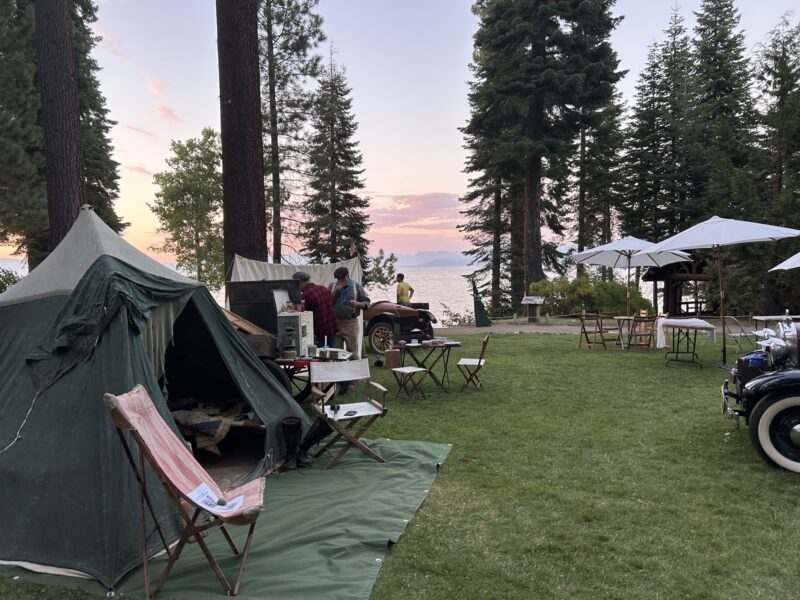
And, as any proper automobile excursion eventually discovers, the road leads somewhere—and on this particular weekend, it led to camp. Antique Overland, hosts of the 2025 National Motor Campout held at Lake Tahoe, returned with a gathering of both new and veteran enthusiasts of prewar automobile camping, bringing along an impressive collection of classic campers and the equipment that made them more than merely decorative curiosities. Four particularly remarkable trailers anchored the gathering: a 1916 Warner Auto Trailer, a 1932 Pullman, a 1934 homebuilt, and a 1937 Gilkie.
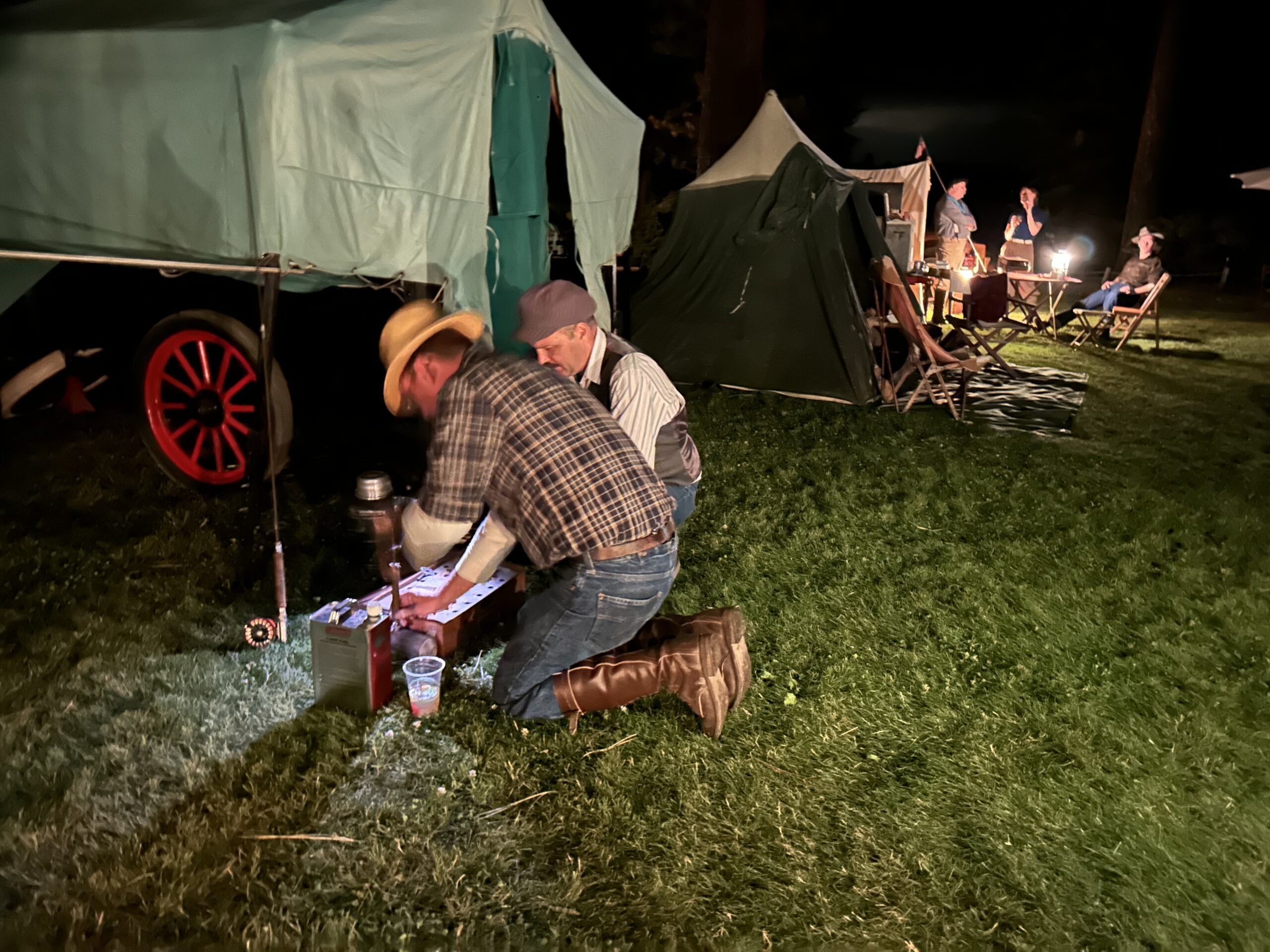
Together, these remarkable original trailers offered a tangible glimpse into the early days of automobile camping, when the open road was still an adventure. The coolers, equipment, and assorted camping accessories were not merely props pulled from a storage cabinet for the weekend. They were all working originals and being put to use in their intended purpose. That distinction is important.
There is a certain temptation when displaying historic objects to make them so pristine, so carefully arranged and so obviously “museum-like” that they become detached from the people who originally used them. A vintage trailer sitting behind a rope is certainly interesting. A vintage trailer with its awning out, its stove being used to cook breakfast and its lantern hanging where it will cast the best light later that evening tells a considerably better story.
The Great Gatsby Festival is, at its heart, a living-history event. Tallac’s historic estates already provide an unusually appropriate setting: the Pope and Baldwin properties date from the resort era of Lake Tahoe, with the estates having been built between 1894 and 1923. Today they form part of a preserved historic landscape operated through a partnership between the Great Basin Institute and the USDA Forest Service.
The campers added another layer to that landscape. They represented a more mobile side of early twentieth-century leisure—the moment when automobiles were beginning to change not only how Americans traveled, but where they could go and how they could spend their vacations once they got there. Unlike a static exhibit, the trailers demonstrated their history through use. That’s the particular magic of historic camping.
The four prewar trailers represented very different approaches to early recreational travel.
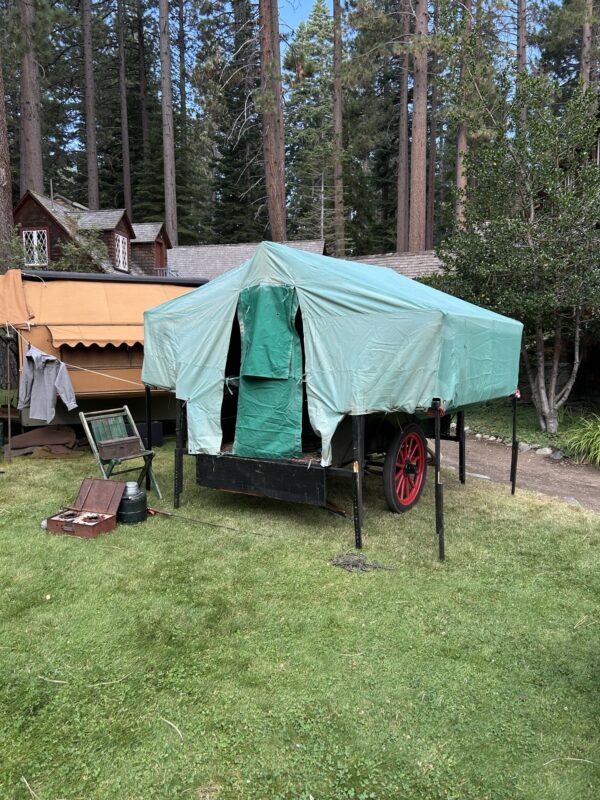
The 1916 Warner Auto Trailer is especially remarkable simply because of its age. It comes from a period when automobile camping was still in its infancy and before the modern travel trailer had become a familiar part of American recreational culture. The Warner has the particular distinction of being the first purpose-built popup trailer and marketed to broad public audience. This one, in particular, has a unique history all its own. While time and periods of ownership have altered its top bow structure, canvas, and bed size it retains its most historically significant features, its patented hitch assembly and its axel which was made expressly for Warner, and not simply a repurposed automotive axel. And for all you Bonanza fans out there, this particular Warner came out of the Ponderosa Ranch theme park collection.
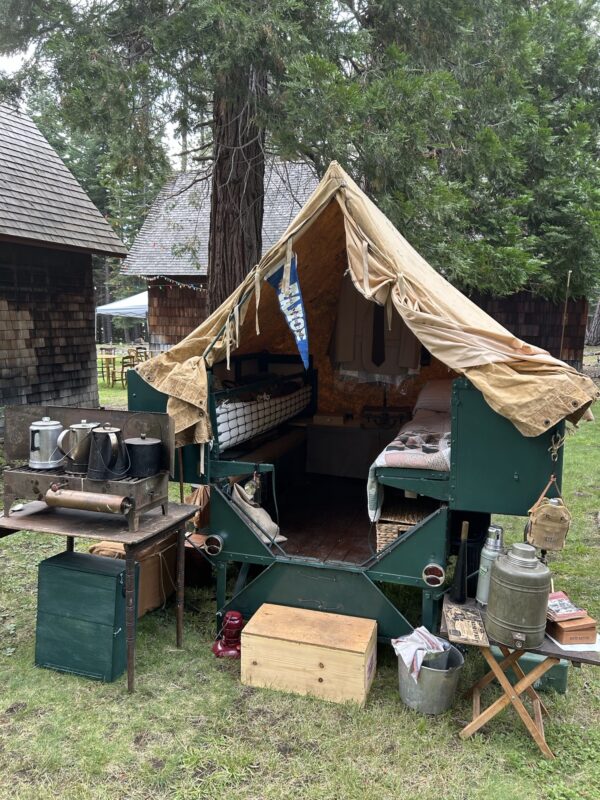
The 1932 Pullman represents a later moment in that evolution, when purpose-built trailers were becoming increasingly recognizable as recreational vehicles. This all-metal box on wheels was built in Redwood City, California by the Pullman Company. Its owner has done wonders to bring this trailer back to working order including repairing the original canvas so it would be stable enough to use. The more research he has done on both the trailer and the company has led him to believe that the trailer he has might actually be the prototype to the subsequent trailers built by Pullman.
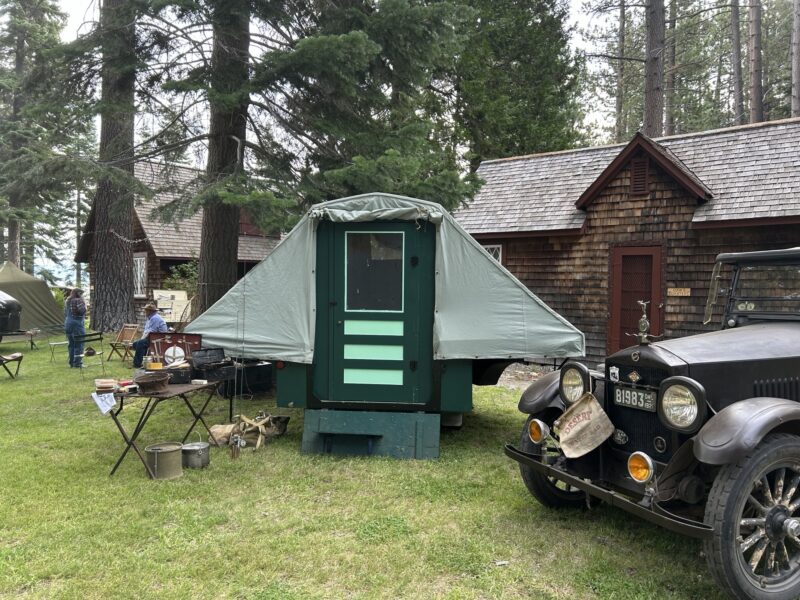
The 1934 homebuilt offers an entirely different perspective. Not every early camper came from an established manufacturer. Some were built by people who wanted to travel, had the necessary skills—or knew someone who did—and simply created the solution themselves. Whether they followed plans for Popular Mechanic or drew them themselves, homebuilt trailers carved out a significant space in early prewar recreational history. They were just another example of the democratization of camping as a hobby. This particular example incorporates two swingout boxes, one that acts as a pantry and dry storage and the other which includes two insulated cooler spaces. This particular homebuilt also incorporates a integral copper water tank.
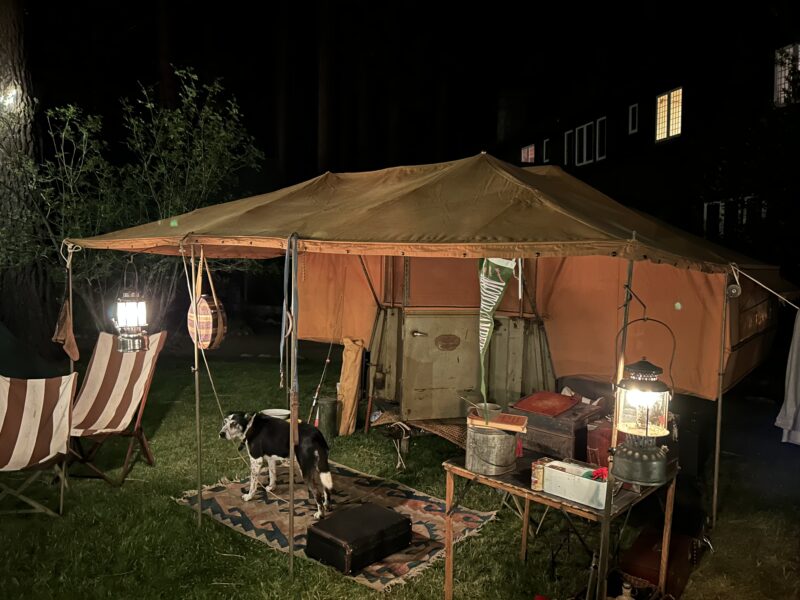
The 1937 Gilkie, s another reminder that the prewar trailer world was populated by manufacturers and designs that have largely disappeared from everyday memory. Made in Terre Haute, Indiana, from the 1920s through the 1950s. The Gilkie’s compact design folded down for easy towing during the day, then unfolded at camp to create surprisingly spacious miniature homes for the night. This particular example retains its original linoleum and all its original fixtures. The canvas has been replaced.
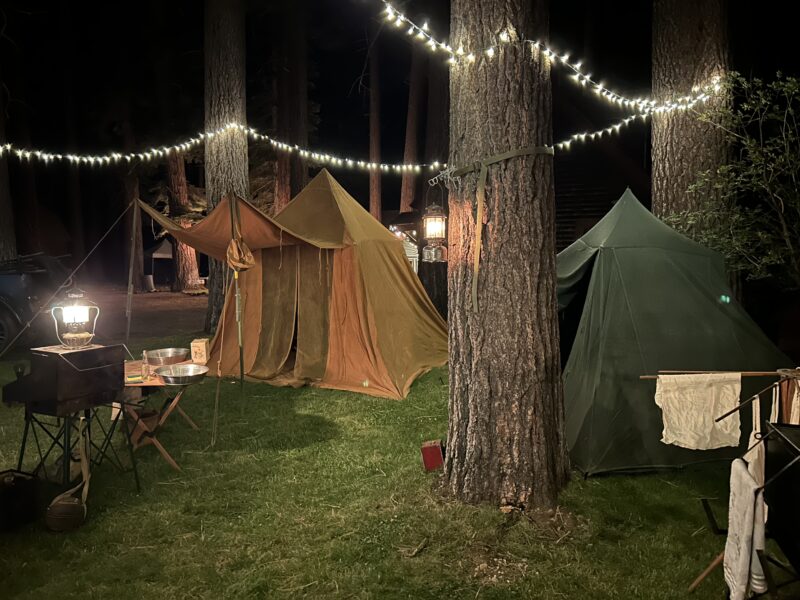
Together, the four trailers provided a remarkably compact history of early trailer camping and wonderfully appropriate addition to the event. The collection of prewar trailers wasn’t an unrelated display. They belonged to a much larger story. Automobiles opened up new possibilities for recreation. Roads made destinations increasingly accessible. Camps and resorts developed alongside the growing popularity of automobile tourism. And trailers offered travelers a way to bring some of the comforts of home along with them.
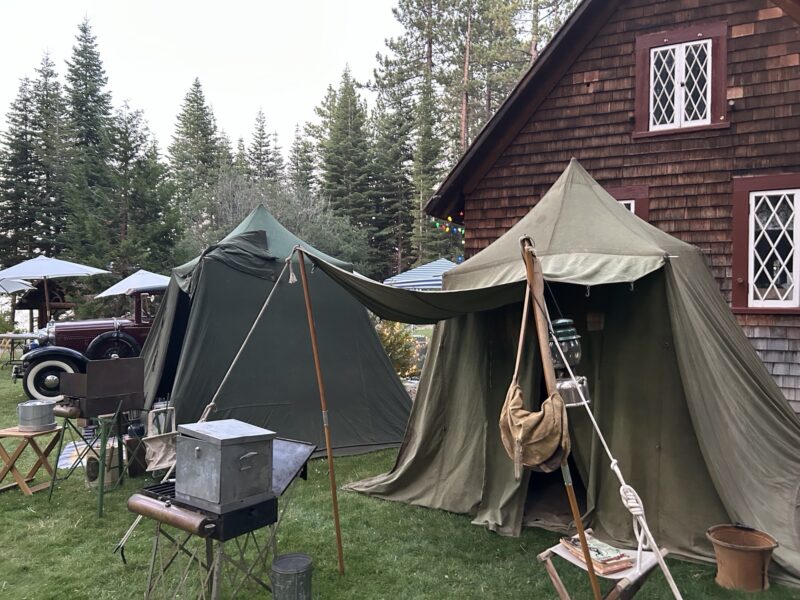
At Tallac, visitors could walk from the historic estates to a collection of campers that represented another side of the same changing American landscape. It was history on wheels—and, for the weekend at least, history that was actually camping. If you are interested in Prewar Camping for the 2027 Gatsby Festival, reach out to Antique Overland at antiqueoverlanding@gmail.com