
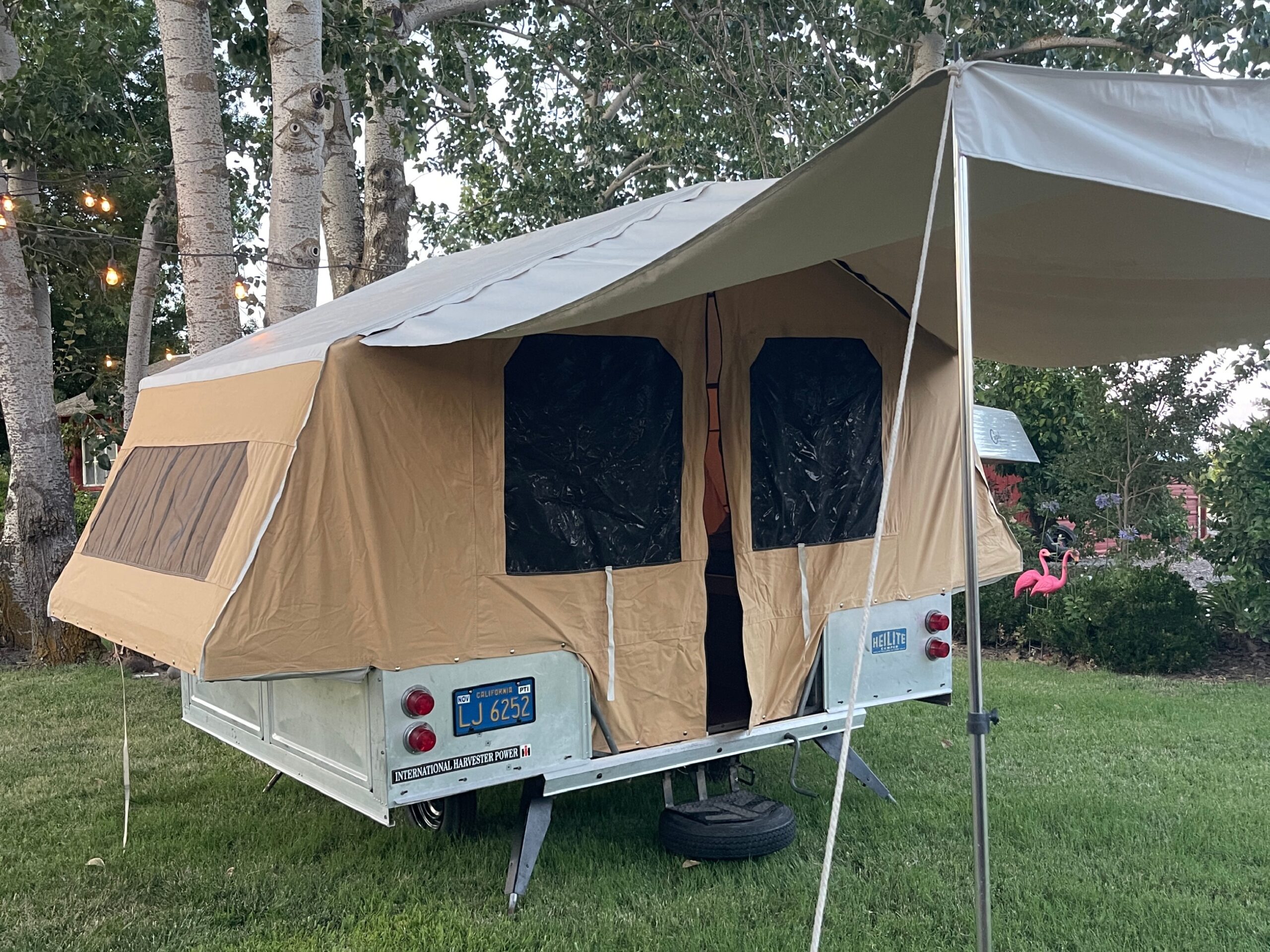
Long before today’s compact pop-up campers filled campgrounds, Heilite tent trailers were giving families a simple way to hit the road. Built in Lodi, California, Heilite trailers were small, light, clever, and easy to tow. They were made for people who wanted real camping comfort without pulling a full-size travel trailer.
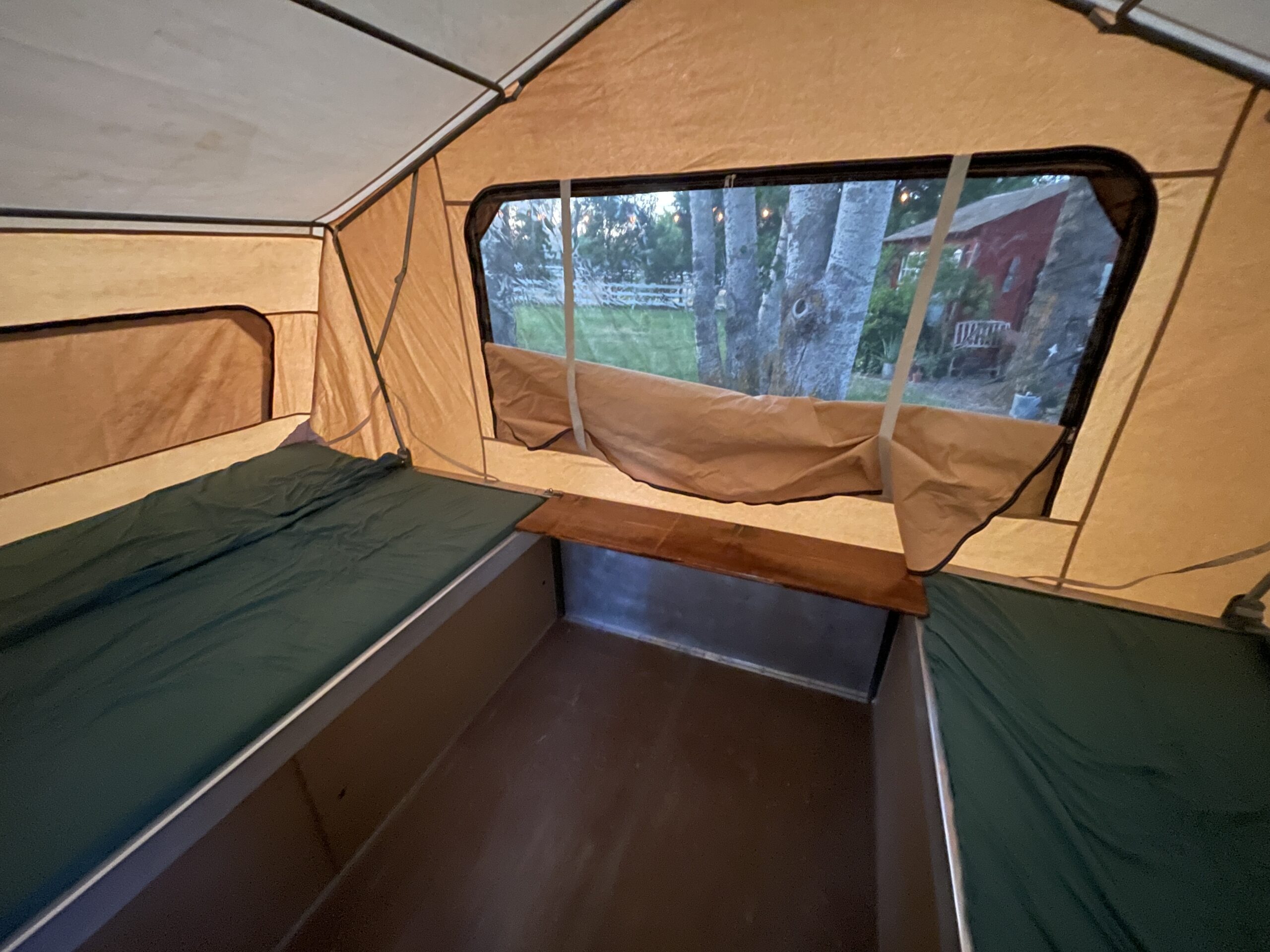
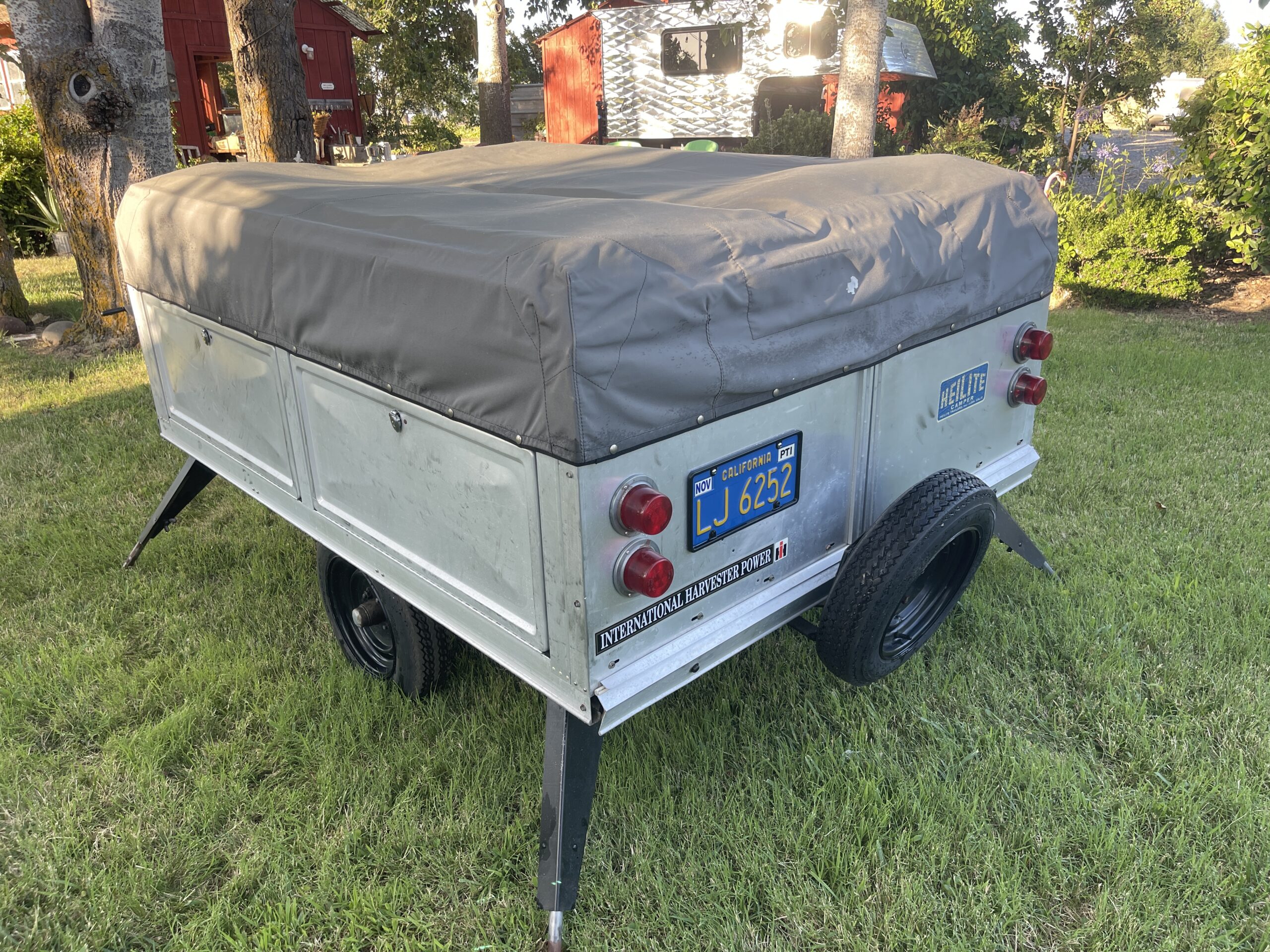
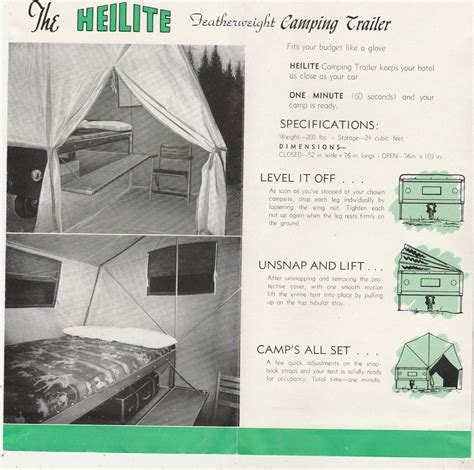
Heilite was founded by Theodore “Ted” Heil in Lodi. Heil had been working on the idea for years before the trailers became well known. His early designs used a lightweight aluminum body with a canvas tent that folded out from the trailer. The trailer box became part storage compartment, part bed platform, and part camping basecamp. It was a simple idea, but it solved a lot of problems for weekend campers.
The early Heilite trailers were famous for their single-wheel design. Instead of two wheels like most trailers, the original Heilite used one wheel that could swivel. Two hitch points helped hold the trailer steady behind the tow vehicle. This made the trailer easy to maneuver and helped it follow the car on tight roads. Heilite ads also promoted how fast the trailer could be set up, with some ads claiming it could be ready in about one minute.
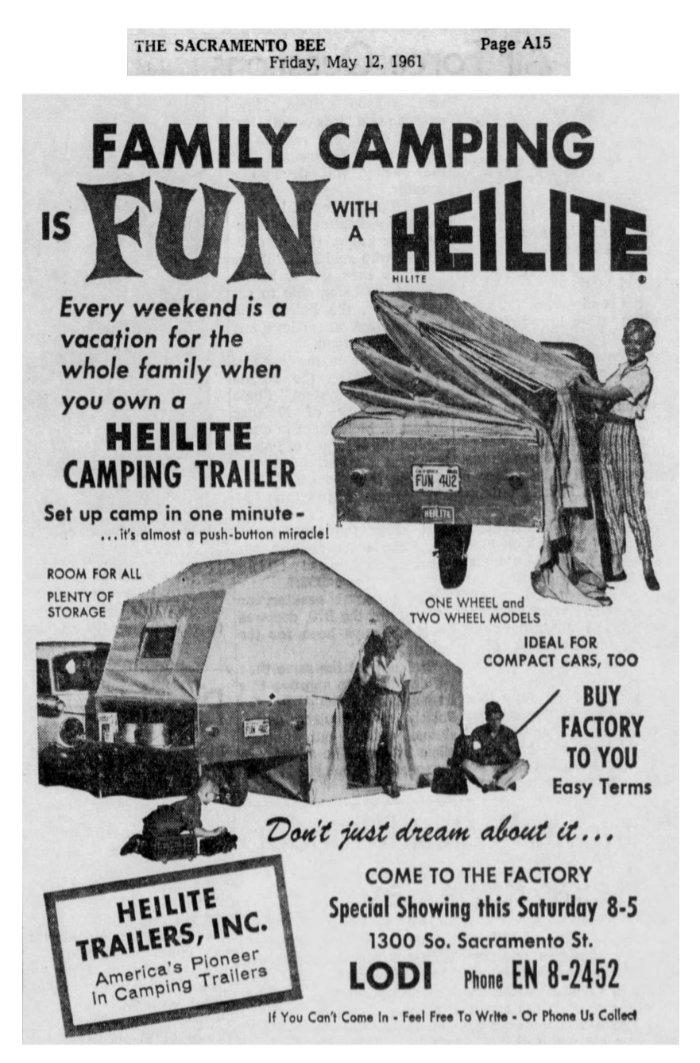
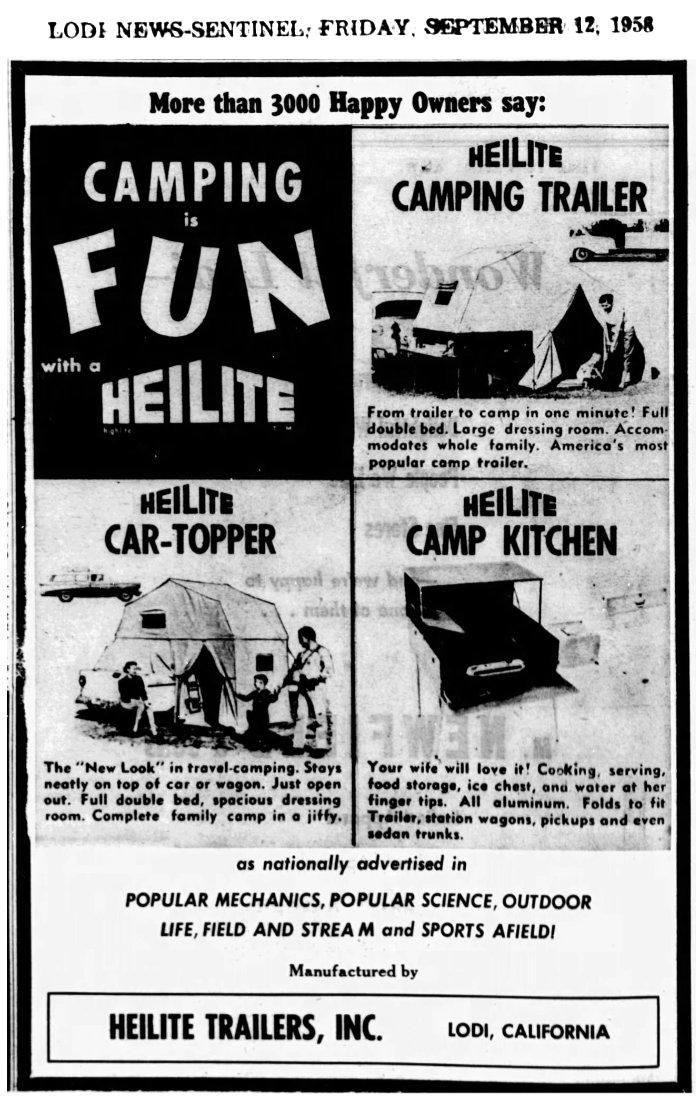
By the early 1960s, camping was changing. More families were buying compact cars, and more companies were entering the tent trailer market. Heilite responded by offering two-wheel models along with its original single-wheel trailers. The two-wheel version was introduced around 1960 and was aimed at small foreign and compact cars.
In 1963, Heilite introduced a larger model called the Heilite 170. This design used a crank mechanism to move the bed/storage compartments outward, which helped the tent expand into a larger camping space. The original Heilite camping trailer was known as the 161, or 162 when fitted with the larger “Big Tent.”
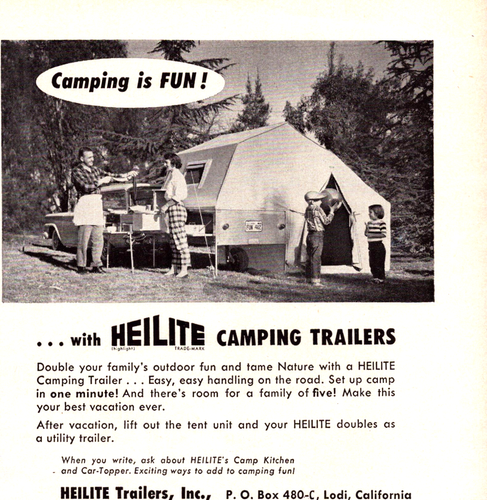
The company changed hands in 1964 when Ted Heil sold his controlling interest. By 1965, the Heilite 161 had been slightly updated and renamed the Viscount. The Heilite 170 became the Viking, and another model called the Valiant was added. The Valiant was similar to the Viking but used single beds instead of double beds.
Heilite advertising from the late 1950s and early 1960s shows just how well the company understood its customers. The ads sold fun, freedom, and family camping. They often showed smiling families, compact cars, simple setup, and roomy canvas shelters. One 1961 Sacramento Bee ad promoted the Heilite as a family camping trailer with one- and two-wheel models, plenty of storage, and a factory showing in Lodi.
Today, Heilite trailers are popular with collectors because they are different. They do not look like canned-ham trailers or aluminum travel trailers. They are part tent, part trailer, and part clever California invention. They also appeal to people with small cars, vintage Volkswagens, compact tow vehicles, and anyone who likes simple camping gear from the early RV era.
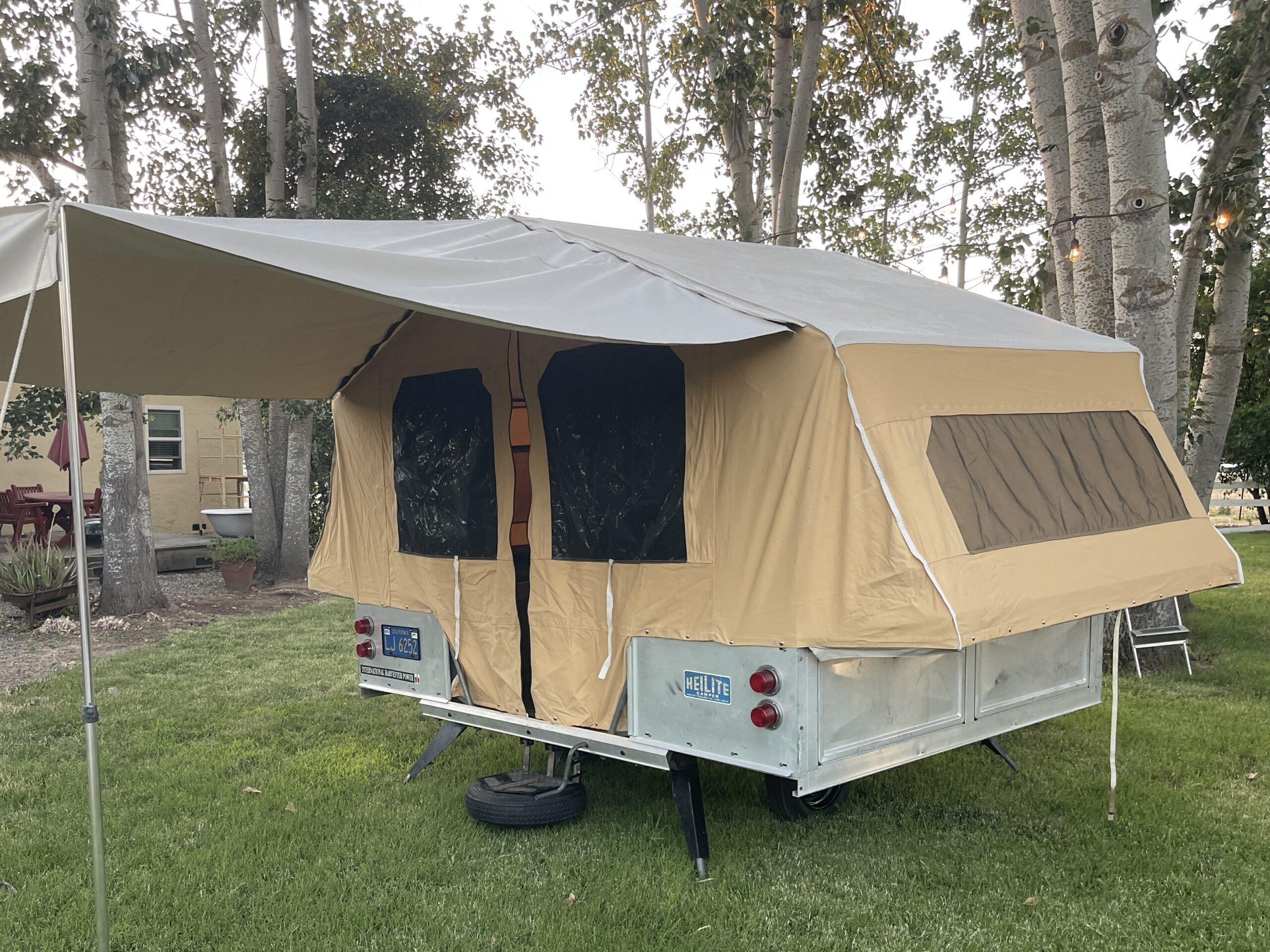
There is currently a 1964 Heilite expandable tent trailer listed for sale on the Vintage Camper Trailers classifieds.
For anyone who wants a vintage camping setup that is light, unusual, and full of conversation-starting charm, a Heilite is hard to beat. It is a reminder that some of the best camping ideas were not big or complicated. Sometimes they were built in a small California town, folded neatly into a little trailer, and opened up into a weekend of fun.

This one’s for sale!
I wish someone still made these. So many great lightweight vintage tent trailers, and so few options on the modern market.