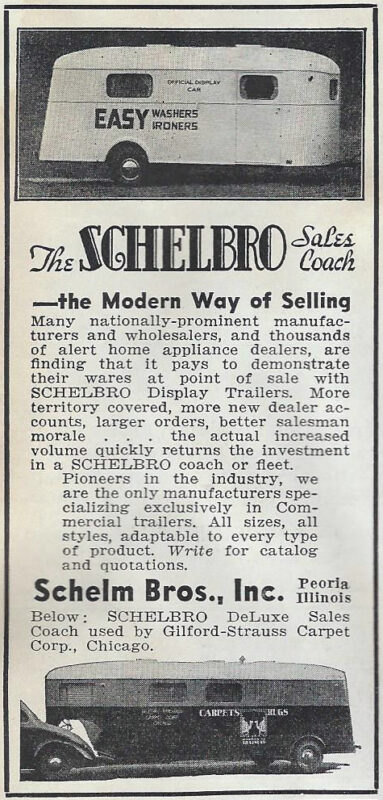

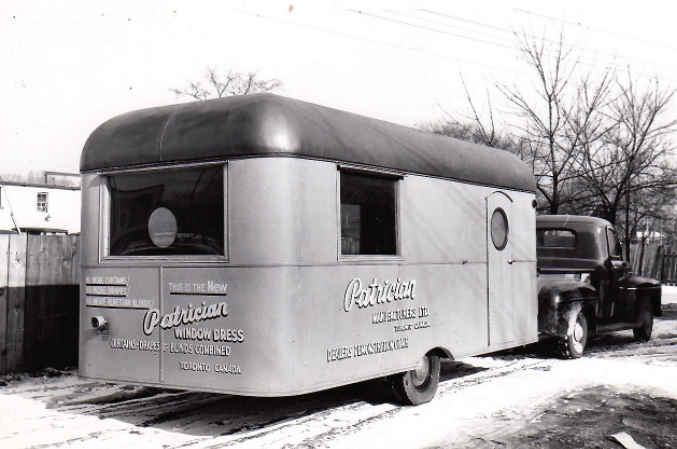
As early as the 1930s, travel trailers weren’t just used for recreation—they doubled as rolling advertisements and mobile storefronts. During the Great Depression, entrepreneurs and small manufacturers saw opportunity in mobility, hitching compact trailers behind their cars to promote everything from household goods to farm equipment. These early units often featured hand-painted graphics, bold lettering, and product displays built right into the exterior walls. Some served as demonstration kitchens, others as sample showrooms, allowing salesmen to travel town to town with their inventory in tow. Long before modern food trucks and branded RV tours became common, these pioneering road warriors were turning highways and small-town main streets into marketing corridors, proving that mobility and promotion were a powerful combination.
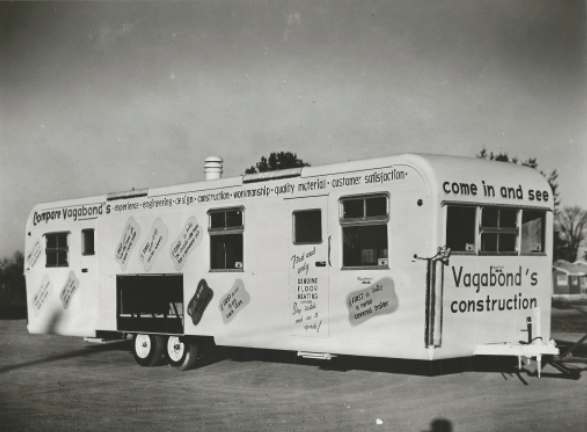
Vagabond used one of their own trailers as a billboard and a traveling sample of their quality construction. The holes in the siding were cutaways so you could see “inside” the walls. (Photo provided by Gordon Collins).
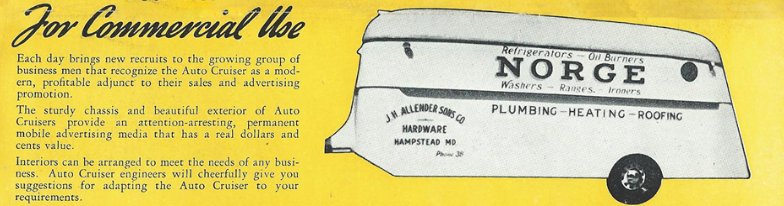
The ad above is from an Auto Cruiser sales brochure. The Auto Cruiser Company of America was based in Baltimore, Maryland.
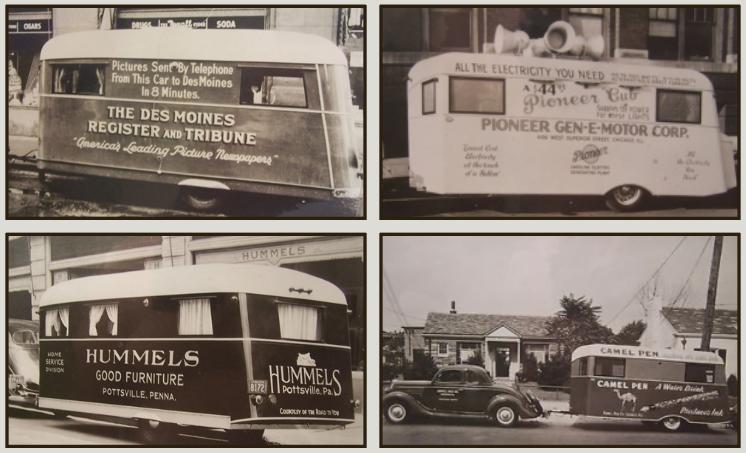
Covered Wagons used as business trailers in the 1930’s.
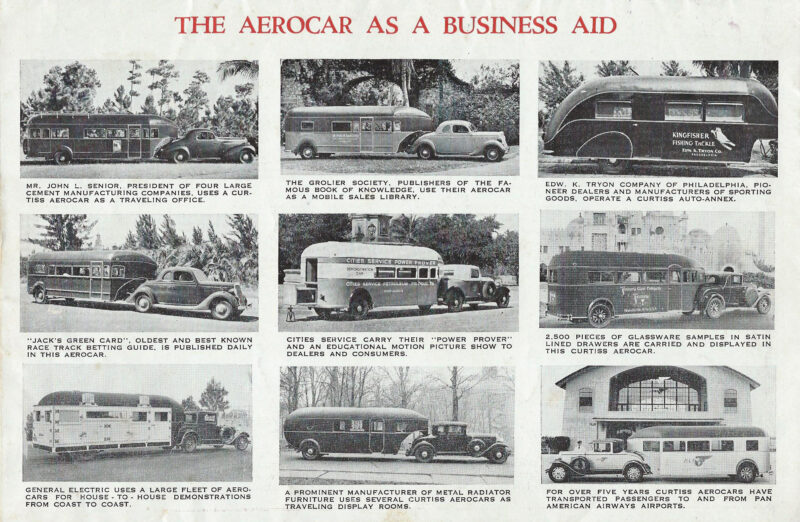
A page from the Aerocar brochure touting the different companies that use their trailers in their businesses. Even General Electric used them (bottom left).
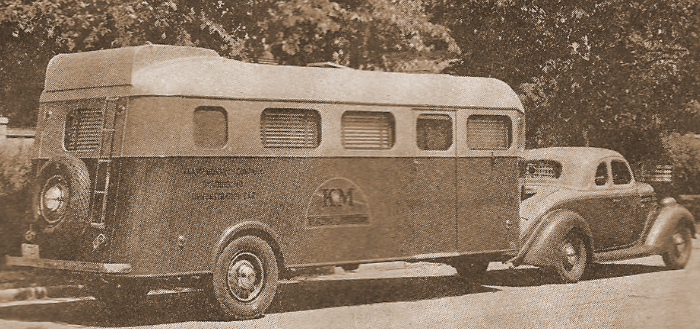
This image was in the Trailer Travel Magazine, 1937. It is one of the Knapp-Monarch units that was highly successful in promoting goodwill and sales. The article read: “We manufacture a popular-priced line of label electrical appliances, which includes such items as toasters, waffle irons, electric sad irons, electric curlers, etc. Then we have in our motor division a complete line of electric fans, small whippers, food mixers, etc. We also have another line, namely, the nationally known “Therm-a-Jug,” which is used by hundreds of thousands of persons for outings, picnics, etc. These are one-gallon jugs with which you are no doubt familiar.
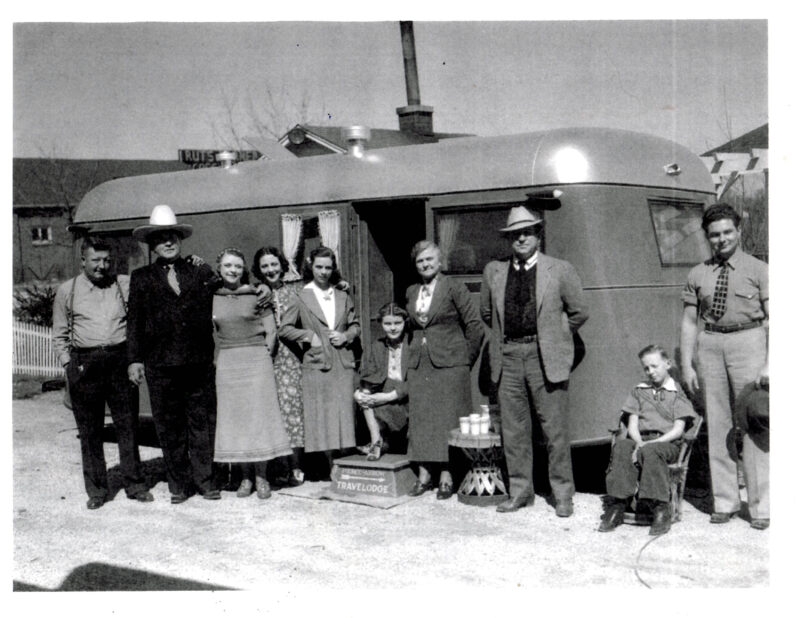
The man in the tall hat may be Sam Houston, and the picture may have been taken in Oklahoma.
Mr. Houston was originally involved with the Gentry Dog and Pony Show. He eventually became known for his independent show which traveled the US and Mexico. He owned Balto the Dog who Saved Nome, Cheetah, the Pancho Villa death car and many other exotic items. Miss Adonna Houston was the daughter of J. Sam Houston.
Miss Houston worked at Fairyland children’s park in Oakland, CA. She was the Old Woman in the Shoe but when Count Popo De Bathe (resident clown) went on UNICEF trips, she filled in for him as Lolo the clown. Schultz knew Adonna (Lolo) very well and worked with her at Fairyland for years.
A trailer would have made perfect sense if you were traveling with the circus!