
This can’t be stressed enough: always use trailer-rated tires on your trailer. Trailer tires are specifically engineered for the rigors of towing, especially when it comes to sidewall construction. Running standard automotive tires on a trailer is a bad idea and can lead to handling issues, tire failure, and even liability if that failure causes an accident.

Vintage Tires: Age Matters More Than Tread
Every tire has a manufacturing date code molded into the sidewall in the format 4020 (where 40 is the week and 20 is the year it was made). If you don’t see this format, the tire is likely more than 20 years old.
As a general rule, trailer tires should be replaced 5 or 6 years from the manufacturer’s date, regardless of how good they look. This is inexpensive insurance for your vintage trailer. When a tire blows or the tread separates, it can cause serious damage—often tearing up fenders, belly pans, and, in some cases, even the interior of the trailer!
Trailer tires usually don’t wear out the way car tires do—unless something is misaligned and causes uneven wear. More often, they simply get too old.
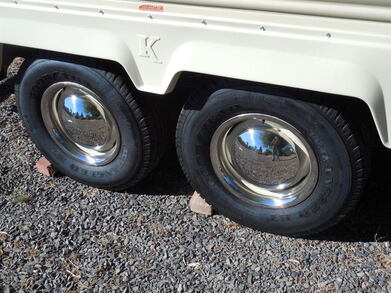
Tire Pressure Is Critical
Every tire lists its maximum recommended pressure on the sidewall. Maintaining proper tire pressure is essential for safe towing and can also improve gas mileage. Under-inflated tires run hotter, wear faster, and are more likely to fail.
Radial or Bias Ply?
I personally use both, depending on the trailer.
For smaller trailers under 20 feet, I typically use radial trailer tires. They tend to provide a smoother ride for lighter trailers, although they can bounce a bit on rough roads. One downside of radials is that, in the event of a tread blowout, the steel belts can cause more damage to the trailer.
For larger trailers (21–40 feet) weighing 10,000 pounds or more, I prefer bias-ply trailer tires. Their thicker sidewalls are better suited for heavy loads. I’ve found that bias tires on larger trailers provide a smoother ride, allow for easier acceleration, reduce bounce due to the trailer’s weight, and even allow for longer coasting thanks to reduced surface drag. In some cases, I’ve seen towing fuel economy improve by as much as 1 MPG with the largest trailers.