
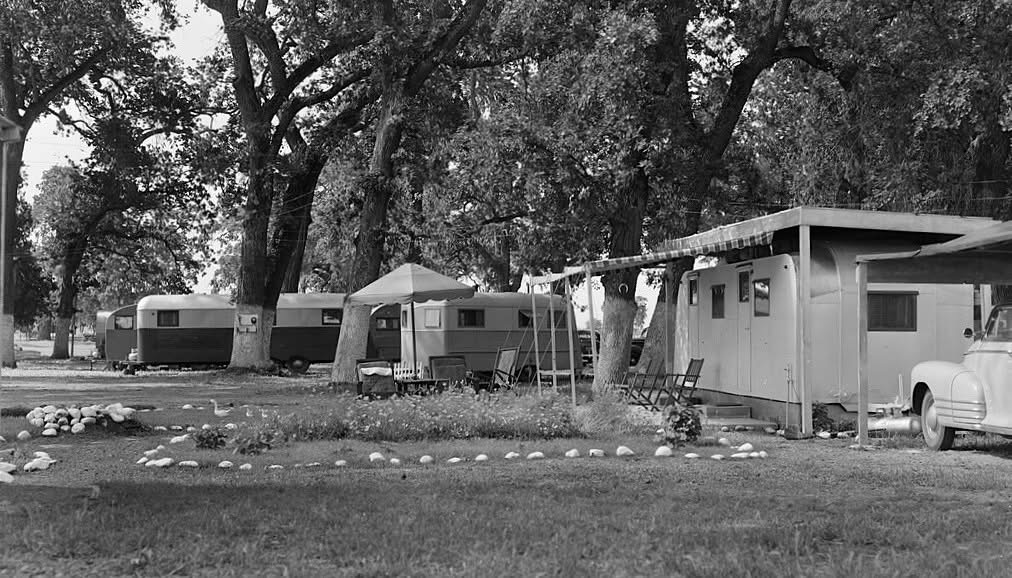
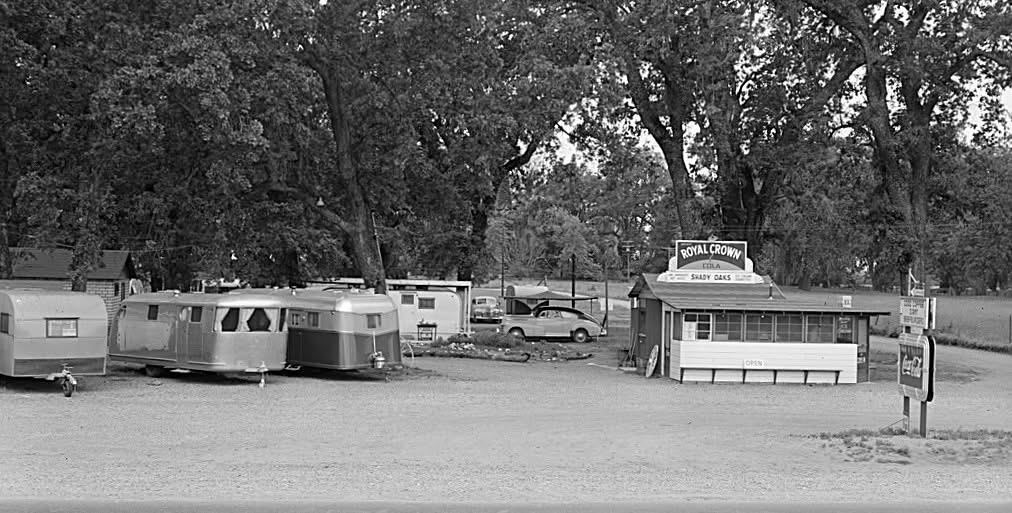
These photographs show Shady Oaks Trailer Park on Nord Avenue in Chico, California. Taken in 1948 by photographer Jervie Henry Eastman, they capture a trailer park on the doorstep of midcentury America. Small trailers sit beneath large oak trees. Tow vehicles are parked nearby. A simple office or store stands near the entrance. There are no swimming pools, concrete patios or elaborate entrance signs.
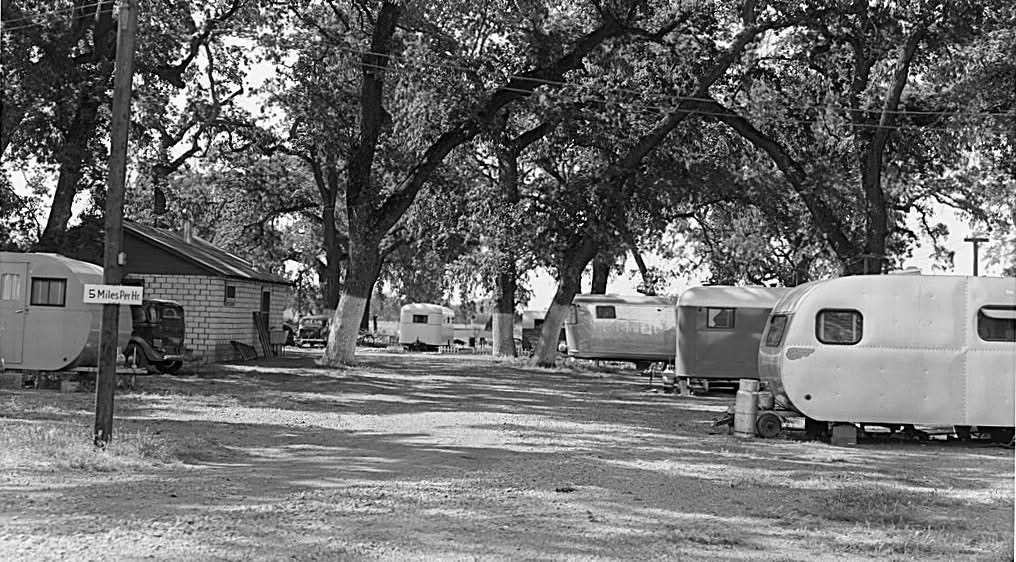
It looks peaceful, practical and lived in.
The trailers are the first things most of us notice. Their shapes, windows and polished or painted exteriors are familiar to vintage trailer collectors today. But when these photographs were taken, the trailers were not vintage. They were current models being used for travel, affordable housing and temporary homes.
Some residents may have stayed for a night or two. Others likely remained for weeks, months or even years. A trailer park could serve tourists passing through town, workers who needed a place to live and families looking for an economical home.
More Than a Place to Park
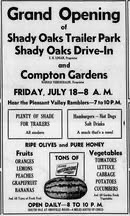
The newspaper advertisement shown with the photos promoted the grand opening of Shady Oaks Trailer Park and the Shady Oaks Drive-In. It invited visitors to arrive at 8 a.m. on Friday, July 18. There would be live music by the Pleasant Valley Ramblers that evening, along with fruit, vegetables, ripe olives and pure honey for sale.
That combination says a lot about early trailer parks. This was not simply a row of rental spaces. It was also a small local business and a gathering place. Travelers could stop, purchase fresh food and hear some music. Residents had a convenient place to shop and meet their neighbors.
The drive-in was probably less like the fast-food restaurants we picture today and more like a roadside produce market. Signs advertising tomatoes, potatoes, carrots and cucumbers were just as important as signs announcing trailer spaces.
“These parks offered more than a place to stop. They created small communities along America’s growing highway system.”
Life Beneath the Trees
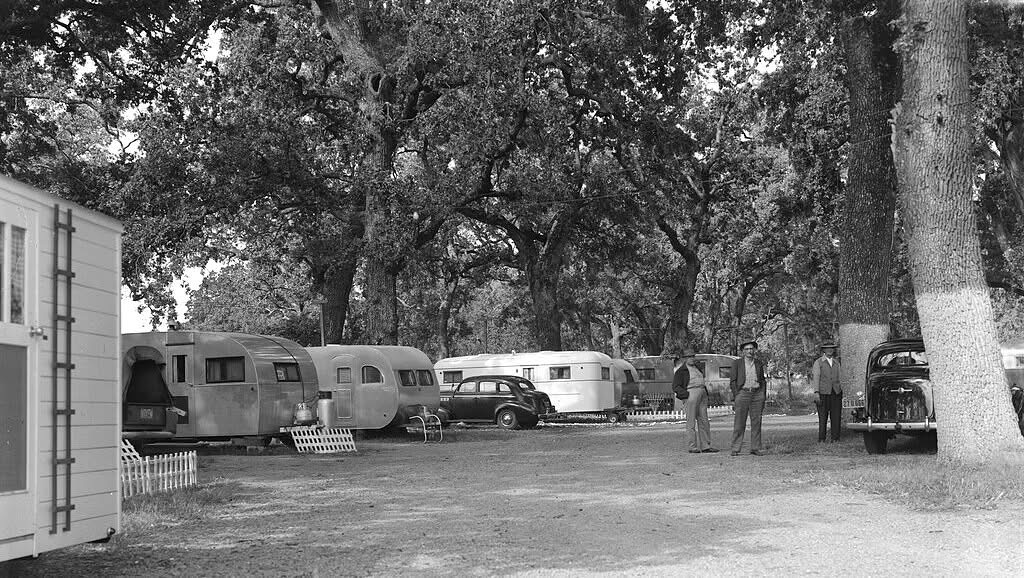
The park’s name was well chosen. Large oak trees stretch across nearly every photograph, giving the trailers plenty of shade. Before rooftop air conditioners became common, a shaded campsite made a major difference during a hot California summer.
Look closely and you can also see the beginnings of outdoor rooms. Chairs, small tables, garden borders and simple additions helped residents make each space their own. The trailers may have been small, but much of daily life took place outside.
There is also a relaxed arrangement to the park. The trailers are not packed tightly together or separated by tall fences. Cars and trailers share the dirt lanes. Trees determine the layout as much as property lines do.
Early auto camps had already been serving road travelers for decades, often providing water, toilets, showers and laundry facilities. After World War II, Americans traveled more, highways improved and trailer ownership grew. Trailer parks became an increasingly familiar part of the roadside landscape. The National Park Service notes that auto camps and similar facilities helped shape the lodging and services created for motorists. (National Park Service)
A Small Window Into Trailer History
Today, many early trailer parks have disappeared or changed beyond recognition. Their original trailers were removed. Dirt roads were paved. Shade trees came down. Small offices and produce stands gave way to larger buildings.
That is what makes photographs like these so important. They show the trailers in the world for which they were built. They also remind us that the vintage trailer story is about more than manufacturers and models. It is about the roads people traveled, the places they stayed and the communities that formed around them.
The surroundings may have changed, but the best part of trailer camping remains much the same: pull in, set up your chair and see who your neighbors are.
Historical note: The Shady Oaks photographs are cataloged as 1948 images in California’s Calisphere collection. The park scenes were photographed by Jervie Henry Eastman. (Calisphere)