
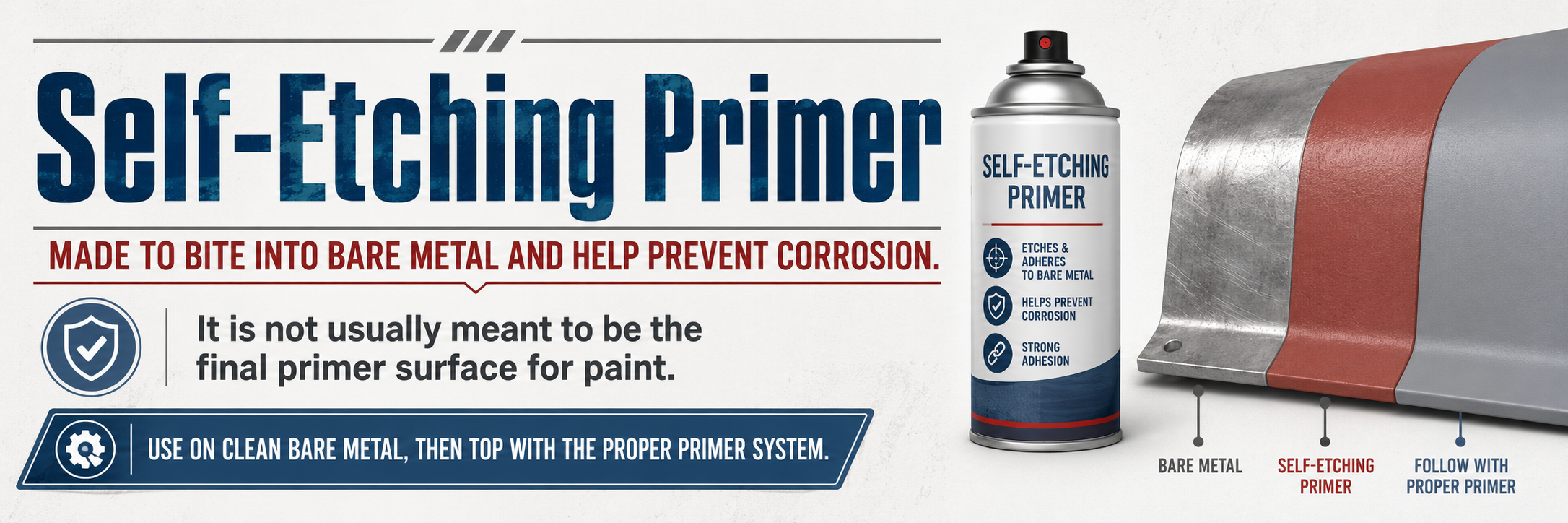
Most trailer siding is aluminum. Bare aluminum is a non-ferrous metal that does not hold paint well without proper preparation. Before painting bare aluminum, be sure to prepare the surface and use a self-etching primer. Self-etching primer is mainly made to bite into bare metal and help prevent corrosion. It is not usually meant to be the final primer surface for paint. For a vintage trailer, treat self-etching primer as a bare-metal treatment rather than the main paint foundation. After it flashes/dries, cover it with a compatible primer or sealer before paint.
Rattle Cans (Spray Paint)
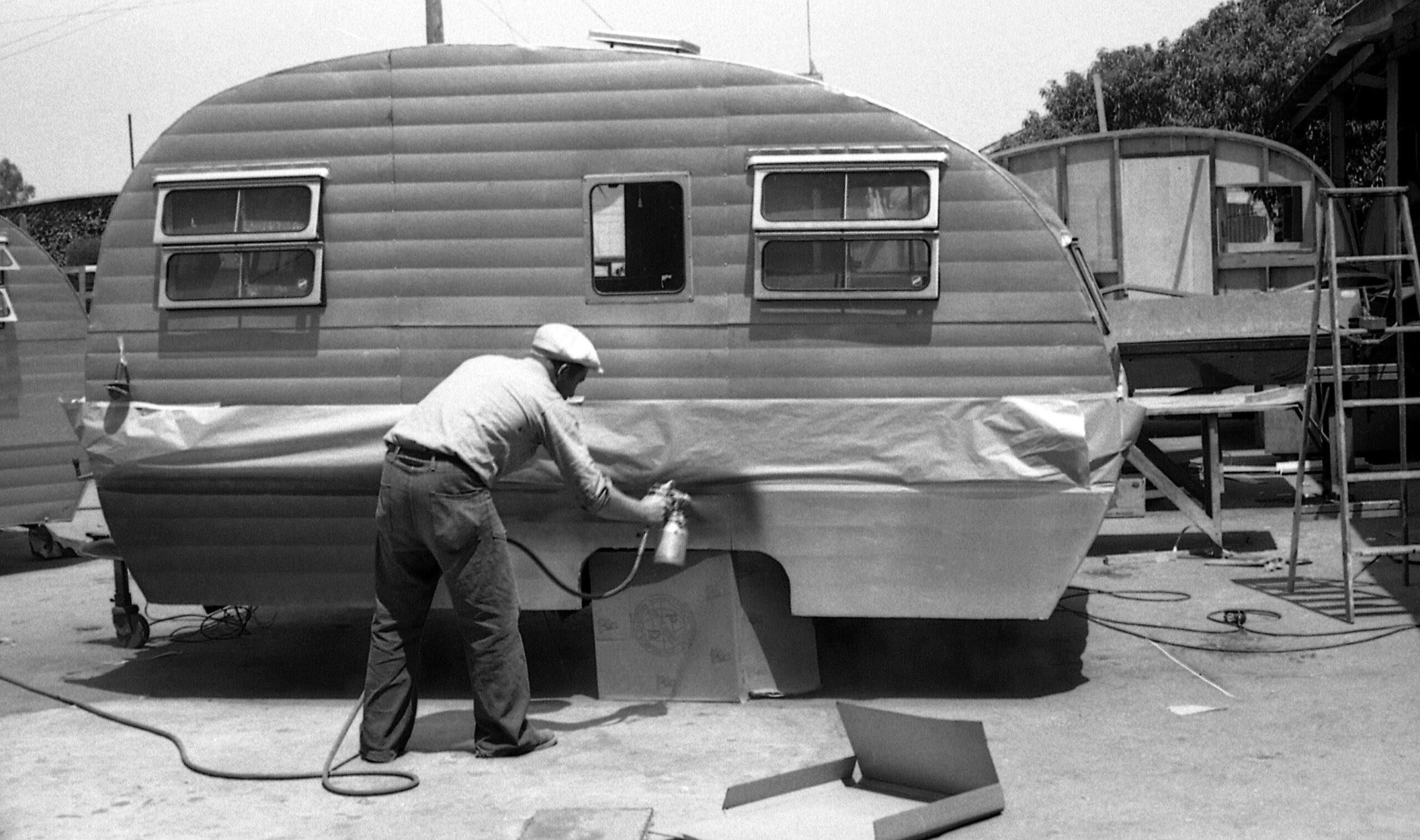
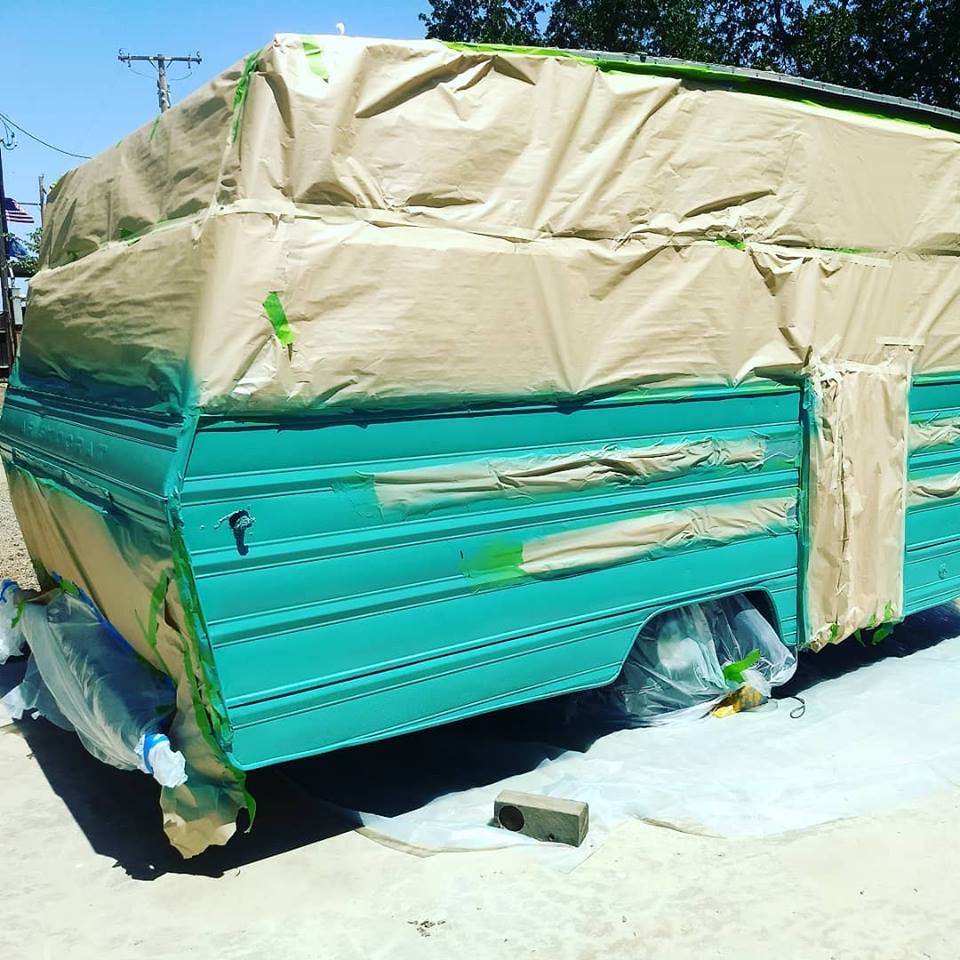
Economical and easy to use, quality spray paints are readily available in many colors, finishes, and gloss levels. Spray paint works best for painting stripes, bumpers, wheels, and smaller items. Trying to achieve a uniform sheen across an entire trailer may be more difficult. If you are going to attempt it, use natural breaks in the panels, seams, and windows to isolate and spray small areas at a time.
I like to use hammertone paints (for accents/stripes and small hardware) because they produce a more forgiving, textured look. I have even used white hammertone paint to blend in spots where the original finish on a trailer had worn away over time.
Direct-to-Metal Paints
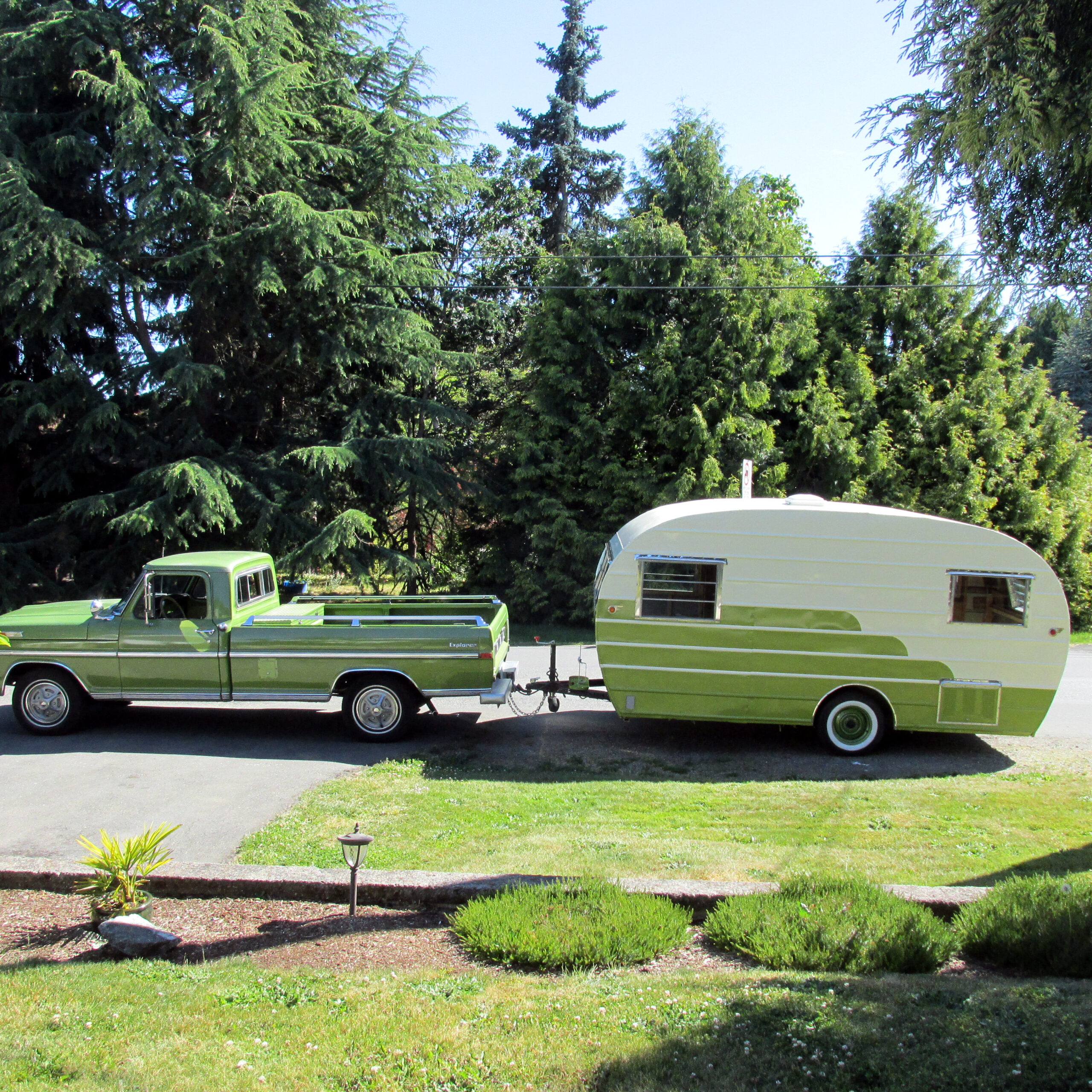
DTM paints have been specially formulated to be applied over metal surfaces, often with less surface preparation than traditional paints. They are commonly used in industrial applications and can form a strong bond to ferrous and non-ferrous metals, galvanized metal, previously painted metal, iron, and steel. Some are developed especially for aluminum. Check with your professional paint supplier to make sure you are using the right product for your project.
House Paint
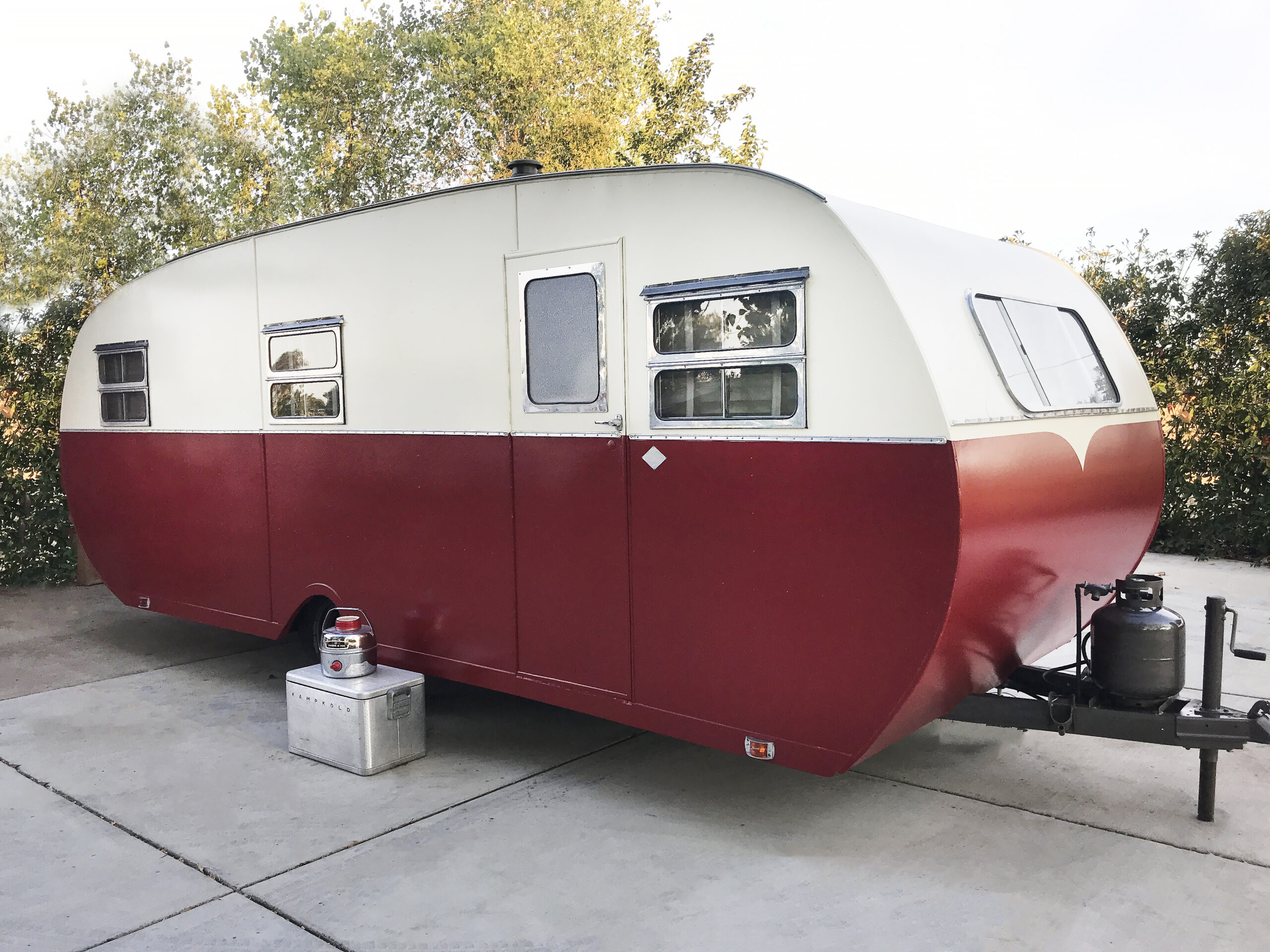
House paint is economical and easy to use. It can be applied with a fine roller or an airless sprayer. A sprayer is preferred for a smoother surface. You can have almost any color matched at a home improvement store, although we recommend working with a professional paint supplier when possible.
Use the highest-quality paint you can afford. House paint was made to sit out in the sun and hold up for years. We use a semi-gloss sheen that does not have the same shine as automotive paint. I prefer this finish on traditional Masonite and homebuilt trailers.
When selecting colors, regardless of the type of paint, remember that lighter colors will show fewer imperfections. Pastels and whites may be the way to go if your siding is showing its years of camping.
If you are painting your interior, do not go cheap. Use quality paint and applicators. Remove the hardware before you paint for a cleaner, more professional finished look.
Automotive Paints
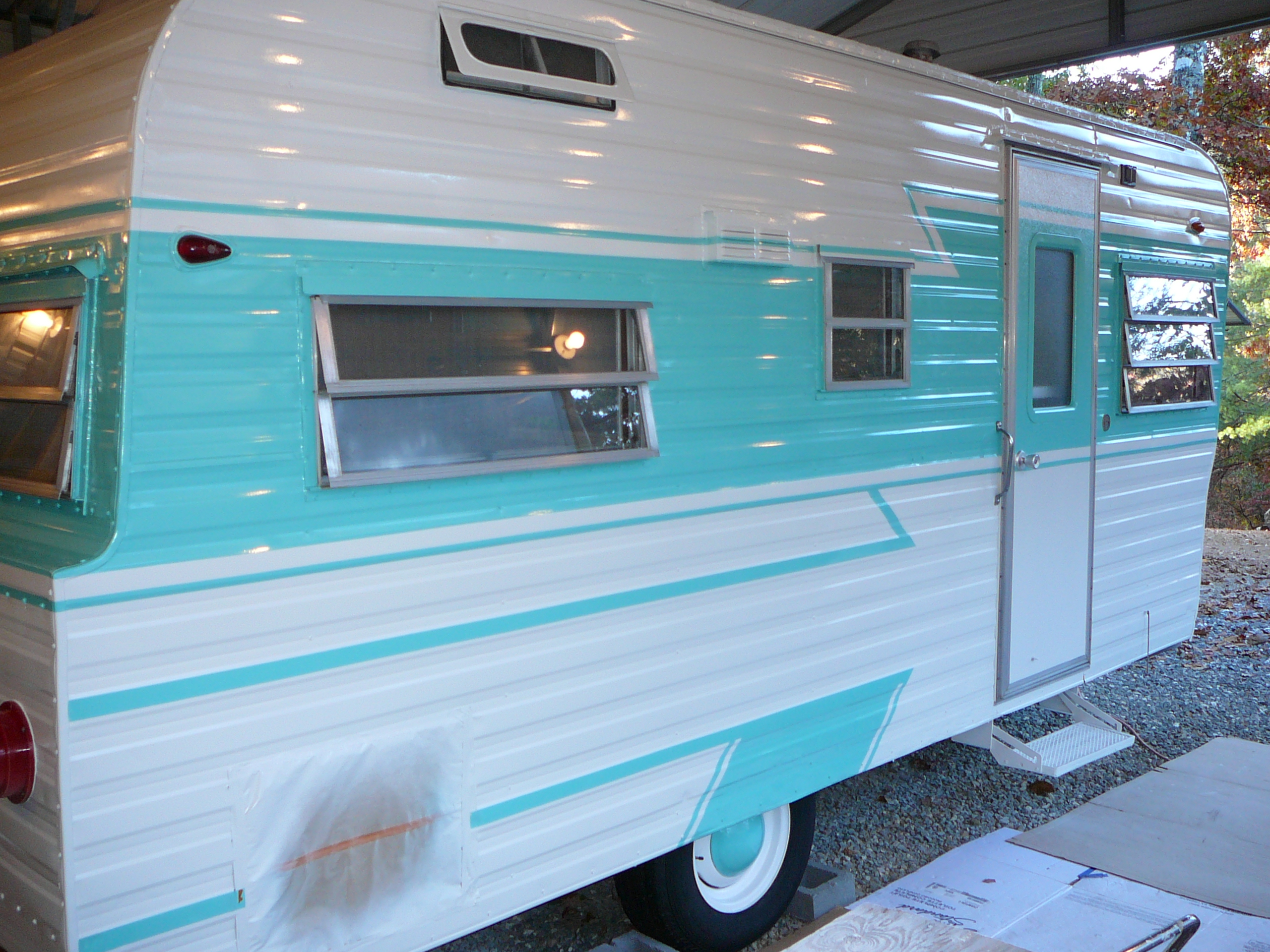
There are two main types of automotive paints: single-stage and two-stage.
The difference between single-stage paint and two-stage paint is that single-stage paint is sprayed on after the primer, and then you are done. There is no need to apply a clear coat because the paint is made with a glossy finish.
Two-stage paint separates the color from the clear coat, giving the finish a deeper, glassier look than single-stage paint. The base coat is applied after the primer and has a dull, matte finish. It provides uniform color coverage. A separate clear coat is applied as the final step, creating a translucent layer that can be finished to a higher shine.
Single-stage paint can be finicky. Spray it too close, and you may get runs. Spray it too far away, and it may lay on dry. You need to have good control of the spray gun and apply the right amount of material to achieve a final gloss, avoid dry or dull spots, and prevent runs.
Spraying standard base colors with two-stage paint is generally simple and easy to control. You get better coverage, which means less variation in color, plus a deep, rich, opaque finish. The extra skill comes with applying the clear coat properly.
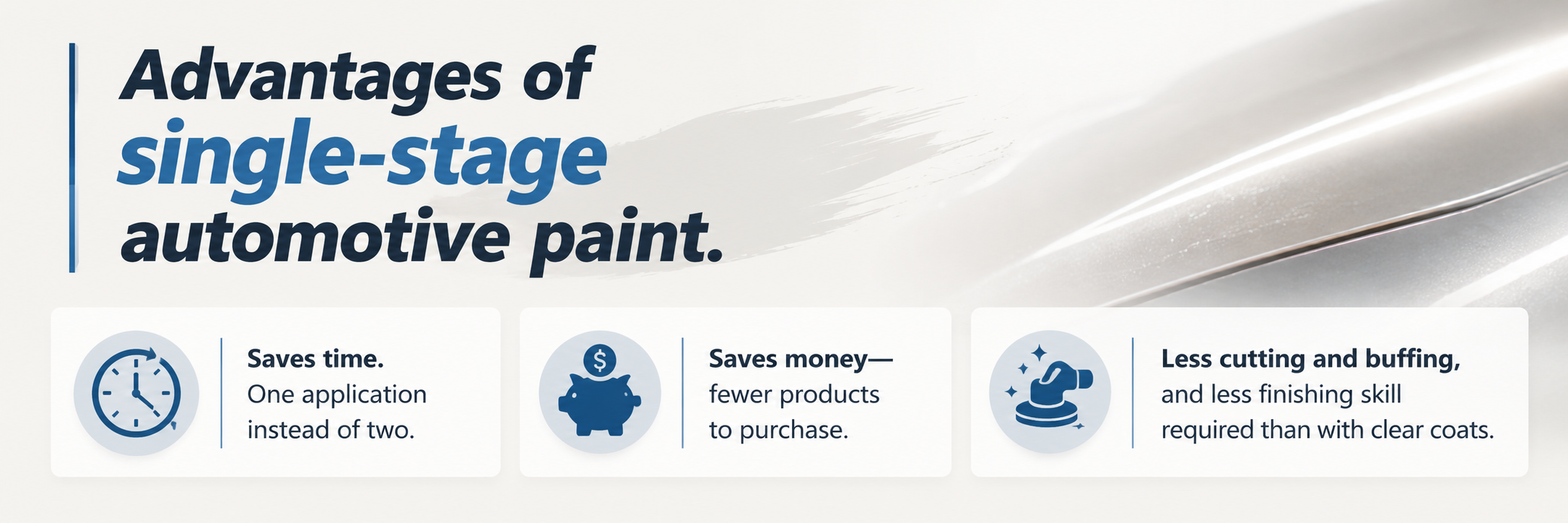
Beginners and DIY enthusiasts who want to maximize cost-effectiveness and minimize the time needed to spray a trailer may want to use single-stage paint. Single-stage paint is a good option for many camping trailers.
If a single-stage finish coat is exposed to direct sunlight all the time and the trailer is stored outdoors in the weather, it will usually go dull more quickly than two-stage paint. Because of the clear coat, two-stage paint will also be shinier than single-stage paint.
If you are dissatisfied with the shine of your single-stage paint, you can spray a clear coat over it to improve the shine. Just remember to properly prep the surface to ensure adhesion before applying the clear coat.
If you have more skill and access to a paint booth, you can use two-stage paint. It is typically used on high-end automotive paint jobs. Evaluate your overall investment in the trailer and how it will be used. For most camper trailers, this finish is probably more than you need.