
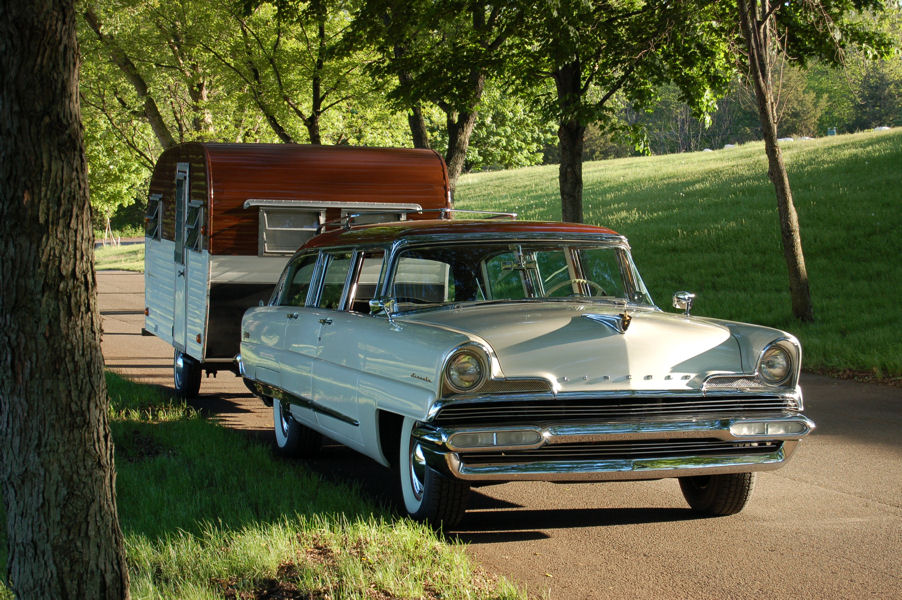
I grew up in a family with a lake house, so camping wasn’t part of my childhood. What was part of my life, however, was antique cars. My father collected them before I was born and continued throughout my youth, and naturally I picked up the hobby—some might call it an obsession. I bought my first antique car at age 18 and still own it more than 40 years later.
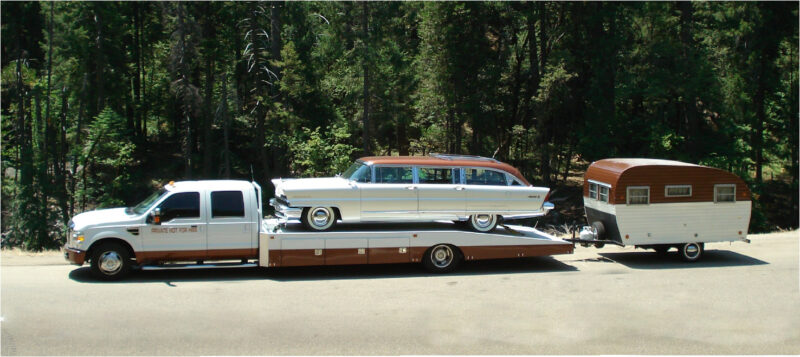
Most of my cars have been original or restored to factory stock. But in the late 1990s I had a custom resto-rod built by The Carolina Rod Shop in Greenville, South Carolina—a 1956 Lincoln station wagon that I named the Pioneere, a blend of Lincoln’s Premiere model name and the Dodge Pioneer wagon.
Over the years I’ve bought and sold a large number of vintage cars, boats, and campers. In fact, when I’m not traveling, I live in a warehouse with glass walls between the living space and the garage so I can see my cars even while cooking dinner.
Discovering Vintage Campers
My introduction to vintage campers happened almost by accident. In 2000, a local taxi company closed and auctioned off its equipment. I went looking for car parts and instead came home with a 1960 Arrow 12-foot camper built in Elkhart, Indiana.
After selling some extra items that came with it, I ended up with a free camper and $800 in my pocket.
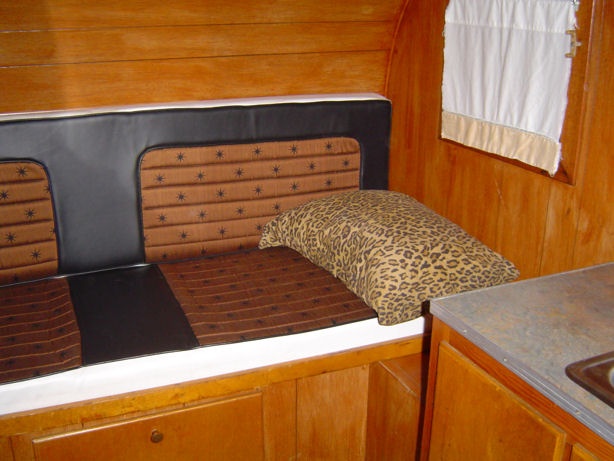
The Arrow had been used as a break room inside the taxi company’s building, so while it smelled like cigarettes and had a pile of broken TVs inside, it thankfully had no water damage. After cleaning it up, adding appliances, new cushions, and fresh paint, I restored it to match my Pioneere wagon and planned to use it as a “rolling picnic basket” at car shows.
But then I took it camping—and discovered how much fun it was.
Tin Can Tourists and Bigger Trailers
Soon after, I discovered the Tin Can Tourists and attended a rally at Camp Dearborn in Milford, Michigan. The vintage trailers, old cars, and friendly people made a lasting impression.
The only issue was that my Great Danes didn’t fit inside the little Arrow.
That led me to a larger project—a 1948 McComb 22-foot camper that had been gutted and used as a garden shed. I planned to build a custom interior for the dogs, but after working through the layout I realized it still wasn’t big enough.
So the search continued.
The 1953 Spartan Manor
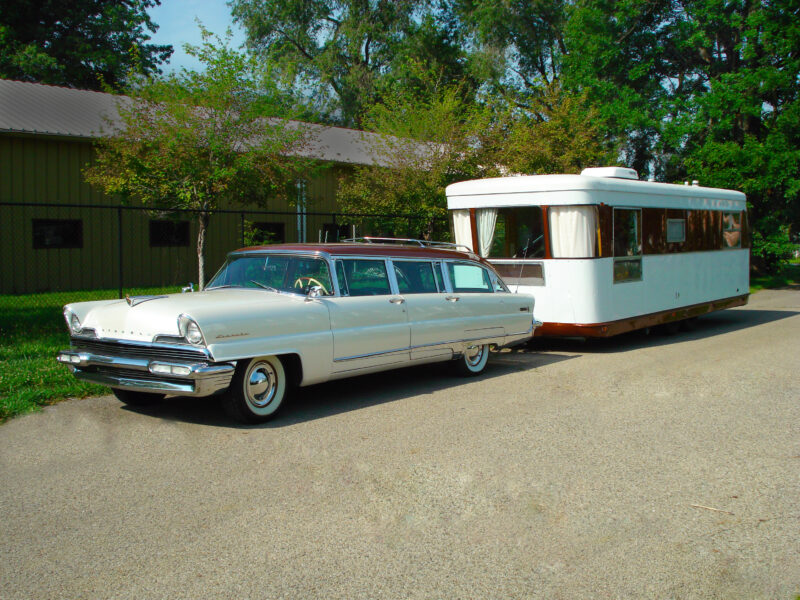
In 2004 I visited Dan Piper at Vintage Campers just to look around—and ended up bringing home a 1953 Spartan 27-foot Manor.
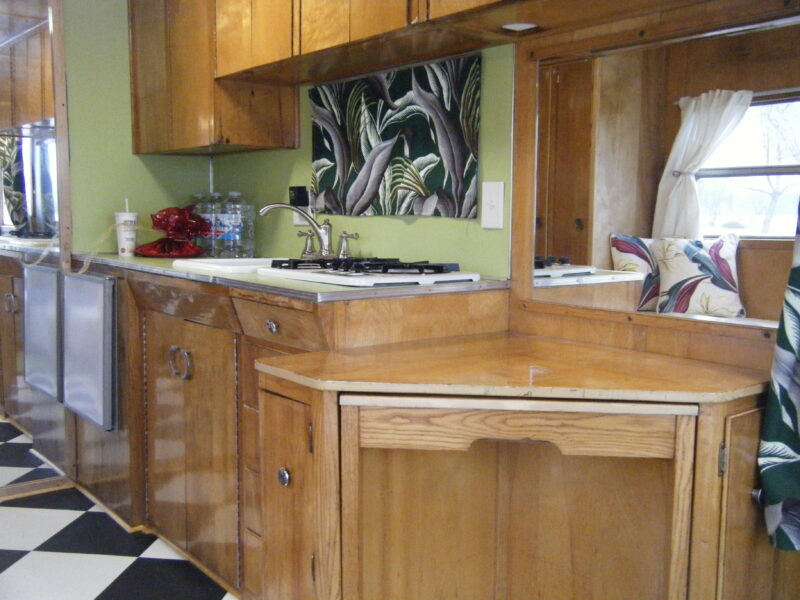
The trailer was mostly original but missing key items like the refrigerator, stove, furnace, and even the entire bathroom. I managed the restoration in my warehouse and added extra Spartan windows to create a brighter interior.
During the rebuild I decided to paint the exterior to match the copper and white color scheme of my Arrow and Pioneere wagon, making it one of the few Spartans not finished in natural aluminum.
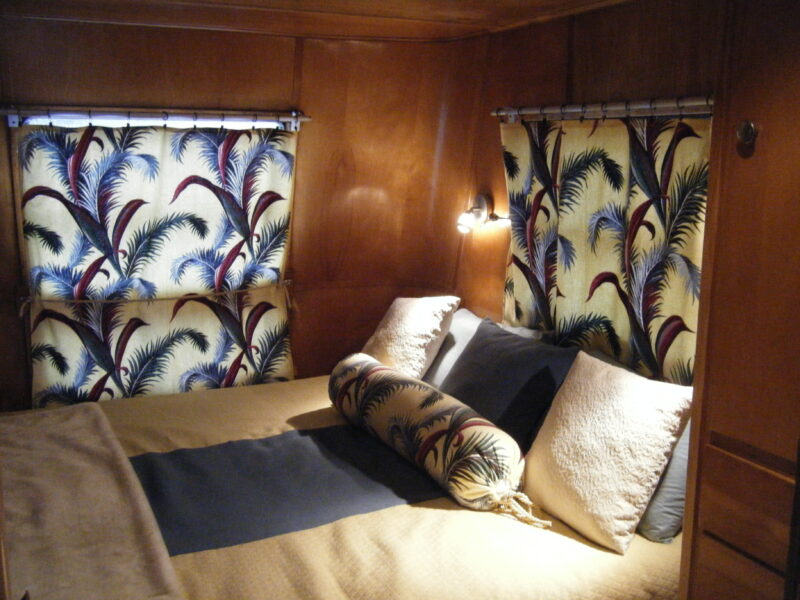
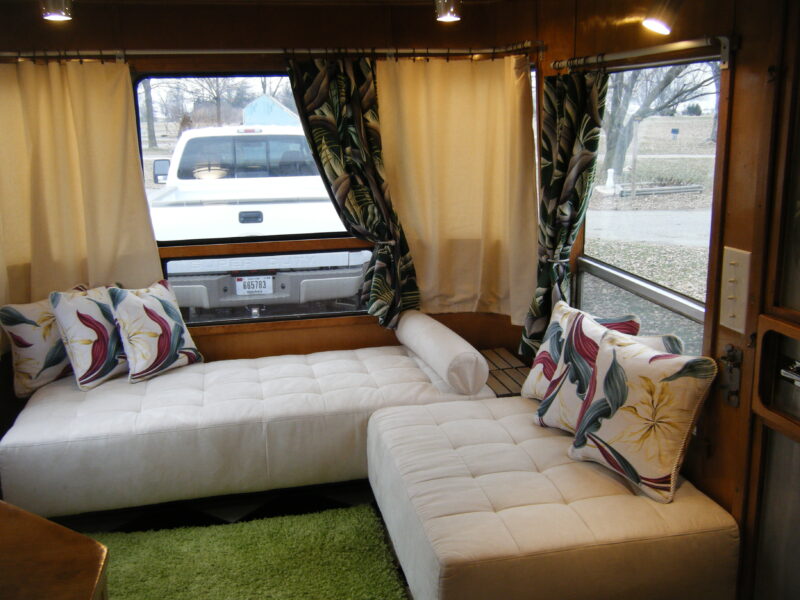
Inside, about 85% of the original woodwork remains, along with the factory cabinets and pull-out dining table. I replaced the bathroom with a hidden toilet under a window seat and installed a king-size bed, along with modern appliances and a couch for the dogs.
“Automotive Grrranimals”
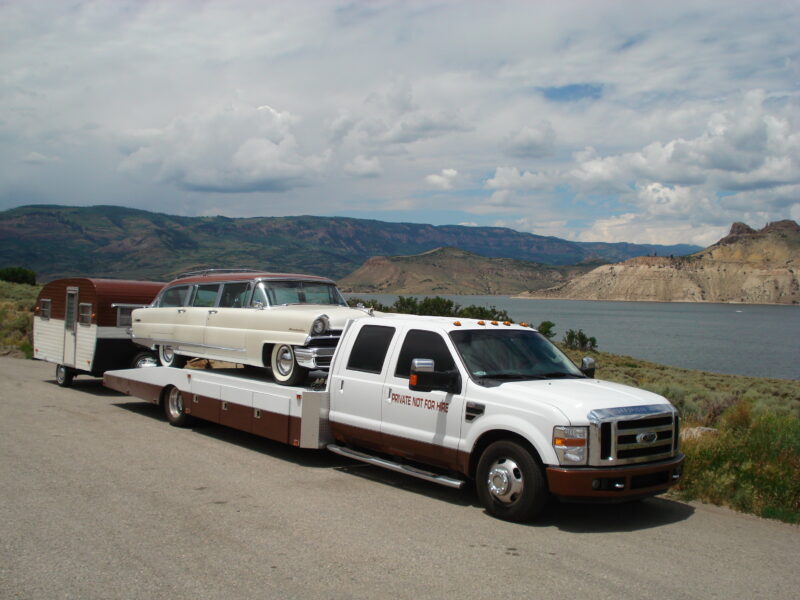
My collection of vehicles—truck, wagon, campers, and hauler—are all painted to match. I jokingly call them my “automotive grrranimals,” inspired by the old Garanimals children’s clothing line where kids could match animal tags to coordinate outfits.
Like those clothes, I can mix and match my vehicles depending on the trip.
Since restoring them, the Pioneere wagon has traveled to 29 states, the Arrow to 21 states, and the Spartan to 31 states, including the full length of Route 66. The Spartan alone has logged roughly 80,000 miles.
These days I spend 150 to 175 nights a year camping, wintering in Key West and traveling around the Midwest during the warmer months.
The “Goldilocks Camper”
The Arrow is too small for the dogs, and the Spartan is a bit large to comfortably tow with an antique car. So I’m restoring a 1954 Airfloat 20-foot camper—large enough for the dogs but small enough to tow with a vintage vehicle.
It will be pulled by a 1972 Cadillac Fleetwood clamshell station wagon, whose interior is nice—but not so nice that I’m afraid to let the dogs ride along.
Because sometimes the perfect camper is simply the one that’s just right.
Condensed from the original article published in Issue 44 of the VCT Magazine