

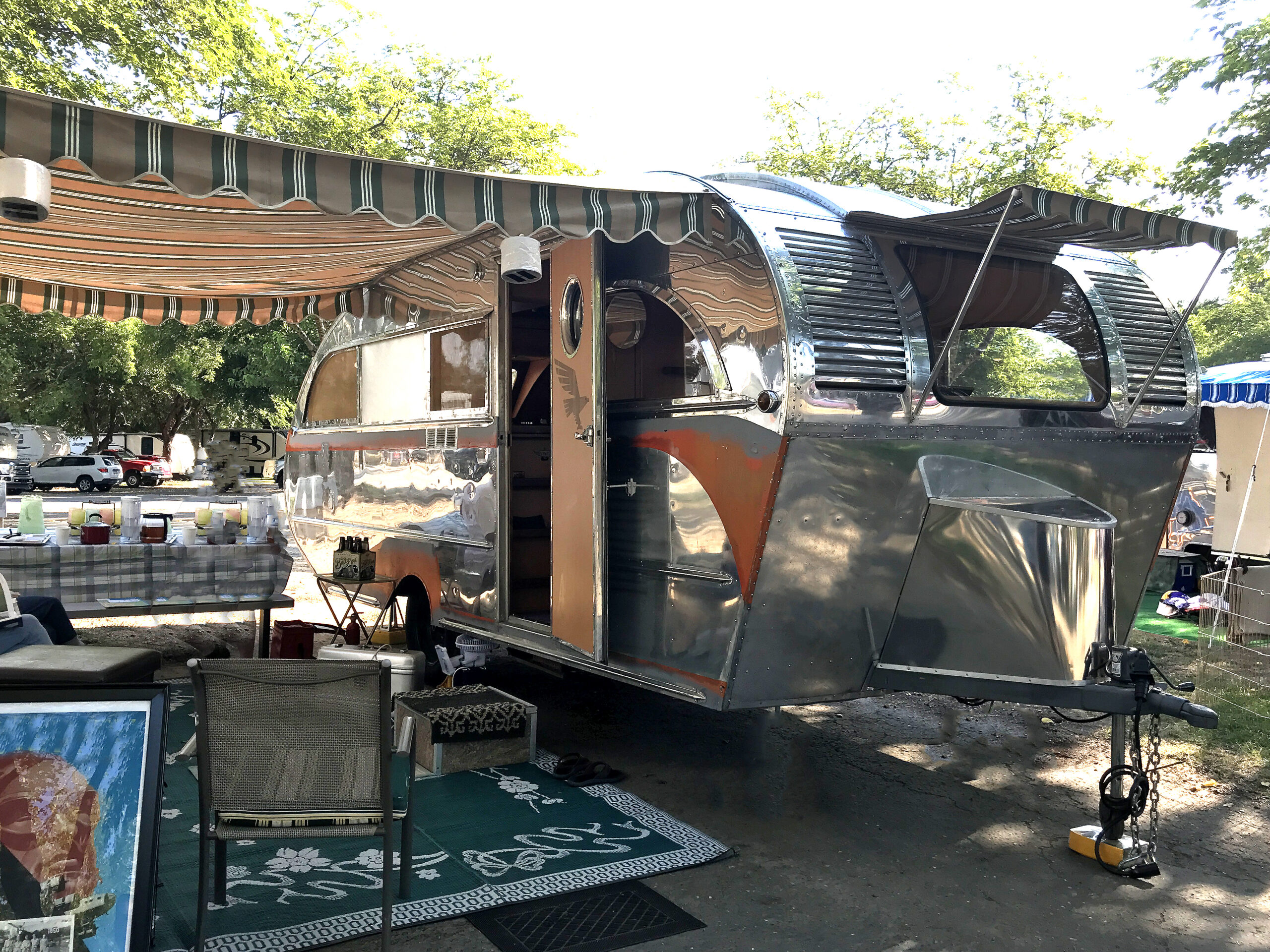
Every so often, a trailer shows up in the Vintage Camper Trailers Magazine online classifieds that feels like more than just a listing — it feels like a piece of American history. This 1947 Aero Flite is one of those trailers. This trailer is for sale if you are in the market for a piece of rolling art.
To really appreciate it, you have to start before 1947.
The company that ultimately built Aero Flite trailers traces its roots back to the early days of aviation under the Wally Timm Company. In 1942, Wally Timm sold the business, and it became Aero Services, Incorporated. Under the leadership of J. Gordon Hussey, the company reached its peak during World War II. Aero Services was deeply involved in the war effort, and in a 1943 advertisement in Flying Magazine, Hussey stated, “From the hour our country was attacked, Aero Services, Inc., has been all-out with every ounce of effort, every resource to smash the Axis.”
That aviation DNA matters. Even though the first Aero Flite trailer wasn’t built until after the war, the mindset behind it was shaped by aircraft design, engineering discipline, and wartime innovation.
J. Gordon Hussey was an entrepreneur through and through. Before aviation, he had tried his hand in multiple industries. He understood aircraft repair and maintenance, but there’s no indication he had experience designing trailers. For that, he brought in serious talent: aircraft engineer and designer Frederick C. Hoffman.
Hoffman joined Aero Services in 1945 and represented the company at the public unveiling of Aero Flite trailers in December of that year. He was known for his ability to design complex mechanical structures that were not only functional but visually striking. His work didn’t just perform — it impressed.
Hoffman also designed the Great Western trailer, built in limited numbers in 1947 and 1948. While the Great Western and the Aero Flite share family similarities, each carries its own personality. The Great Western featured improved rear headroom and even an unusual rooftop sun deck — a bold concept in a market crowded with lookalike postwar trailers. In a field of hundreds of manufacturers, Hoffman’s designs stood apart.
That lineage is part of what makes this 1947 Aero Flite currently listed in the classifieds so compelling.
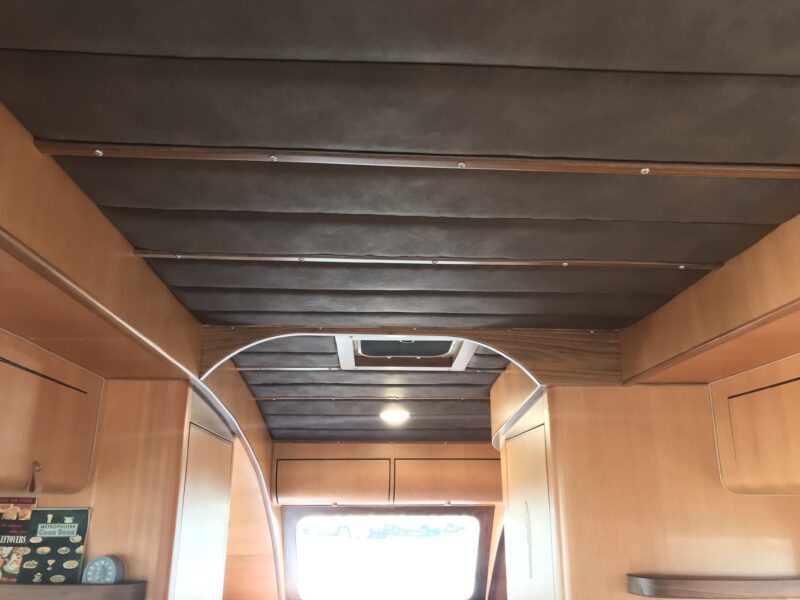
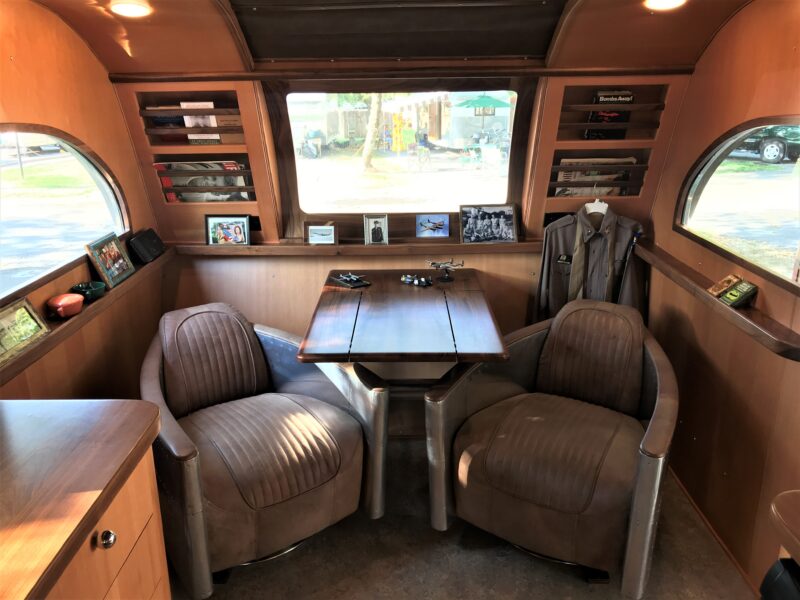
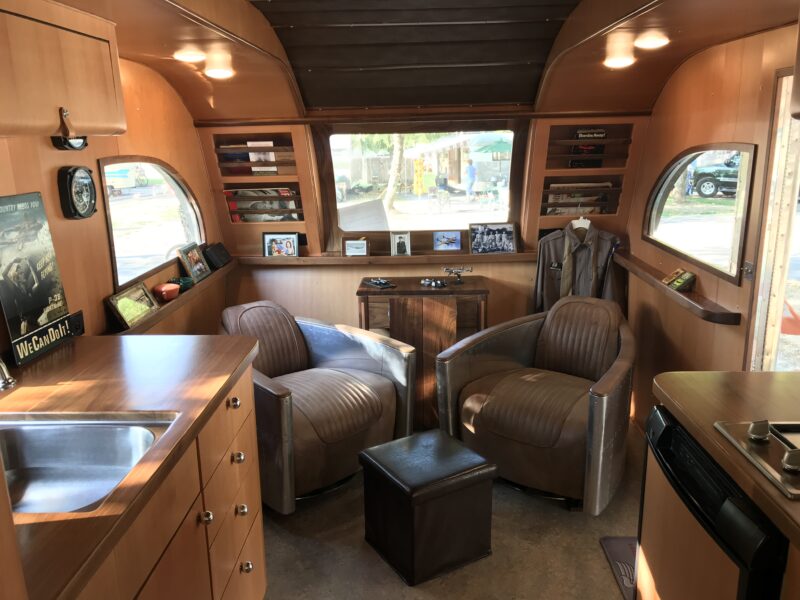
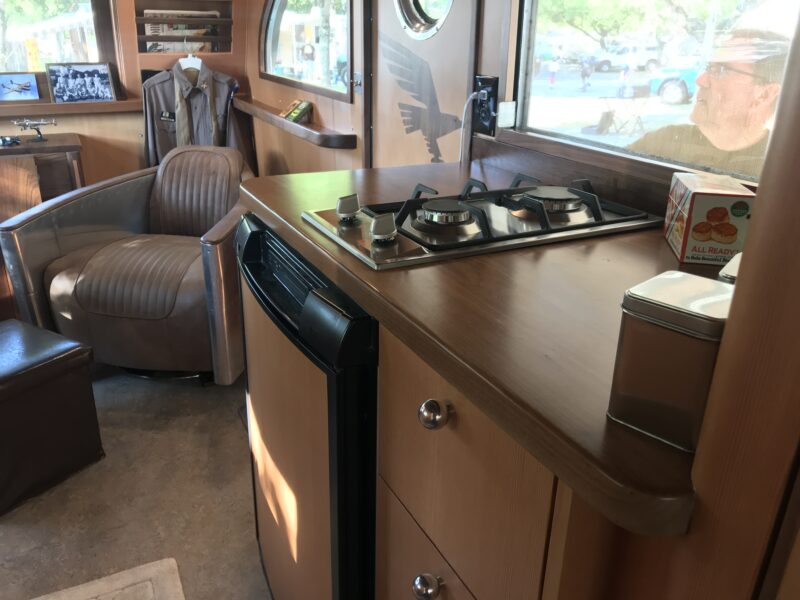
Inside, this particular trailer reflects the same spirit of thoughtful design and craftsmanship that defined its origins. The custom upholstered ceiling was intentionally designed to echo the material and look of the front swivel seats, creating a cohesive interior aesthetic. In fact, the seats were so substantial they had to be installed through the front panel during construction — a small detail that hints at the level of customization involved.
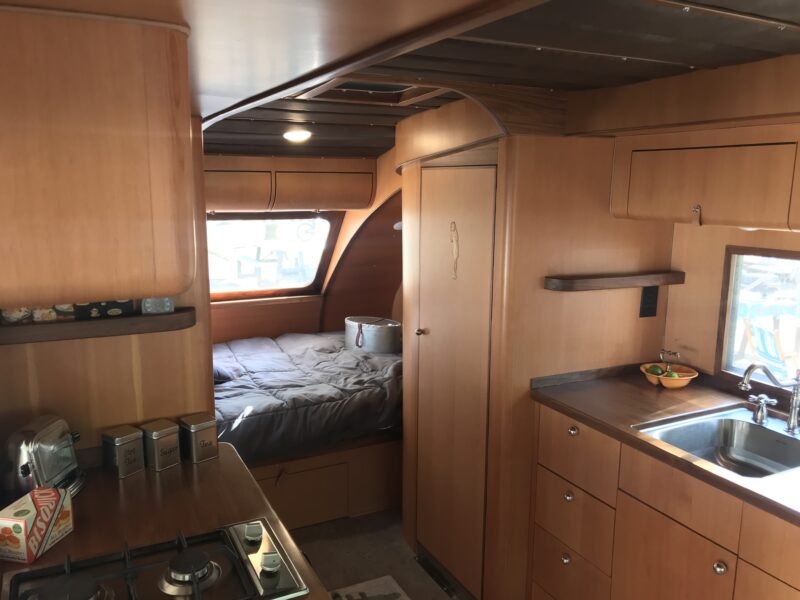
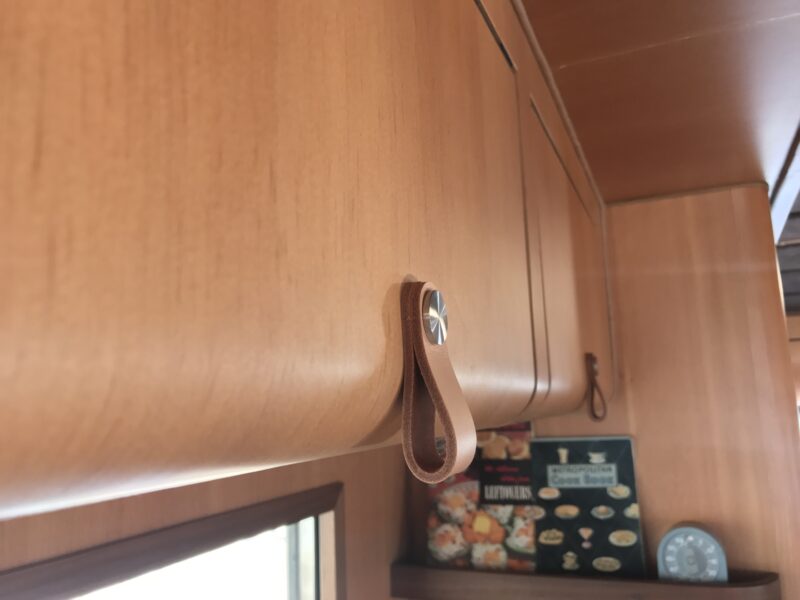
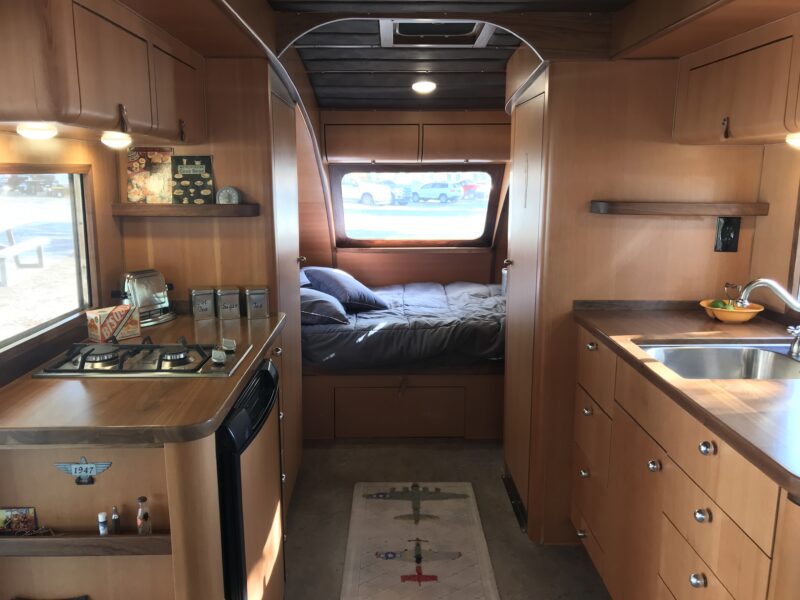
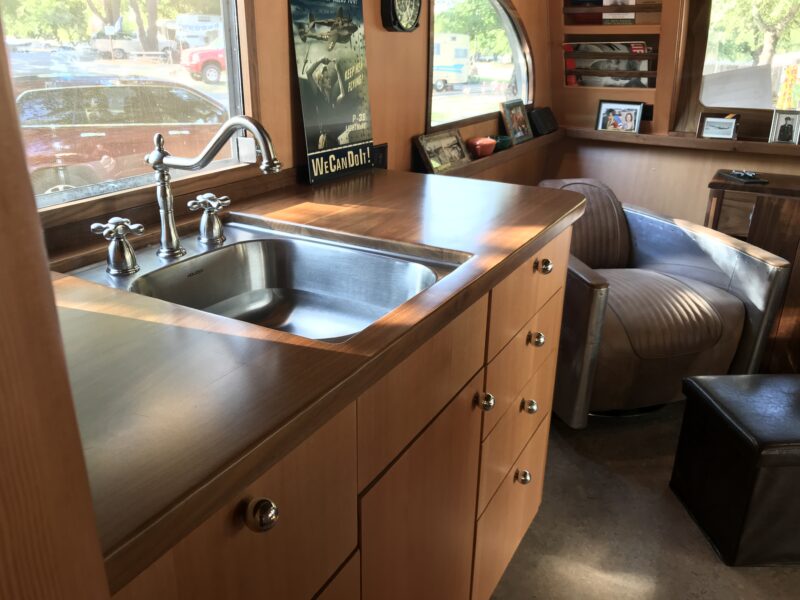
The cabinetry is finished with soft leather pulls that add warmth and texture. Radius corners are cut from solid vertical grain Douglas Fir, and the window frames are crafted from solid slabs of English Walnut — no joints, no shortcuts, just clean, confident woodworking.
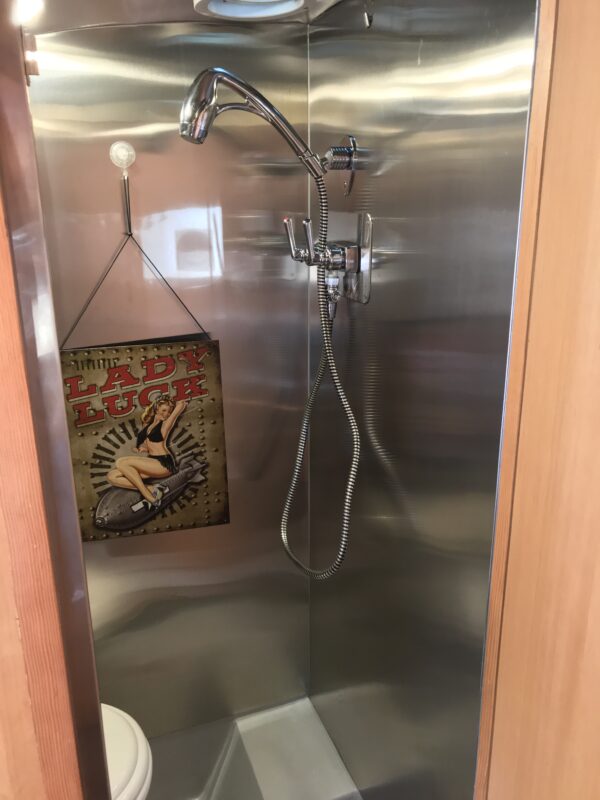
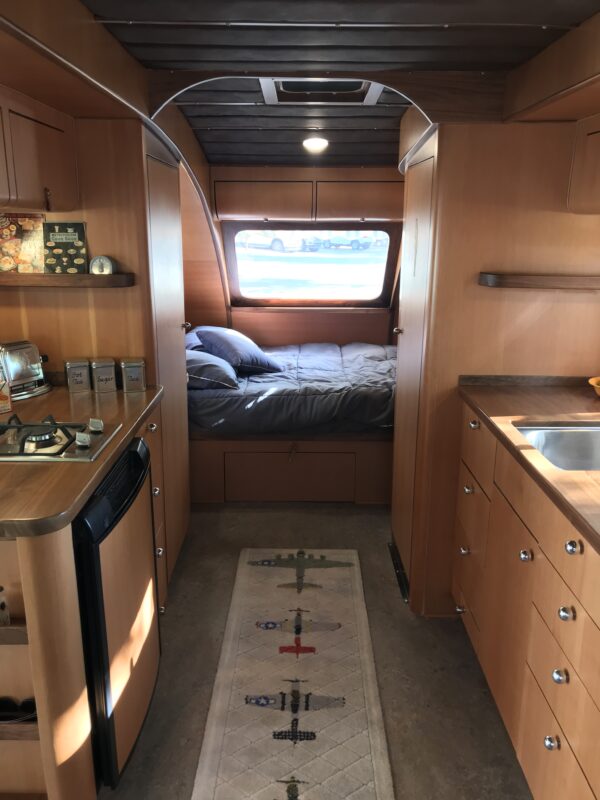
One of the most notable updates is the addition of a stainless steel wet bath. This wasn’t part of the original 1947 design, but it transforms the trailer into a fully self-contained unit, making it far more practical for modern travel while still respecting its heritage.
Outside, the trailer wears its natural patina proudly. For some, that weathered aluminum tells the story best. For others, it offers an opportunity — polish it to a mirror shine or refinish it to match your vision.
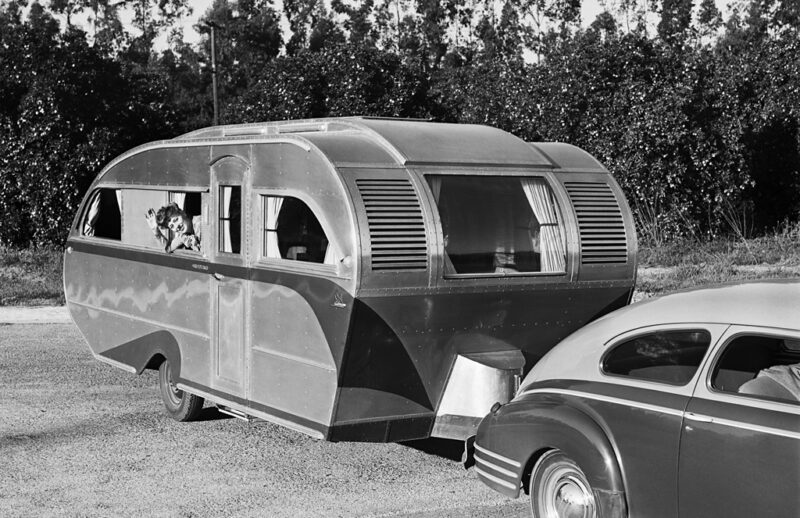
What makes this Aero Flite special isn’t just its craftsmanship or its upgrades. It’s the connection to a brief, fascinating moment in American manufacturing history — when aviation engineers turned their attention to the open road and brought aircraft thinking with them.
In a postwar market filled with similar silhouettes, the Aero Flite stood out. And nearly eighty years later, it still does.
This trailer was featured in issue 53 of the Vintage Camper Trailers Magazine.

Is the 1947 Aero Flite for sale? Saw no pricing or contact information.
dancrafts270@gmail.com
It is for sale. Here is the link: https://classifieds.vintagecampertrailers.com/Classified/1947-aero-flite-listing-3415.aspx