
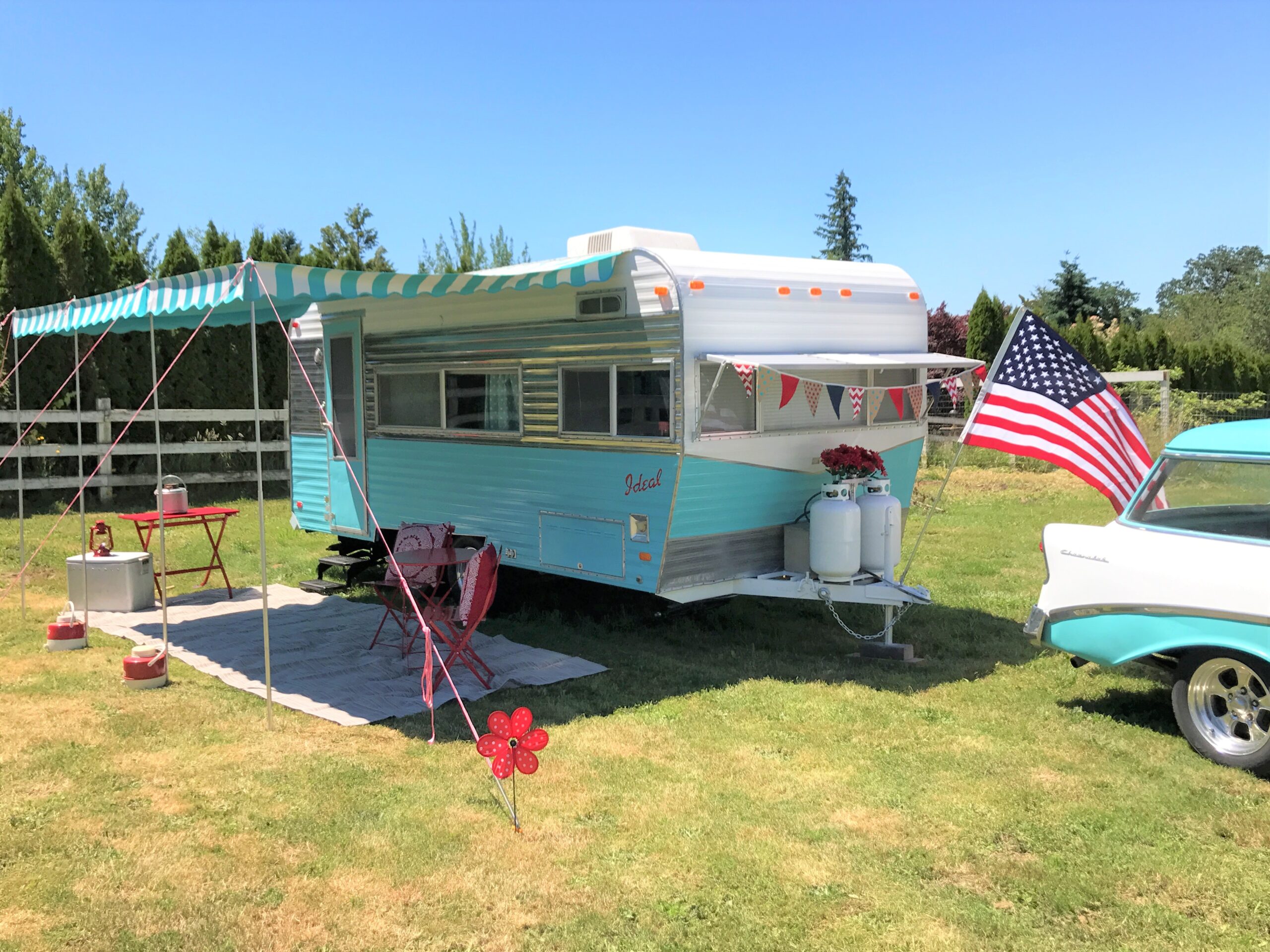
Before long, winter gives way to spring, and spring inevitably rolls into summer. For vintage trailer enthusiasts, that seasonal shift signals one thing: it’s time to get back on the road and enjoy our trailers again. While warm-weather travel is part of the fun, summer heat also brings a familiar challenge—keeping the interior of a vintage trailer comfortable.
Most trailers built prior to the mid-1960s were not equipped with air conditioning. Unlike modern RVs, vintage trailers feature distinctive shapes, curved roofs, and clean lines that make installing contemporary rooftop A/C units more challenging. And let’s be honest—most vintage trailers simply look better without a modern air conditioner perched on the roof, especially smaller “canned ham” styles.
Today’s RVs and travel trailers are designed with rooftop A/C units in mind. They’re efficient, effective, and visually compatible with modern designs. Vintage trailers, however, require a bit more thought. The good news is that adding air conditioning to a vintage trailer isn’t difficult, and there are a couple of proven ways to do it while preserving the trailer’s character.
Roof-Mounted Air Conditioning
Most rooftop A/C units are designed to fit standard 14″ x 14″ ceiling vent openings. Installation involves positioning the unit over the vent opening and securing it from inside the trailer using the manufacturer’s bracket system and four mounting bolts. A foam gasket is sandwiched between the A/C unit and the roof to create a watertight seal.
Over time—typically around five years—these foam seals can dry out or shrink, allowing water intrusion. Replacing the seal requires removing the A/C unit, fully removing the old gasket, and thoroughly cleaning the roof skin. We recommend lining the vent opening with FortiFlash, wrapping the material over the roof skin edge (about 1″), the exposed roof structure, and extending approximately 1″ onto the interior ceiling. This extra protection helps prevent future water damage if a leak occurs.
Before installing the new gasket, apply a bead of Trempro 635 between the roof skin and the seal. If an older ceiling vent was previously removed, be sure to seal any remaining holes and allow adequate curing time before reinstalling the A/C unit.
One important consideration for vintage trailers is roof curvature. Most rooftop A/C units are designed for flat roofs, so trailers with curved profiles may require additional support beneath the rear of the unit. Rooftop units typically weigh around 90 pounds, and reinforcing the roof structure may be necessary to safely handle the added load.
Window-Mounted Air Conditioning
Window-mounted A/C units offer a more affordable alternative, often costing several hundred dollars less than rooftop systems. Smaller units draw less power and, in compact vintage trailers, can provide more than enough airflow to cool the interior effectively.
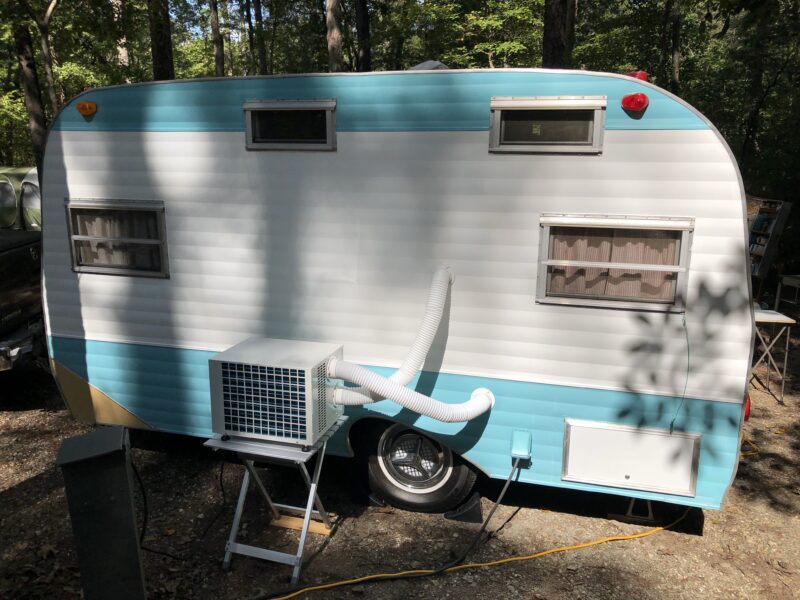
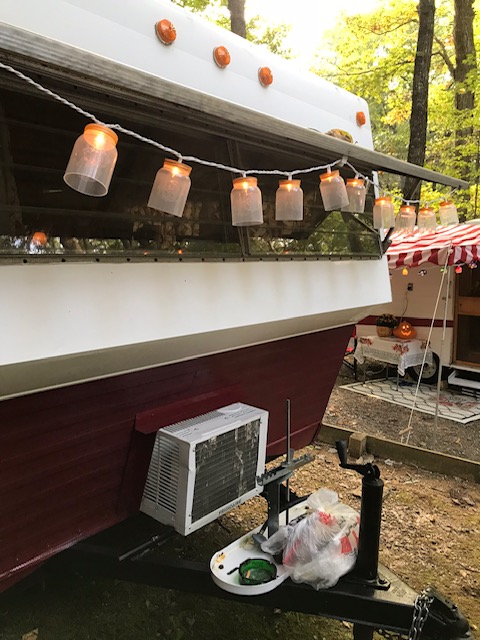
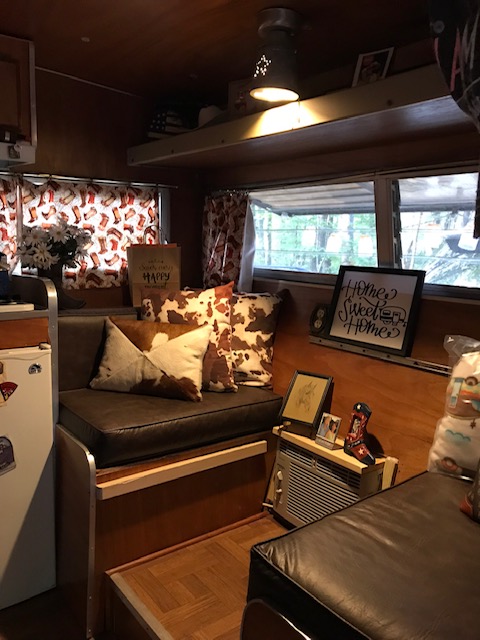
Rather than installing a window unit directly into a trailer window—which is often unsightly, prone to leaks, and can permanently damage the window structure—many owners opt for custom installations. Common locations include closets, under benches, or beneath beds, keeping the unit discreet and preserving the trailer’s exterior appearance.
It’s important to remember that window-mounted units are designed to vent heat outside. When installing one inside cabinetry or enclosed spaces, adequate airflow around the top and sides of the unit is critical. Without sufficient ventilation, the unit can overheat and fail to operate properly. A proper installation also requires a sealed, unobstructed exhaust path and a method for draining condensation. This is typically accomplished with a shrouded exhaust chute and a latchable exterior access door.
As with any A/C installation—roof or wall mounted—it’s essential to follow the manufacturer’s guidelines to ensure safe and reliable operation.
Final Thoughts
Both rooftop and window-mounted air conditioning systems can be successfully installed in vintage trailers when done thoughtfully and correctly. Our shop has experience with both traditional rooftop installations and custom window-unit setups, allowing owners to choose the option that best balances comfort, cost, and aesthetics—without compromising the vintage charm that makes these trailers special.