
Making it to the top of a long mountain grade while towing a vintage trailer feels like a small victory. The engine stayed cool, nothing broke, and the view from the top reminds you why you hit the road in the first place. But there’s always one unavoidable truth—you still have to get back down.
Descending a long grade can be more demanding than the climb, and preparation matters. Before ever leaving home, two systems deserve your attention: your tow vehicle’s brakes and your trailer brake controller.
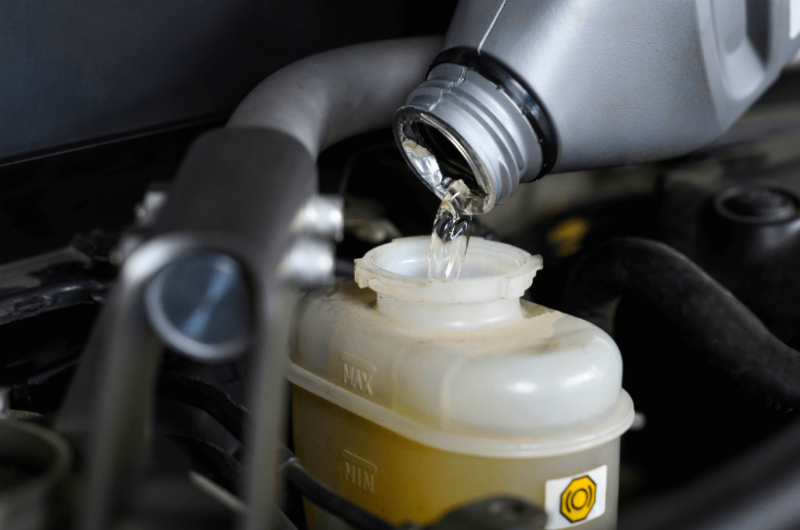
Brake fluid is one of the most overlooked components in any braking system. Because it absorbs moisture over time, old fluid loses its high boiling point. On long downhill grades, that can lead to brake fade—or worse, a complete loss of braking. If your tow vehicle hasn’t had a brake fluid flush in several years, it’s worth addressing before your next mountain trip.
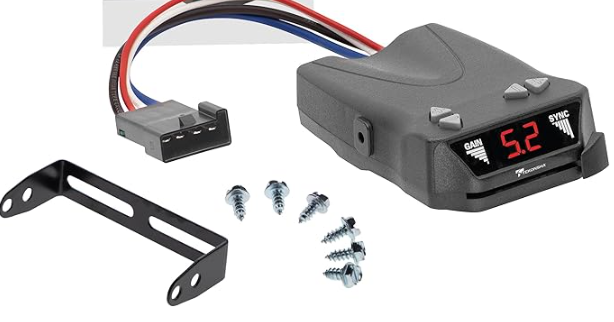
Equally important is knowing your trailer brake controller. Understanding gain, timing, and how to use the manual override should happen long before you’re staring down a steep descent. A well-adjusted controller helps keep the trailer pulling straight behind you instead of trying to lead the way downhill.
Once you crest the hill, speed control becomes the priority. There’s no prize for being first to the bottom. Safe speed depends on grade, length, weather, road conditions, and total weight. Engine braking should do most of the work, with service brakes used sparingly to control speed. A good rule of thumb is to use the same gear going downhill that you needed going up.
Using proper “stab braking” allows brakes to cool between applications, reducing heat buildup and fade. Gravity is relentless, but patience and preparation are stronger allies. With the right setup and mindset, the downhill can be just another part of the adventure—one you’ll remember for the views, not the white knuckles.
*Stab braking is an emergency stopping technique for vehicles without Anti-lock Braking Systems (ABS), involving rapidly pumping the brakes: applying full pressure until wheels lock, releasing just as they start rolling, then immediately reapplying hard, repeating until stopped to regain steering control and prevent skidding. It mimics what ABS does automatically and is crucial for older vehicles or trucks, but should never be used with ABS, where threshold braking (just before lock-up) is better.