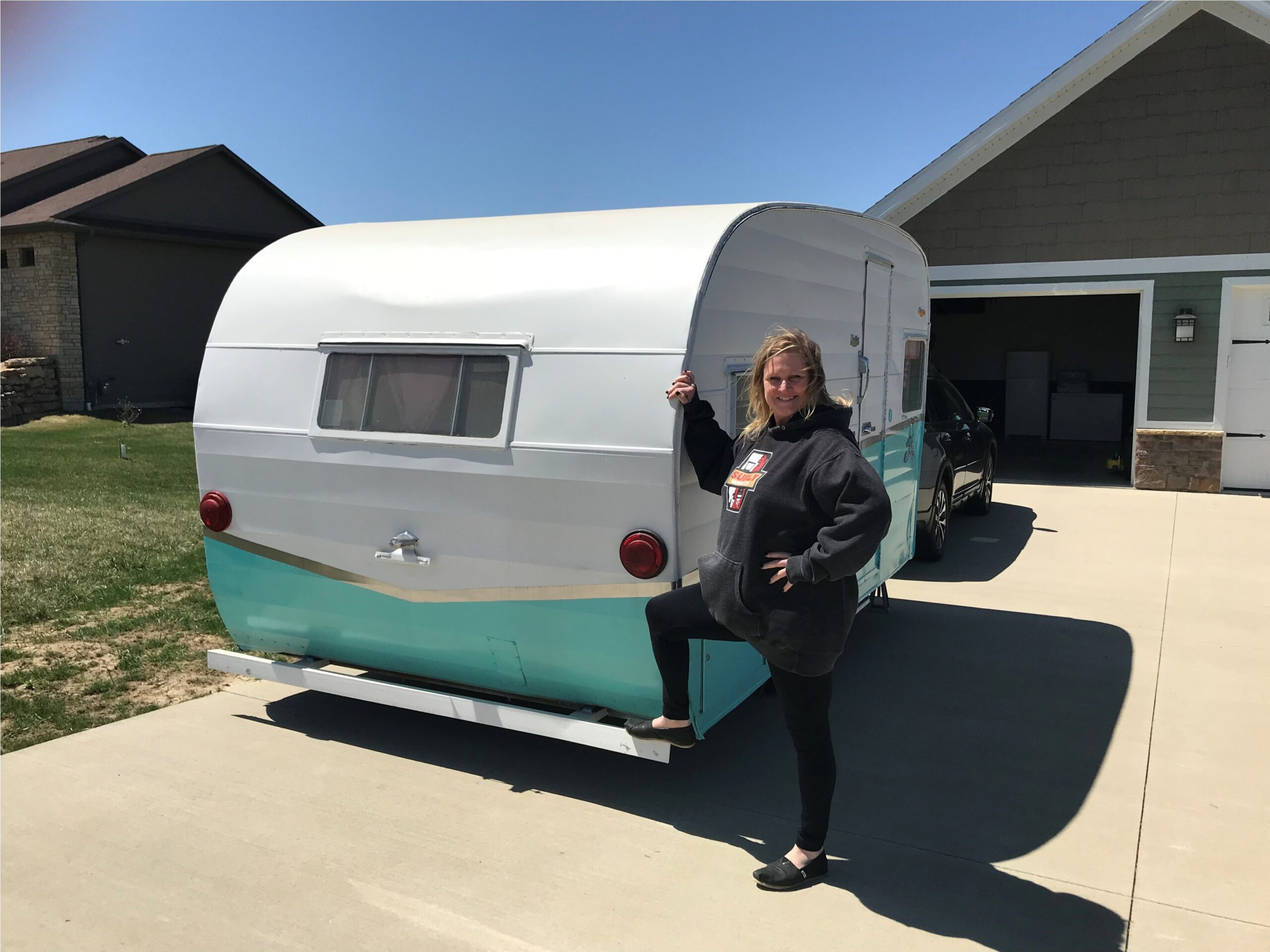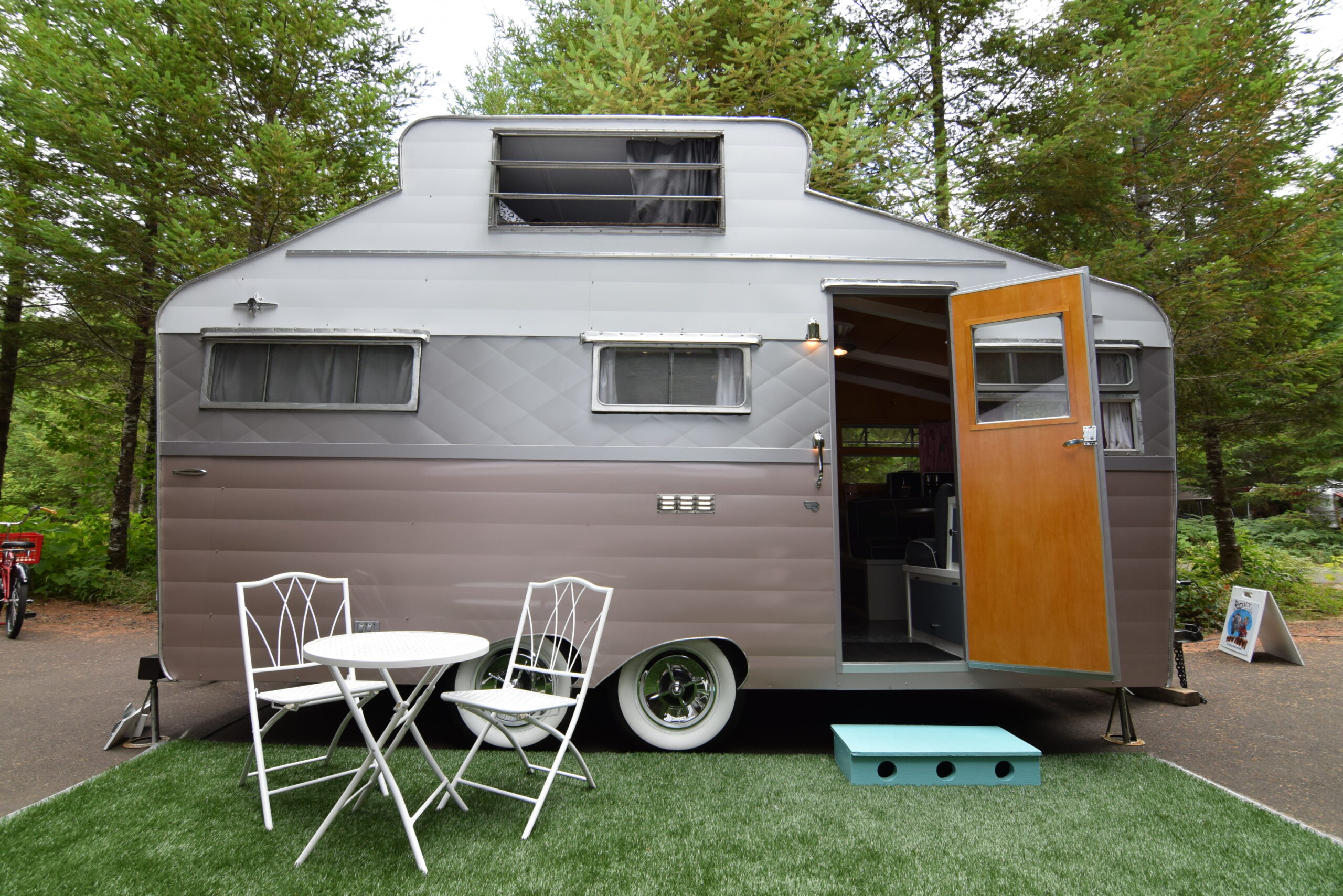

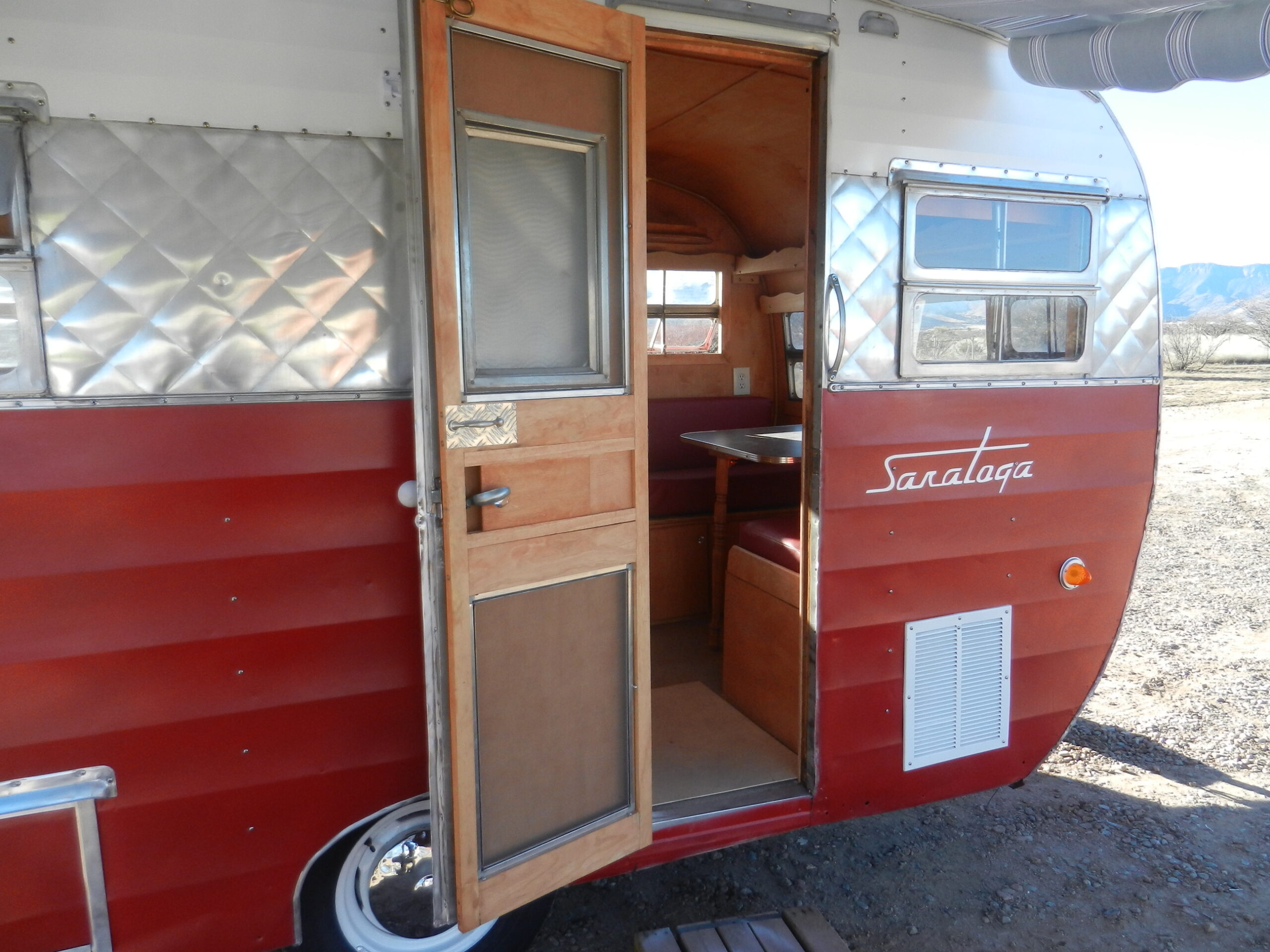
Every vintage trailer has a story, and sometimes that story begins with a full restoration. That was the case with my 1952 Saratoga travel trailer. When I first acquired it, the trailer was in pretty humble condition. Years of use and neglect had taken their toll, and it quickly became clear that this wasn’t going to be a light cosmetic project. The only real path forward was a complete rebuild — essentially gutting the interior and starting over.
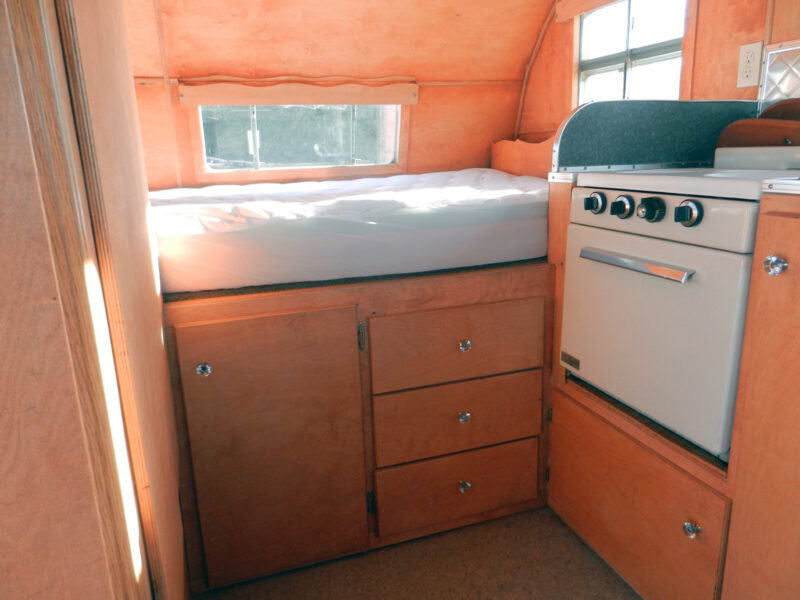
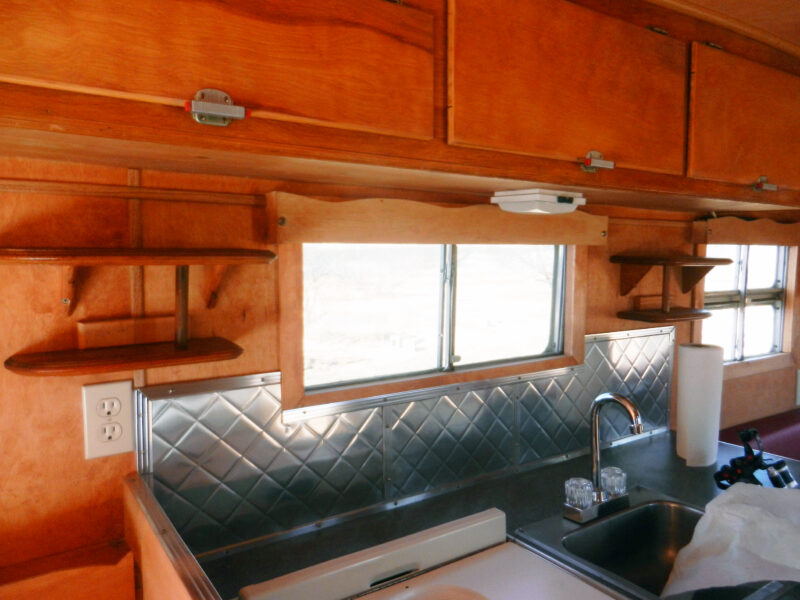
Fortunately, there was a bit of luck involved in the process. My neighbor happened to own another Saratoga trailer that had survived the decades in mostly original condition. Having access to an intact example turned out to be incredibly valuable. It gave me a clear reference for the layout, cabinetry, finishes, and overall design, allowing the rebuild to stay faithful to the way the trailer was originally constructed. Instead of guessing how things were supposed to look, I could study the original and use it as a model throughout the restoration.
The Saratoga trailers themselves are somewhat rare today, largely because the company only built them for a short period of time. They were produced by the Saratoga Trailer Corporation, which operated out of 578 East Commercial Street in Pomona, California. The company began building trailers around 1950 or 1951 and appears to have stopped production by about 1953. That relatively brief production run means there aren’t many Saratogas left on the road today.
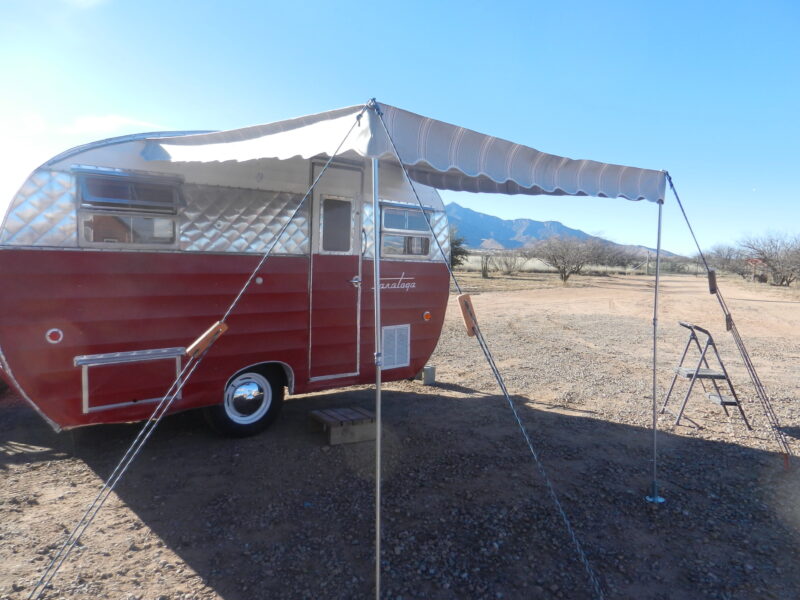
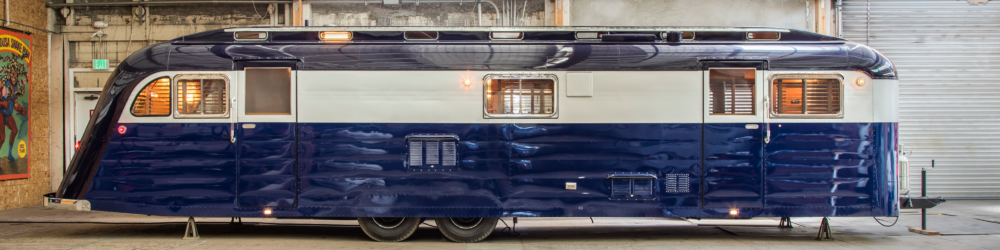
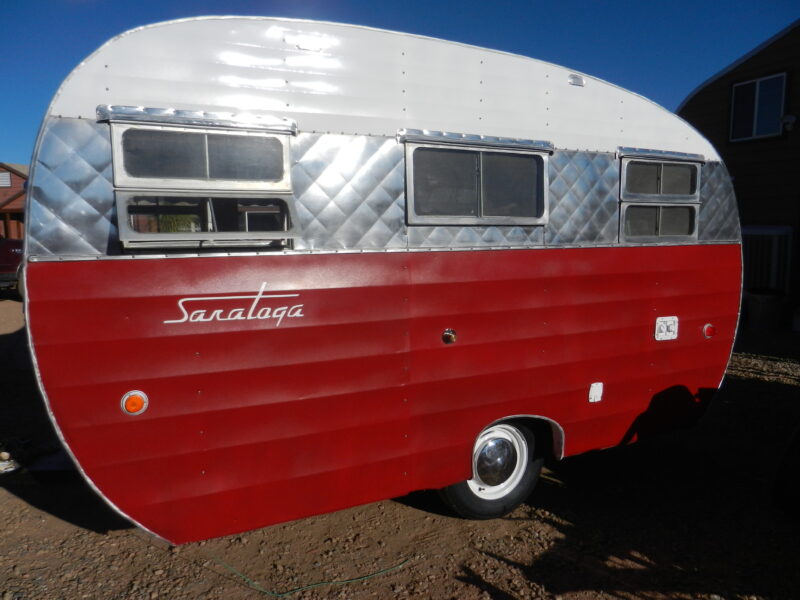
In 1952 the company offered just three trailer sizes: a 15-foot model, along with larger 31-foot and 35-foot versions. Interestingly, Saratoga didn’t use model names for these trailers. They were simply identified by their length. The smaller 15-foot model, which is the one featured here, represents the compact end of their lineup and reflects the practical, lightweight design philosophy common to early 1950s travel trailers.
The 15-foot Saratoga measures 15 feet overall with a 13-foot body length. It is 7 feet 6 inches wide and stands about 8 feet 5 inches tall, with an interior height of 6 feet 5 inches — a comfortable amount of headroom for a trailer of its era. It rides on a single axle and features an aluminum exterior skin, while the larger Saratoga models were built using both aluminum and steel siding.
Despite its modest size, the trailer is relatively sturdy, weighing in at about 1,720 pounds dry with a hitch weight of around 300 pounds. When new, this little trailer sold for $1,195 F.O.B. at the factory in Pomona. For the early 1950s, that represented a significant but attainable investment for families looking to explore the growing network of American highways and campgrounds.
Restoring a trailer like this is always a balance between preservation and rebuilding. When a trailer is too far gone to save in its original form, a careful restoration can still bring the design and craftsmanship back to life. Having an original example nearby to reference made it possible to recreate many of the details that might otherwise have been lost to time.
Today, trailers like the 1952 Saratoga represent a fascinating snapshot of early postwar travel culture. They were built during a time when Americans were discovering the freedom of road trips and campground vacations, and manufacturers across Southern California were experimenting with new trailer designs to meet that demand.
Even though Saratoga Trailer Corporation was only in business for a few short years, the trailers they produced remain a small but interesting part of vintage trailer history. And for those lucky enough to own one, bringing a Saratoga back to life can be a rewarding way to preserve a little piece of that era.